
In the lush outskirts of Nairobi, Kenya, stands a place of hope and determination: the Giraffe Centre. It is here that the conservation of one of the most endangered giraffe subspecies, the Rothschild’s giraffe, takes tangible form. Once at risk of disappearing entirely, these tall, graceful animals are now the focus of intensive efforts to reintroduce them into the wild—and their story is both urgent and inspiring.
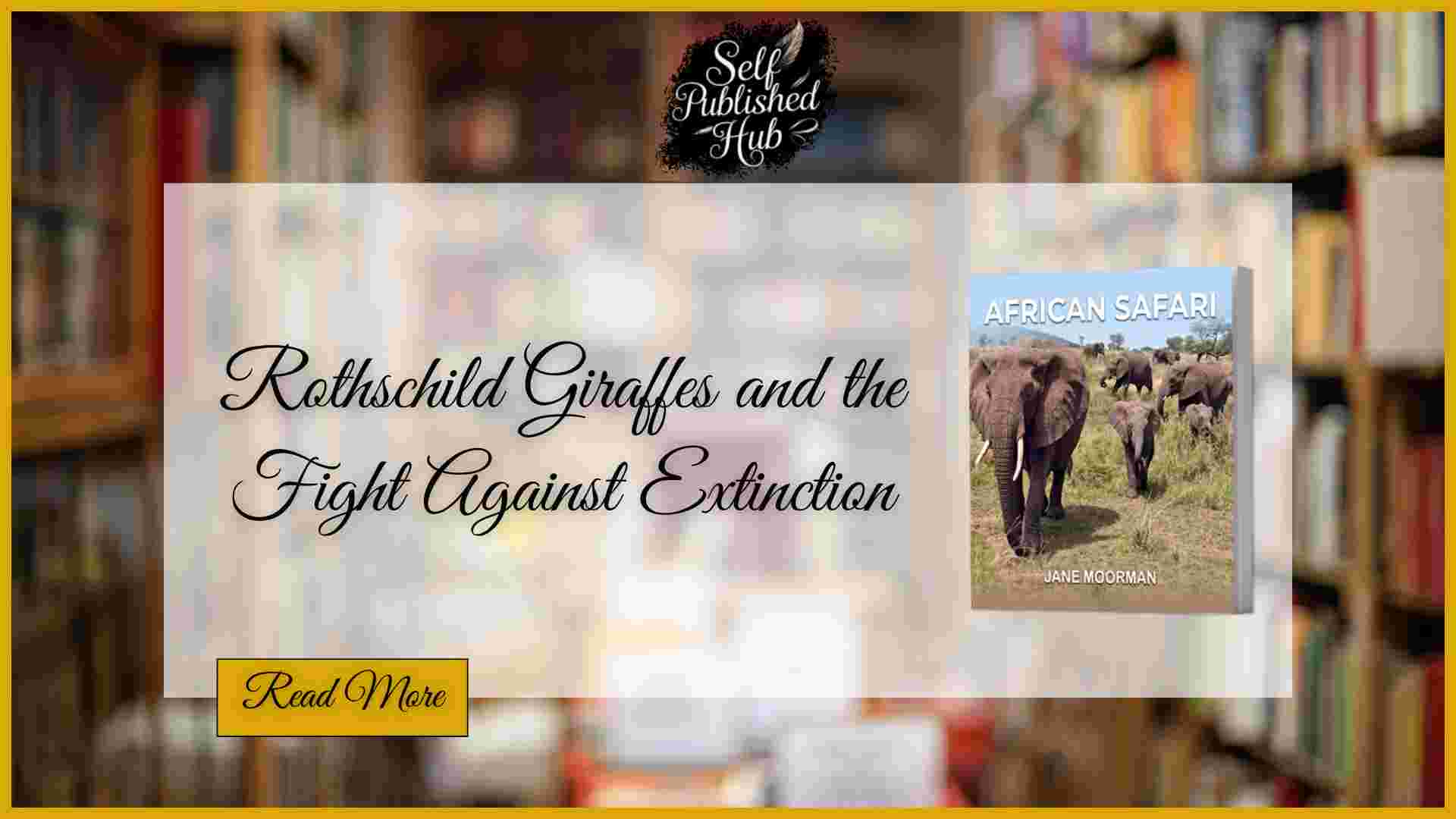
Jane Moorman’s African Safari: Kenya and Tanzania and Birds of Africa bring readers into direct contact with this story. Through her photos and detailed field notes, Moorman captures not only the majestic presence of the Rothschild’s giraffe but the significance of the conservation work happening behind the scenes.
Rothschild’s giraffes are easily identified by their unique rectangular markings. Unlike their Masai or Reticulated cousins, Rothschilds have no spots below the knees, giving the appearance of wearing white socks. The males also sport five ossicones (horn-like structures) instead of the usual three. These traits, along with their size and stature, make them a striking presence on the African landscape.
Yet despite their beauty, their numbers have dwindled. Habitat loss due to agriculture and human settlement, along with limited protected areas, pushed the Rothschild’s giraffe to the brink. At one point, fewer than 700 individuals were believed to exist in the wild.
The Giraffe Centre, managed by the African Fund for Endangered Wildlife (AFEW), was established to change that trajectory. Located in Lang’ata, just outside Nairobi, the center focuses on breeding, education, and conservation. Young giraffes are raised with the intention of reintroducing them into protected areas such as Lake Nakuru National Park. Before their release, they are taught how to forage independently, evade predators, and adapt to life without human assistance.
Moorman’s visit to the Giraffe Centre, documented in African Safari, highlights not only the visual beauty of the giraffes but the deep commitment of those working behind the scenes. She also documents the giraffes in the wild at Lake Nakuru, where many rehabilitated individuals now roam freely—a testament to the success of the reintroduction program.
Lake Nakuru itself is a sanctuary that supports biodiversity on a grand scale. It’s not just a home for giraffes but also a haven for flamingos, pelicans, baboons, and leopards. In this thriving ecosystem, Rothschild’s giraffes are finding new footholds, and with each successful birth and each year of survival, their chances of recovery improve.
Conservation is not only about species—it’s about stories. The Rothschild’s giraffe is a story of revival, made possible by collective effort, scientific dedication, and public awareness. It is a story that continues to unfold, one calf and one relocation at a time.
By showcasing these efforts in vivid detail and photography, Moorman’s work contributes to spreading awareness of what is at stake. Her books offer readers a window into what conservation looks like on the ground: not just fieldwork and statistics, but living, breathing success.
For readers interested in wildlife, travel, or global conservation, African Safari and Birds of Africa are more than photo collections. They are witness accounts of a fight for survival—and a celebration of progress made. The Rothschild’s giraffe still needs protection, but thanks to places like the Giraffe Centre and those who support it, there is every reason to believe that extinction is not inevitable. With care, education, and global attention, the journey toward recovery continues.
The best way to enjoy this kind of beauty is by diving into my books. They go far beyond still photography, offering QR codes that unlock videos of hippos fighting, elephants wading through rivers, and much more live-action adventure.