Artificial intelligence is transforming how work is performed across nearly every industry. Automation is streamlining repetitive tasks, predictive systems are guiding operational decisions, and robotics are entering environments once managed solely by human labor. While these developments create new efficiencies and new career pathways, they also disrupt established roles and long standing professional identities. Reskilling is no longer optional. It is essential. Yet the transition must be managed with care if workers are to be protected rather than displaced.
Workforce transformation is often framed as an economic shift. New roles will emerge. Digital fluency will increase in value. Collaboration between humans and intelligent systems will define the next generation of careers. However, beneath these opportunities lies a period of adjustment that carries real human consequences. Workers asked to adapt quickly may experience stress, uncertainty, and cognitive overload. Long held expertise can feel diminished when automated tools assume decision making authority. In some cases, rapid change can lead to burnout or disengagement if proper safeguards are not in place.
Reskilling must therefore be treated as a health and safety issue, not simply a training initiative. When organizations introduce new technologies without structured support, the burden of adaptation falls entirely on employees. Learning curves intensify while performance expectations remain unchanged. Psychological strain can increase, especially when job security appears uncertain. If intelligent systems are poorly explained or inadequately governed, workers may struggle to understand how decisions affecting them are made.
Protecting workers in transition requires a deliberate strategy. First, education must be practical, role specific, and continuous. AI literacy is a modern safety control. Employees who understand how systems function, what their limitations are, and when to question outputs are better equipped to collaborate safely and confidently. Second, worker participation in design and implementation strengthens trust. When employees contribute feedback during rollout phases, organizations can identify unintended stressors and adjust accordingly. Third, oversight mechanisms must remain visible and measurable. Reskilling programs should include evaluation of workload, mental fatigue, and the impact of automation on professional judgment.
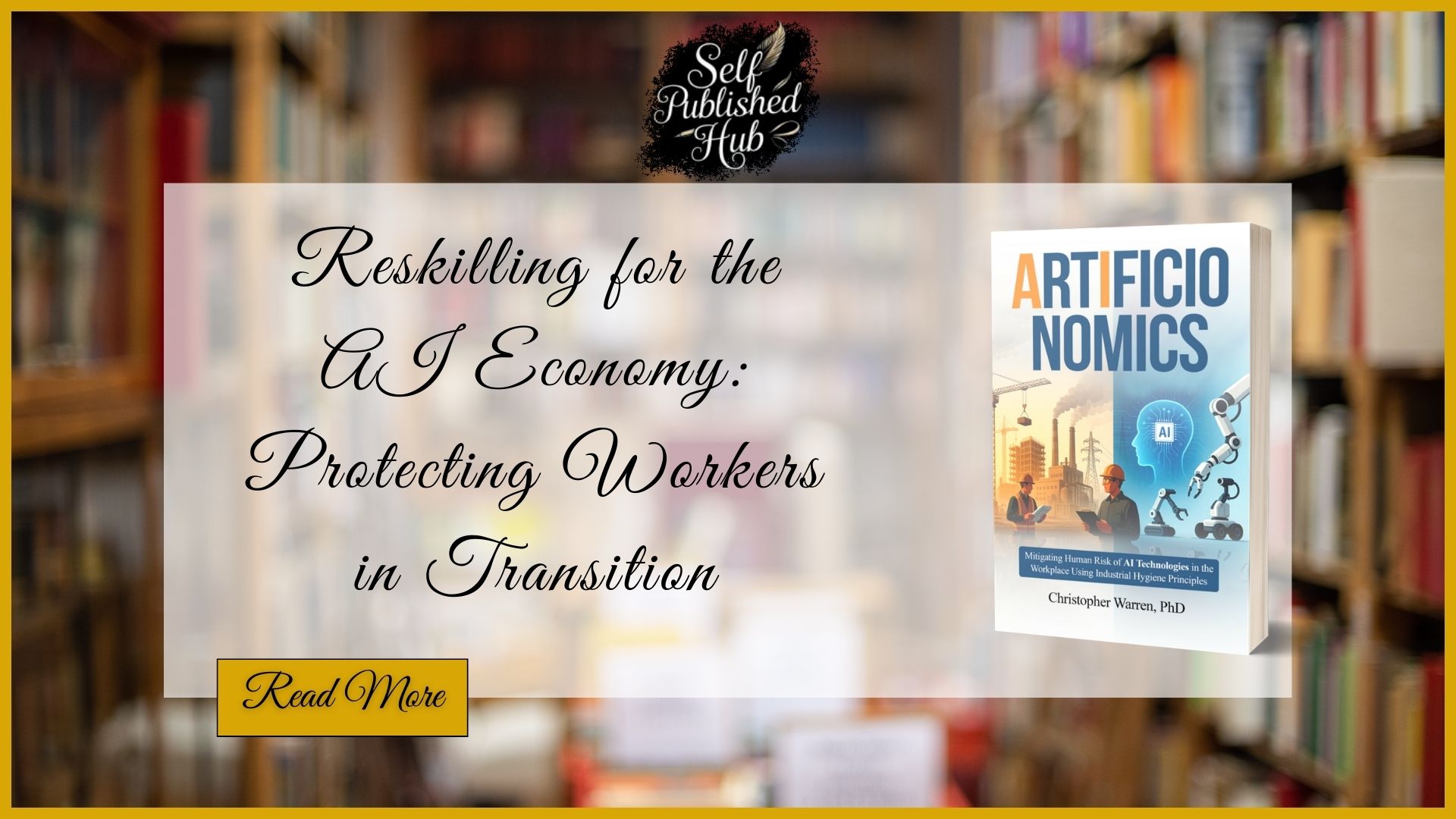
This is where Artificionomics: Mitigating Human Risk of AI Technologies in the Workplace Using Industrial Hygiene Principles by Dr. Christopher Warren becomes indispensable. The book reframes technological change as an occupational health challenge and provides a structured methodology for managing both physical and psychosocial exposures introduced by intelligent systems. By applying established principles of hazard identification, evaluation, and control, Artificionomics ensures that reskilling efforts are embedded within a broader framework of human protection.
Reskilling done responsibly empowers workers rather than marginalizes them. It shifts the narrative from replacement to augmentation. Intelligent systems should enhance human capability, not erode confidence or autonomy. When organizations align innovation with structured safeguards, the result is not only higher productivity but also greater resilience and morale.
The AI economy will continue to evolve. Jobs will change. Skills will shift. The critical measure of leadership will not be how quickly new technologies are adopted, but how thoughtfully workers are supported through the transition. Protecting people while preparing them for new roles is not simply good management. It is a professional obligation.
Artificionomics offers the roadmap for navigating this transformation with discipline and integrity. In an era defined by change, safeguarding workers during transition is the clearest sign that progress is truly human centered.
Get your Copy Now on Amazon: https://www.amazon.com/dp/B0GFY4RL6B