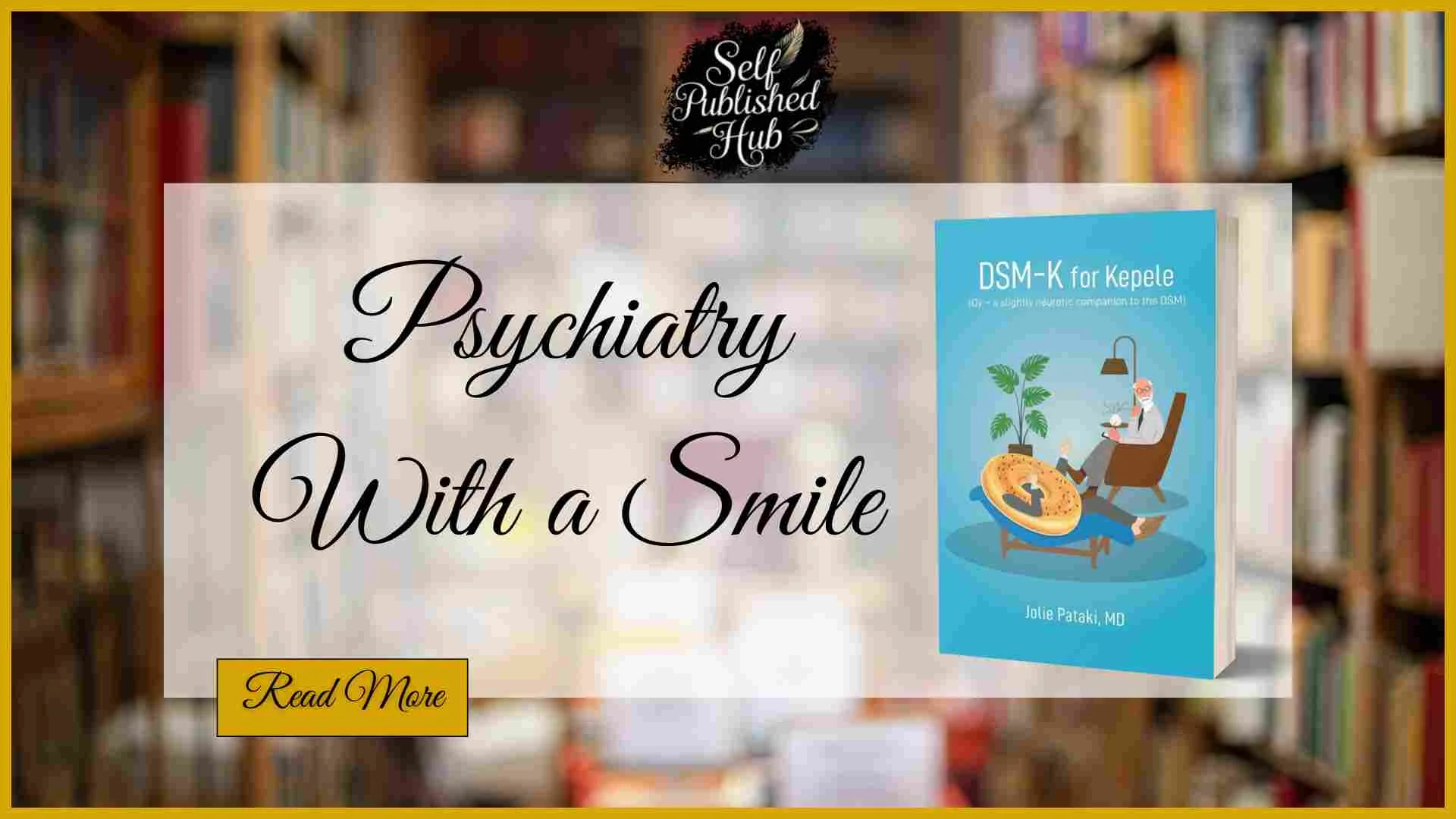
Most of us have been in situations where the words we use don’t seem to capture what we’re feeling. Clinical language can describe, but it doesn’t always connect. This is where Yiddish steps in, with its humor, imagery, and knack for turning everyday life into language. Dr. Jolie Pataki’s DSM-K for Kepele takes this gift of Yiddish and blends it with psychiatry to create something truly original: a book that makes us laugh while helping us recognize ourselves and others.
Dr. Pataki, instead of overwhelming terminology, get familiar with Yiddish phrases that perfectly describe the mishegos of daily life. Anxiety becomes Plotz Attacks. Restlessness is Shpilkes Disorder. Shared family quirks are Folie-A-Jew. The genius here is that the words feel right. They don’t just label behaviors—they paint them in vivid, recognizable detail.
One of the joys of reading this book is how quickly it strikes a chord. As you turn the pages, you keep saying, “That’s me!” or “That’s exactly like my uncle!” The recognition is instant and often hilarious. These humorous “diagnoses” are not meant to belittle real struggles, but to remind us that we all share them in one way or another. Laughter becomes a kind of therapy, showing us that quirks are not flaws—they’re part of the shared human experience.
What sets DSM-K for Kepele apart is its compassion. Dr. Pataki is not making fun of mental health. She is using humor to open doors to conversations that often feel intimidating. By reframing conditions with Yiddish expressions, she removes fear and adds connection. You don’t need to be Jewish to appreciate the humor, but if you are, the cultural references will feel like home. For others, it is an invitation to learn the richness of Yiddish while discovering that mishegos is universal.
The book is also a subtle critique of how psychiatry can sometimes feel detached. By showing how everyday language can capture behavior better than medical jargon, Dr. Pataki reminds us that psychiatry is about people, not just diagnoses. It’s a gentle push toward making mental health more human and approachable.
By the end of the book, you will not only have laughed out loud but also gained a new way of seeing yourself and those around you. You may even find yourself using words like kvetch or plotz to describe your own moods. That is the power of language—it connects, entertains, and heals.
DSM-K for Kepele is a rare find: a book that entertains while offering real insight. It is witty without being shallow, compassionate without being heavy, and above all, a joy to read. If you have ever wanted a lighter way to think about mental health, this is the book for you.
So why not take a break from the heaviness of life and give yourself the gift of laughter? Read DSM-K for Kepele. You may discover that your meshugenah moments are not just normal—they’re something to celebrate.
DSM-K for Kepele is a witty, one-of-a-kind fusion of psychiatry and Yiddish culture from the mind of Dr. Jolie Pataki, a psychiatrist with over 30 years of experience-and a Jew for more than twice as long. Through the humorous lens of her alter-ego, Dr. Fackacta, she offers a fresh (and hilarious) take on mental health diagnoses, replacing clinical jargon with the most accurately descriptive language ever spoken: Yiddish.
With tongue-in-cheek “disorders” like Kvetch Disorder, Plotz Attacks, and Folie-A-Jew, Dr. Pataki pokes fun at the quirks of human nature, psychiatric practice, and cultural traditions alike. Whether you’re a mental health professional, a lover of Jewish humor, or just someone who appreciates a good “oy vey,” this book delivers insight and laughs in equal measure.
Packed with cultural references, clever definitions, and compassionate wit, DSM-K for Kepele is more than a parody-it’s a celebration of the richness (and ridiculousness) of human behavior. Read it, share it, and maybe even self-diagnose-at your own risk, of course.
Head to Amazon to purchase your copy: https://www.amazon.com/dp/1968966498.