The distribution of wealth has always been a central concern in American democracy. From the earliest days of the nation, the Declaration of Independence emphasized the rights of every citizen to equality, life, liberty, and the pursuit of happiness. Yet these rights cannot be fully realized without mechanisms that ensure fairness and opportunity for all. Progressive taxation is one such mechanism, balancing resources so that society can support the welfare of every citizen.
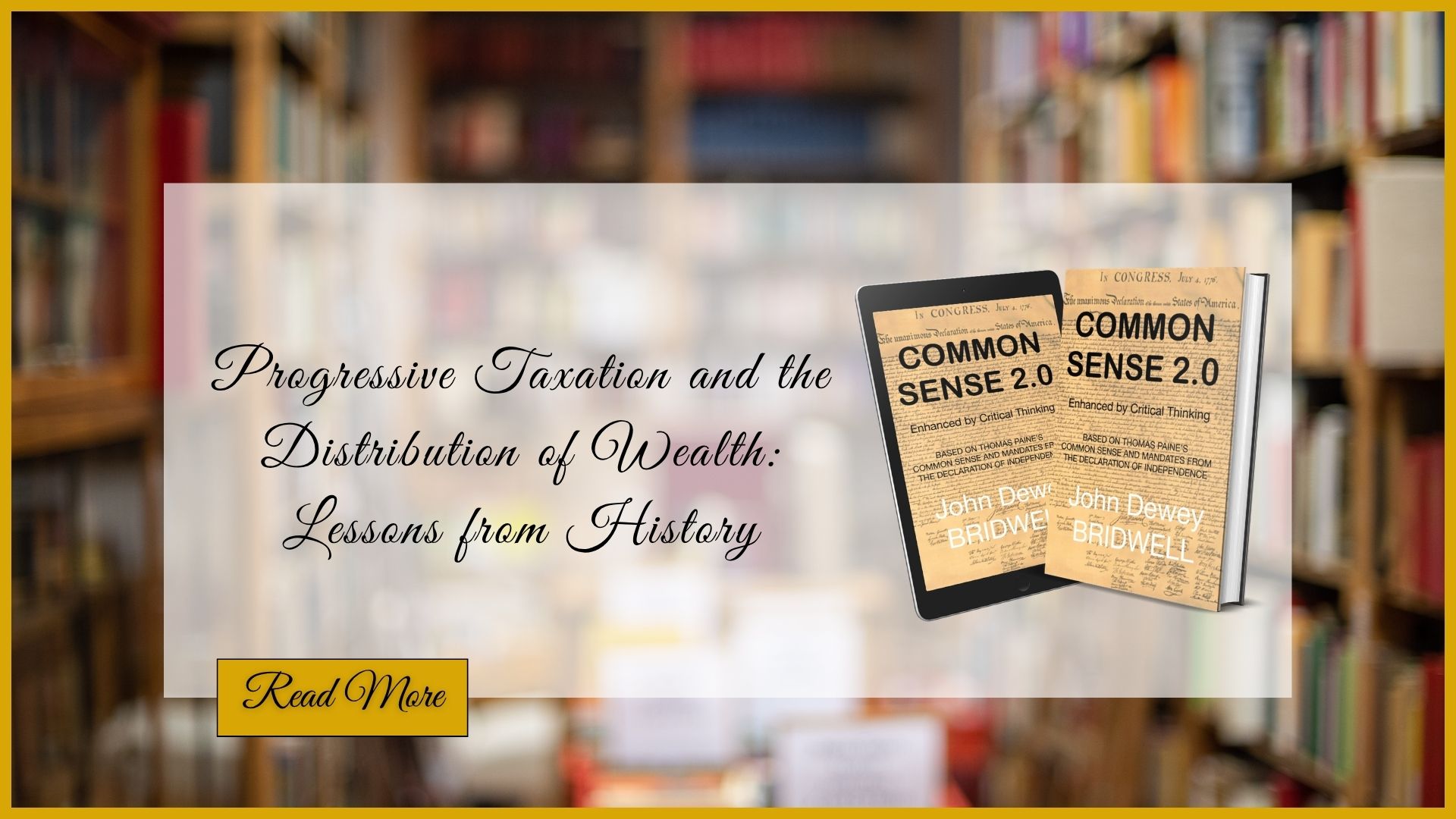
Common Sense 2.0 by John Bridwell examines the historical and practical importance of progressive taxation. The book shows how unchecked accumulation of wealth can erode equality and leave millions without access to essential services like healthcare, education, or adequate housing. By examining historical policies and their outcomes, the book demonstrates that societies thrive when those with greater means contribute proportionally to the collective good.
In the mid-20th century, high marginal tax rates allowed governments to fund infrastructure, social programs, and educational initiatives that benefitted the majority. These measures were essential for creating a strong middle class and promoting social stability. Conversely, decades of tax reductions for the wealthiest Americans have led to widening inequality, concentrating power and influence in the hands of a few. Common Sense 2.0 explores how these decisions affect the ability of government to fulfill its duty to protect the rights of all citizens.
The book argues that progressive taxation is not a matter of ideology but a practical tool for sustaining democracy. It ensures that government has the resources to provide for public welfare and maintain the conditions necessary for citizens to pursue their rights fully. By applying lessons from history, the book shows that fair taxation is fundamental to realizing the vision of equality and opportunity envisioned by the nation’s founders.
Common Sense 2.0 also addresses the broader implications of wealth inequality, including its impact on political influence, social mobility, and public trust in government. By highlighting the connection between economic policy and democratic integrity, the book underscores that fairness in taxation is central to protecting the rights to life, liberty, and happiness for everyone.
For anyone seeking to understand the link between economic policy and the founding principles of the United States, Common Sense 2.0 offers clear insight and guidance. It provides a roadmap for restoring balance and fairness in society, showing that progressive taxation is not simply a fiscal policy but a cornerstone of democratic governance. Engaging with this book equips readers to think critically about wealth, equity, and the responsibilities of government in safeguarding the rights of all citizens.
Common Sense 2.0 is essential reading for those who care about a fair and just society, demonstrating how historical lessons can inform the policies needed to create opportunity and uphold the principles that make democracy meaningful.
Discover this book now, available on Amazon: https://www.amazon.com/dp/B0GNCKMC5H/