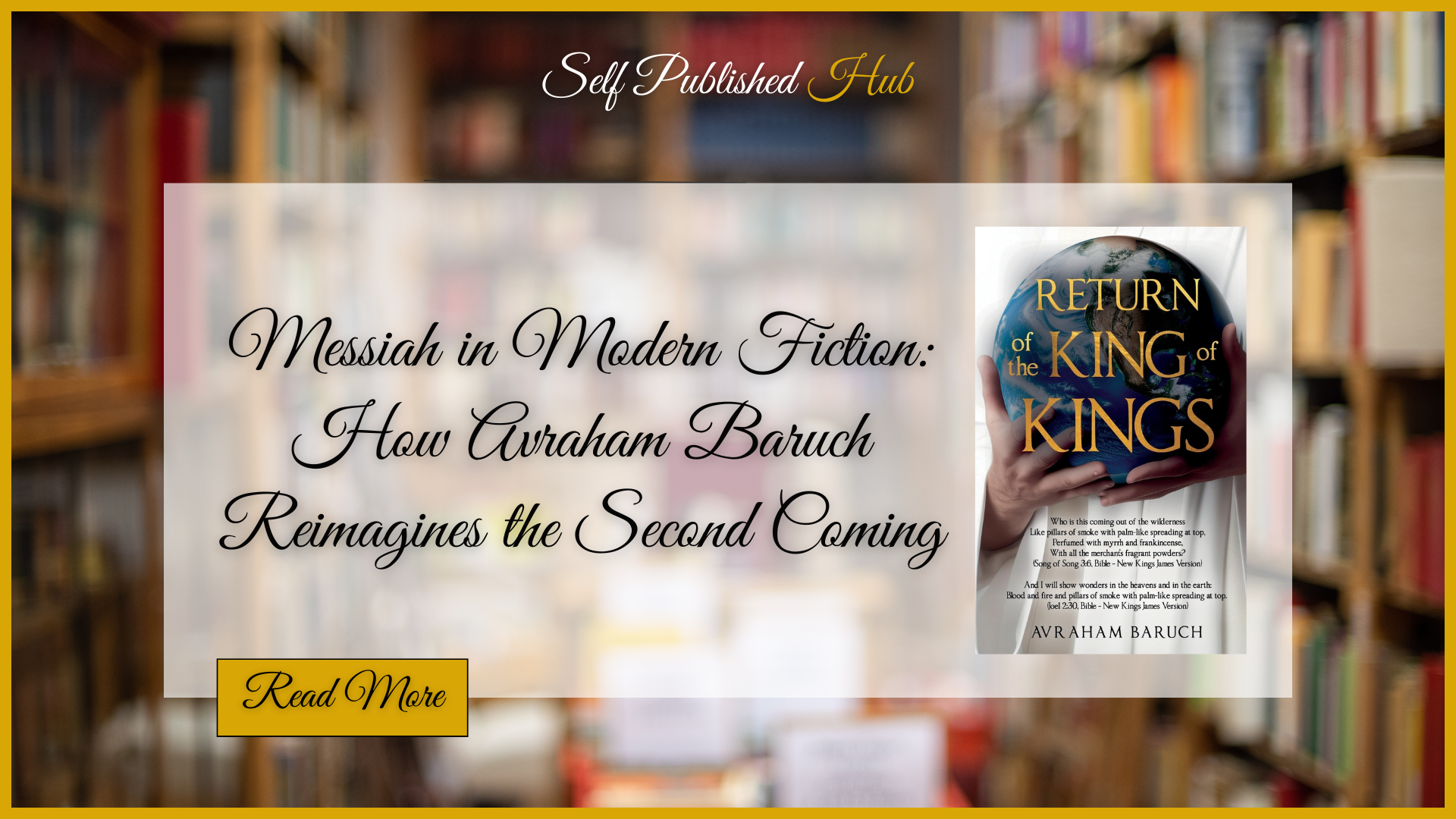
The concept of the Second Coming has fascinated theologians, artists, and writers for centuries. In Return of the King of Kings, Avraham Baruch brings that vision to life in a bold and imaginative way, crafting a story that places the Messiah not in a distant, ethereal realm, but squarely in the midst of a world recovering from devastation.
At the heart of the novel is Ishua Hameshea, the long-awaited Messiah who returns to a planet, Istra, shattered by war, fear, and corruption. But unlike typical apocalyptic portrayals, this is not the beginning of the end. Baruch’s narrative begins thirty years after the Second Coming. The Messiah has already come, judgment has been rendered, and a new order has been established. What follows is a powerful reflection on what it means to live in a world where peace is restored—yet personal healing and moral choice still matter.
This is where Baruch’s reimagining of the Second Coming stands apart. Rather than focusing on cataclysmic judgment alone, he explores the world that comes after the divine intervention. It is a world where the temple on the hill in Iruslim stands as a beacon of spiritual unity, where nations live in harmony, and where high priests from all over the world gather to give thanks. And yet, individuals like Micho still carry wounds from the past, showing that even in a restored world, grace must be embraced on a personal level.
The Messiah figure, Ishua, is not a distant monarch but a remembered savior whose presence remains spiritually central. The society functions under divine law, but the freedom to choose goodness remains paramount. Baruch uses this to explore how redemption is both cosmic and deeply intimate. Ishua’s legacy is not enforced through fear but lived out through the transformed hearts of those who remember what came before.
What makes this vision so powerful in modern fiction is its hopefulness. In a literary landscape often dominated by dystopian despair, Return of the King of Kings offers a different kind of future—not naive, but rooted in the idea that divine intervention does not end the human story; it reshapes it. Through characters like Sashi, who remain faithful even in dark times, and Micho, who wrestles with guilt and redemption, Baruch shows that the Messiah’s return is not the end of struggle, but the beginning of a new moral clarity.
There are echoes here of Revelation, Isaiah, and the Gospels—but also of our current world, with its fractures and longings for justice. The rise of extremist political groups, environmental devastation, and societal breakdowns portrayed in the novel feel all too familiar. Baruch’s Messiah returns not just to punish the wicked, but to restore the sacred. His arrival is not a spectacle, but a turning point.
For readers of Christian literature, speculative fiction, and spiritual allegory, this book is a thought-provoking exploration of what it might look like if divine promises were fulfilled in our time. It asks: what if the Messiah returned not to escape the world, but to dwell among us and set things right?
Avraham Baruch invites us to imagine that world—and to ask ourselves how we would live in it.