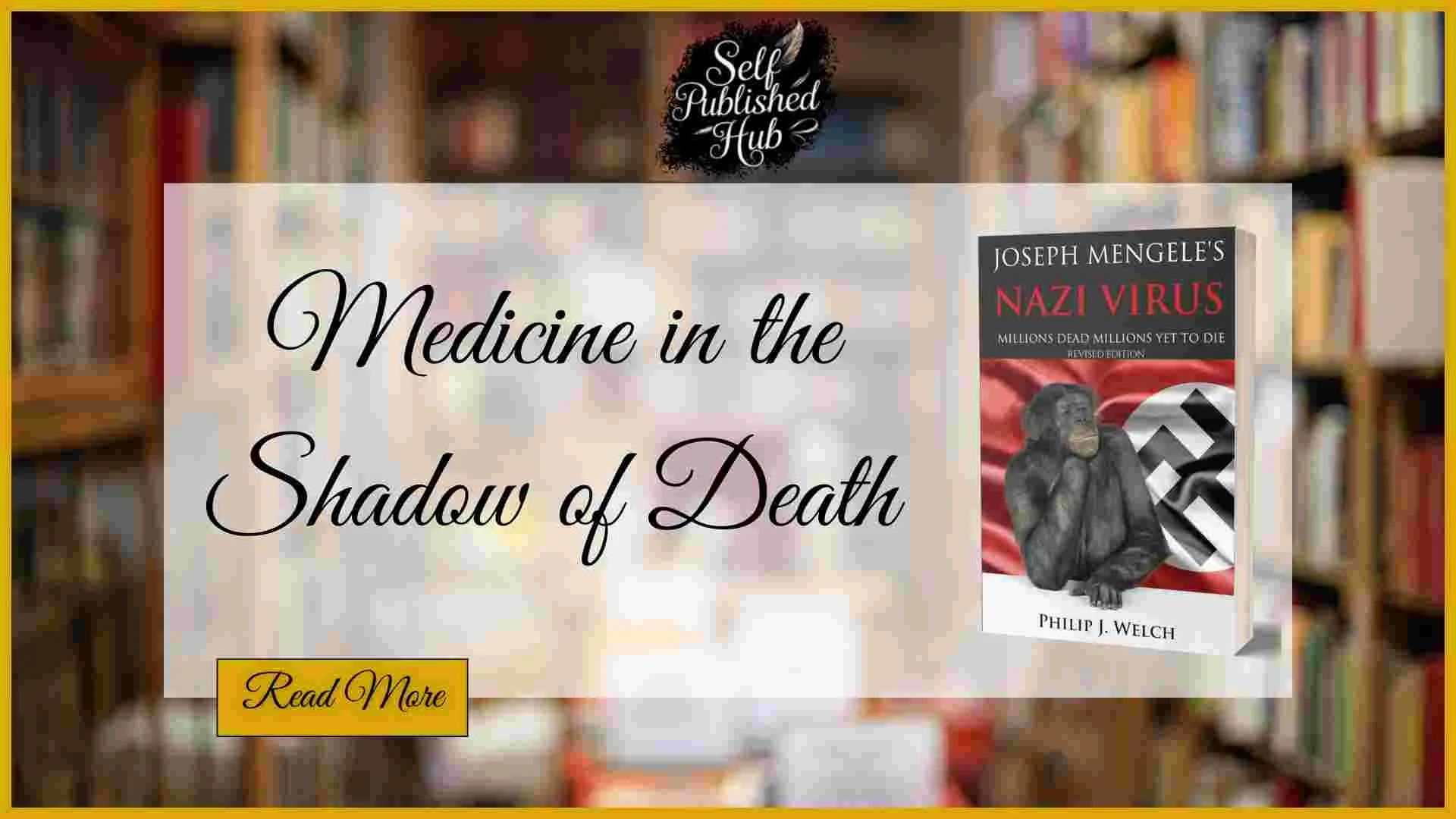
What does it mean to be a doctor when the oath to heal collides with an ideology that demands destruction? Few moments in history illustrate this contradiction more starkly than the scenes Philip J. Welch depicts in Joseph Mengele’s Nazi Virus. Here, medicine is not practiced in the quiet of hospitals but in the smoke and chaos of battlefields, where every choice exposes the fragile line between healing and killing.
Welch’s novel portrays Josef Mengele in moments of wartime crisis, managing a flood of casualties in a makeshift hospital. Soldiers, burned and broken, stream through doors that smell of smoke and despair. The SS doctor, once an ordinary man of science, is thrown into circumstances where triage becomes both a medical and a moral battlefield. On one hand, he stitches wounds, organizes teams, and keeps men alive against impossible odds. On the other hand, his loyalty to ideology colors every decision, turning even acts of healing into acts of service for a regime built on death.
This duality is the heart of the novel’s power. In the shadow of combat, Welch shows us a doctor whose skill saves lives even as his allegiance destroys them. Mengele’s steady hand with a scalpel contrasts chillingly with his steady embrace of propaganda. The tension is unbearable: how can the same mind that treats a soldier’s burns also design experiments that treat human beings as expendable? Welch does not offer an easy answer. Instead, he places readers inside the contradiction, forcing us to feel the weight of choices made when compassion and cruelty intertwine.
The hospital scenes also highlight the corruption of medicine itself under fascism. The wards are not sanctuaries of healing but extensions of the battlefield, run with military precision and ideological fervor. Nurses and orderlies function under the gaze of armed officers, their work shaped by orders from above rather than patient need. Even the smallest act of care exists under the shadow of political power. Welch’s detail makes this clear: bandages are tied while executions happen outside, and soups are spooned to survivors while others are carried to graves. Medicine becomes inseparable from violence.
What makes these depictions more than historical fiction is how they resonate today. The book raises questions in our modern world: how do we ensure that science and medicine serve humanity rather than ideology? What safeguards prevent doctors from becoming instruments of power rather than advocates for patients? These questions echo in contemporary debates over bioethics, from the use of genetics to the boundaries of wartime medicine.
By dramatizing the contradictions of a doctor caught between healing and killing, Welch’s novel reminds us that medicine is never neutral. Its purpose is defined by the values of those who control it. In the right hands, it eases suffering and preserves life. In the wrong hands, it becomes complicit in cruelty.
Joseph Mengele’s Nazi Virus is not an easy read, but it is a necessary one. It pulls readers into the shadowed corridors of wartime hospitals, where the true cost of corrupted medicine is laid bare. This novel is a haunting and unforgettable guide for anyone seeking to understand how ideology can twist even the noblest professions.
Available on Amazon: https://www.amazon.com/dp/B0FF2M64TF.