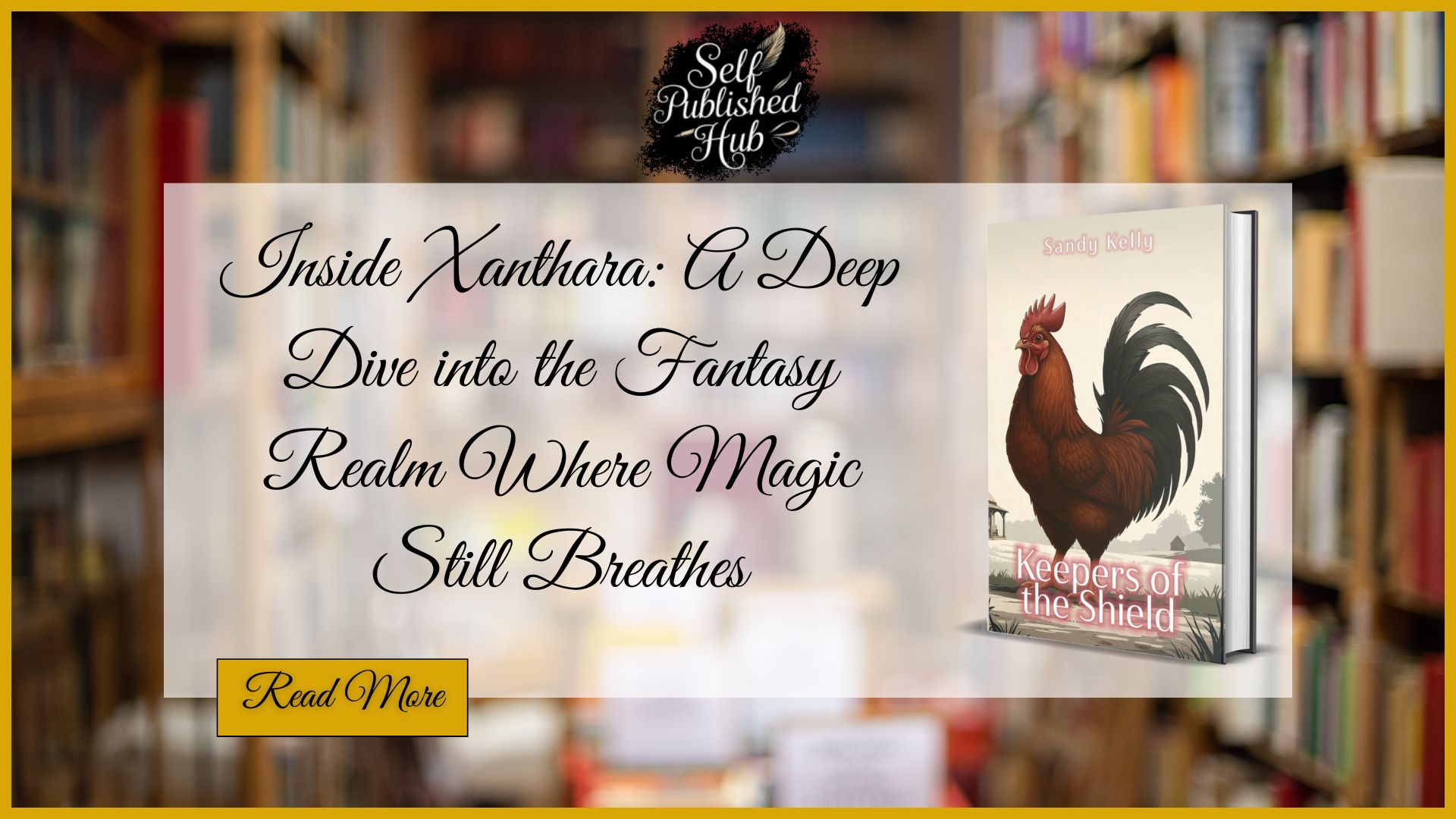
Some fantasy worlds feel distant, filled with wonder but hard to grasp. Xanthara is different. In Keepers of the Shield by Sandy Kelly, the realm of Xanthara feels alive, structured, and deeply connected to the characters who enter it. Magic does not simply exist there. It breathes, responds, and shapes every part of life. Through careful worldbuilding, the book introduces a setting that feels ancient yet active, guided by history, rules, and responsibility.
Xanthara is governed by balance. This balance is safeguarded by the Elders, powerful immortals who oversee the realm and make decisions that impact both the magical and mortal worlds. The Elders are not distant figures removed from consequence. They bear the weight of a long memory and understand the cost of both action and inaction. Their presence gives Xanthara a sense of order and purpose, reminding readers that power is always tied to responsibility.
One of the most distinctive features of Xanthara is its colour based magic system. Magic is not random or undefined. It is measured and identified through colour, each representing a different level or type of ability. Red and gold are the strongest, followed by white, blue, yellow, brown, and black. This system allows the world to operate with clarity. When Jesse is revealed to have red magic, it immediately signals that something rare and important is unfolding. The colours help readers understand hierarchy and potential without the need for lengthy explanation.
Talismans play a key role in connecting individuals to magic. These objects respond to power, intention, and presence. Cami’s ring, for example, reacts to Jesse in a way that reveals his true nature long before he understands it himself. Talismans are not weapons. They are tools of recognition and connection. They link Keepers to Xanthara and help maintain balance between worlds.
Immortals add another layer to the realm. They are not presented as untouchable beings beyond consequence. Instead, they are guardians shaped by time and duty. Their long lives allow them to see patterns and threats others might miss. This perspective is essential in a world where danger does not always announce itself openly. The immortals help guide decisions that affect the future of Xanthara.
Ancient councils further strengthen the sense of history. These councils bring together voices of experience, debate, and careful judgment. They reflect a world that values discussion over impulse. When threats begin to rise, the councils become places where strategy and caution meet. This structure reinforces the idea that Xanthara has survived because it learns from its past.
What makes Xanthara compelling is how these elements work together. The Elders, magical colours, immortals, talismans, and ancient councils are not decorative details. They form a living system. Magic breathes because it is part of everyday structure, not something added for spectacle.
In this book, Xanthara stands as a reminder that strong fantasy worlds are built on clear rules and meaningful history. Readers who enjoy immersive settings grounded in logic and balance will find Xanthara a world worth exploring.
To experience this realm fully, consider reading Keepers of the Shield by Sandy Kelly, available on Amazon: https://www.amazon.com/dp/B0FJZPGKDJ.