Children are not born knowing how to make careful decisions. They learn by observing adults, testing limits, asking questions, and experiencing the results of their choices. Positive guidance helps children understand what is expected of them while giving them the confidence to think, reflect, and improve.
Positive guidance is different from harsh punishment. Its purpose is not to frighten or shame a child. Instead, it teaches the child why a certain choice may be unsafe, unkind, or unhelpful. When adults explain rules calmly, children are more likely to understand the reason behind them. This understanding can help them make better choices even when an adult is not present.
Clear communication is an important part of positive guidance. Children need simple instructions that match their age and level of understanding. Rather than only saying no, adults can explain what the child should do instead. For example, a parent may say, “Please walk inside because running could cause you to fall.” This gives the child both a direction and a reason.
Children also benefit when adults listen to their thoughts. A child may make a poor choice because of excitement, curiosity, fear, or pressure from others. Asking what happened allows the child to explain the situation. It also encourages them to think about their actions. Calm questions can help children recognize what went wrong and consider what they might do differently next time.
Positive guidance builds trust. When children know they can speak honestly without being humiliated, they are more likely to ask for help. They begin to see adults as reliable sources of advice rather than people who only appear when something goes wrong. This trust becomes especially important when children face unfamiliar or difficult situations.
Praise can also support better decision making. Adults can acknowledge moments when children show patience, honesty, kindness, or responsibility. Specific praise, such as “You stopped and thought before crossing,” helps children understand which behavior was helpful. It encourages them to repeat that choice in the future.
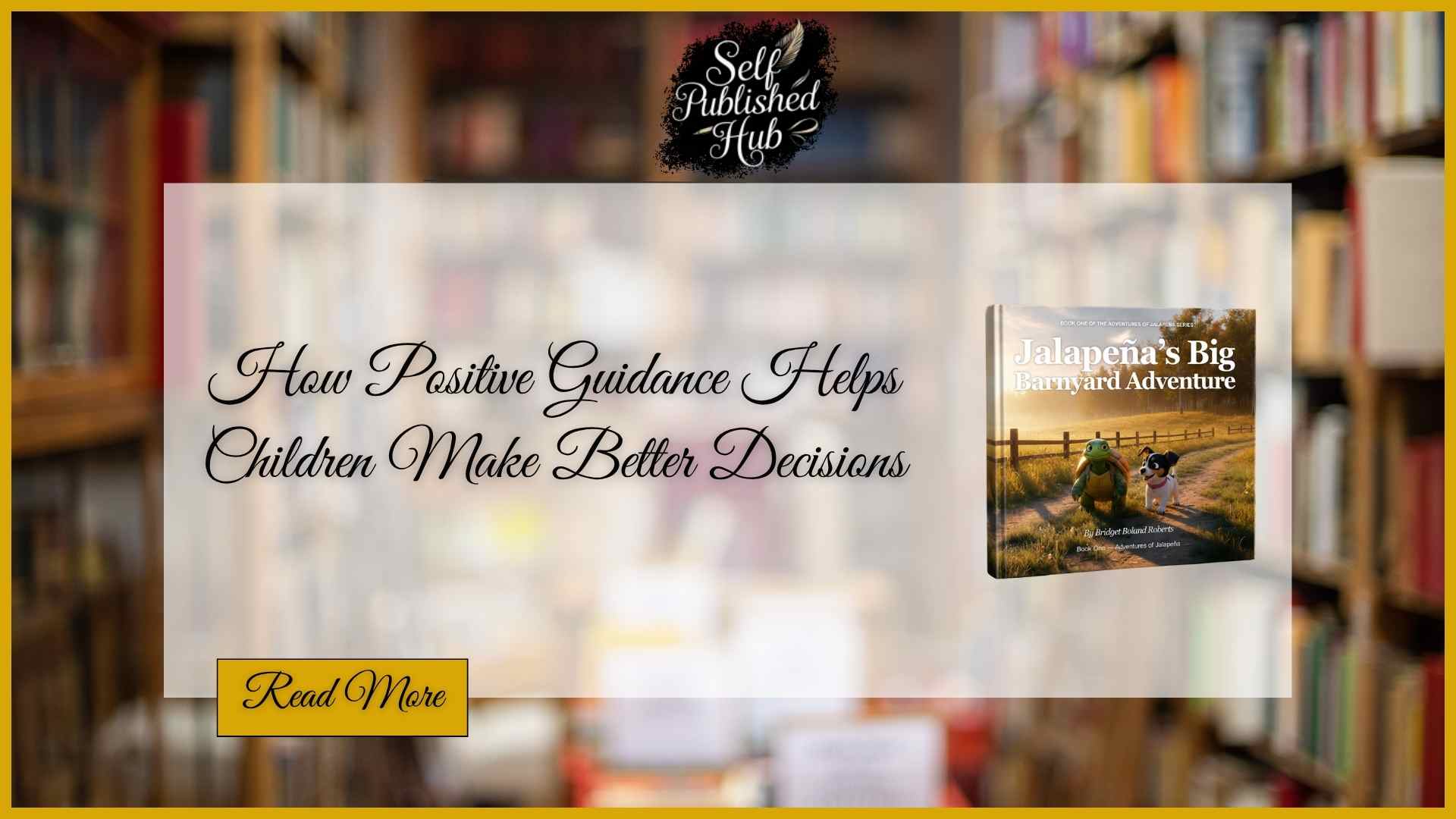
In Jalapeña’s Big Barnyard Adventure by Bridget Boland Roberts, Jalapeña receives gentle guidance from Dr. Roberts, who warns her that the world beyond the barnyard gate can be tricky. His warning comes from care and concern, not a desire to prevent her from enjoying life. Jalapeña does not understand this at first, and her curiosity leads her beyond the gate.
After facing danger, bad weather, and the fear of being lost, Jalapeña begins to understand why the warning mattered. Gandalf, the wise tortoise, continues that positive guidance by helping her slow down, stay calm, and follow a safer path home.
The story shows children that guidance is not meant to remove freedom. It helps them use freedom wisely. Through its warm characters and meaningful adventure, Jalapeña’s Big Barnyard Adventure offers families an engaging way to discuss safety, listening, responsibility, and thoughtful choices.
Positive guidance gives children more than rules. It gives them the tools to understand consequences, manage emotions, and make decisions with greater care.