When people think about trade, they often think of it as a fair exchange. One country sells goods, another buys them, and both sides benefit. But what happens when that exchange becomes one-sided? What happens when your money leaves your country and helps build the strength of a country that wants to outcompete you?
This is the reality the United States faces with its ongoing trade relationship with China. Each year, the U.S. sends hundreds of billions of dollars to China through purchases of goods and services. That money is not just used for business. It becomes a tool that China uses to increase its influence and control in ways that do not always align with American values.
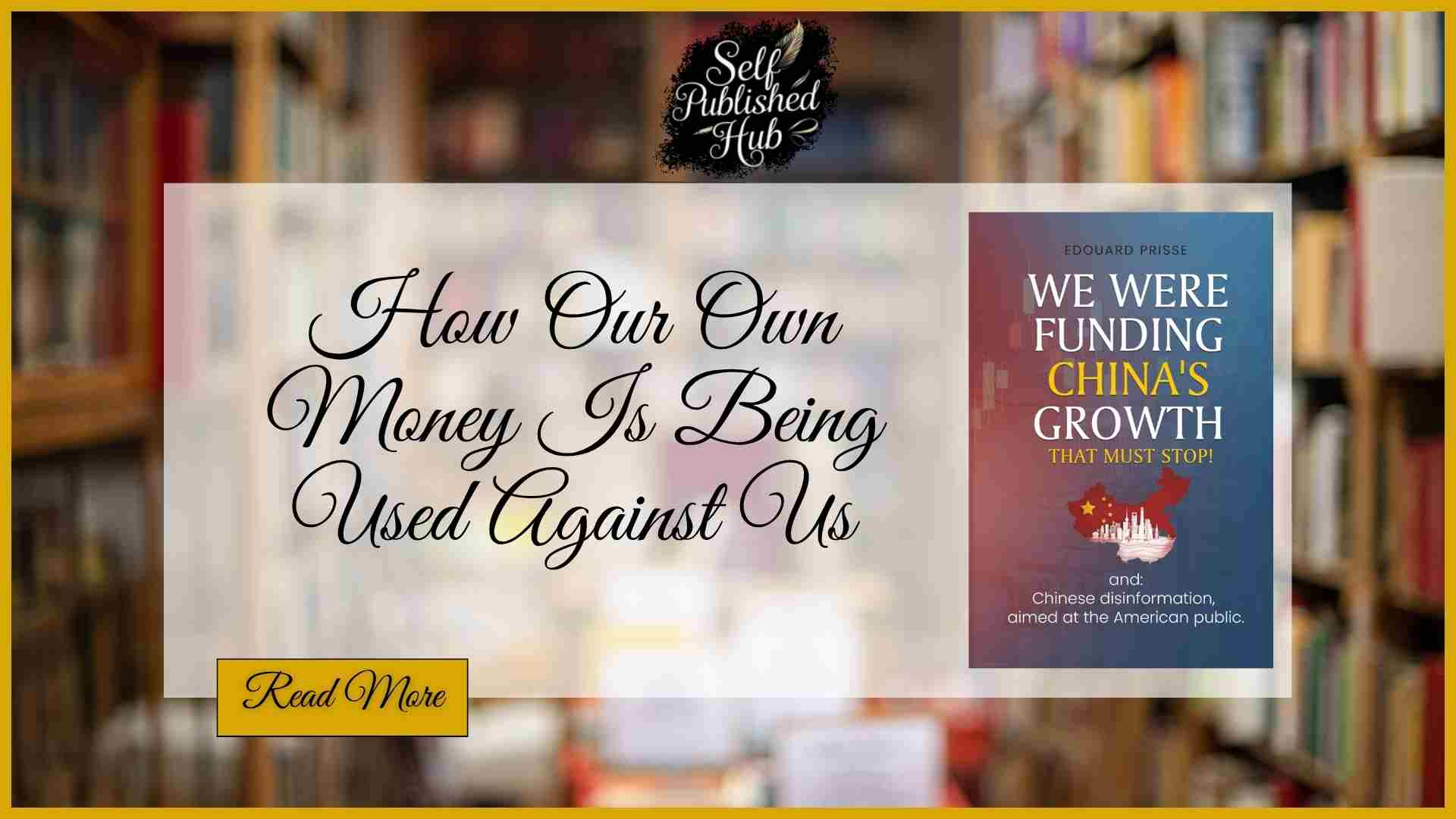
Edouard Prisse explores this in depth in his book We Are Funding China’s Growth That Must Stop!. He explains how trade surpluses give China the financial power to make long-term investments in key areas. These include transportation infrastructure in other countries, digital technology platforms, energy systems, and even military advancements.
In many cases, these investments give China lasting control. When they fund the construction of a port or power plant in another country, they often gain the right to operate or manage it. These agreements are not always transparent and can lead to long-term dependency. That means countries around the world may find themselves tied to China not by military force, but by financial obligation.
At the same time, China uses its trade advantage to support state-owned companies. These businesses are able to sell products at very low prices because they receive financial backing from the government. Competing companies in the U.S. or Europe are expected to survive without this kind of help. Over time, this creates an uneven playing field and pushes local businesses out of the market.
What makes this more troubling is that the money comes from everyday purchases. Americans buy goods made in China because they are often cheaper. But the long-term result is that the profits from these sales are reinvested in ways that challenge American economic strength and national security.
The situation is not hopeless, but it does require awareness. Prisse proposes a policy called Equal Trade. This idea is based on simple fairness. If we are going to buy goods from China, we should expect them to buy a similar value of goods from us. If they are not willing to do that, then we need to reduce what we buy until the relationship becomes balanced.
This is not about cutting off trade. It is about making trade work in both directions. A healthy economic relationship should benefit both countries. Right now, the benefits are one-sided. The money we spend is helping to build systems that compete with our own and, in some cases, threaten our ability to remain independent.
We cannot afford to ignore where our money goes. The choices we make as consumers, businesses, and policymakers have consequences. If we want to keep our economy strong, our industries competitive, and our country secure, we need to take control of how our money is used, which this book shows how to achieve.
Read We Are Funding China’s Growth That Must Stop! to learn how to stop working against our own future. https://www.amazon.com/dp/1967963045
We Were Funding China’s Growth That Must Stop! by Edouard Prisse is a sharp, well-researched examination of how decades of misguided free trade with China have fueled the rise of America’s greatest rival. Drawing on the economic insights of John Maynard Keynes, Prisse explains how the 2001 decision to welcome China into the global trade system created a one-sided relationship that drained Western industries while empowering Beijing’s authoritarian regime. The book not only exposes the dangers of this ongoing imbalance—job losses, weakened manufacturing, and growing geopolitical risks—but also offers a clear solution: shifting from “free trade” to “Equal Trade,” a value-balanced system that ensures reciprocity and protects democracy. Both a warning and a roadmap, this book is essential reading for policymakers, business leaders, economists, and citizens who care about safeguarding the future of free societies.