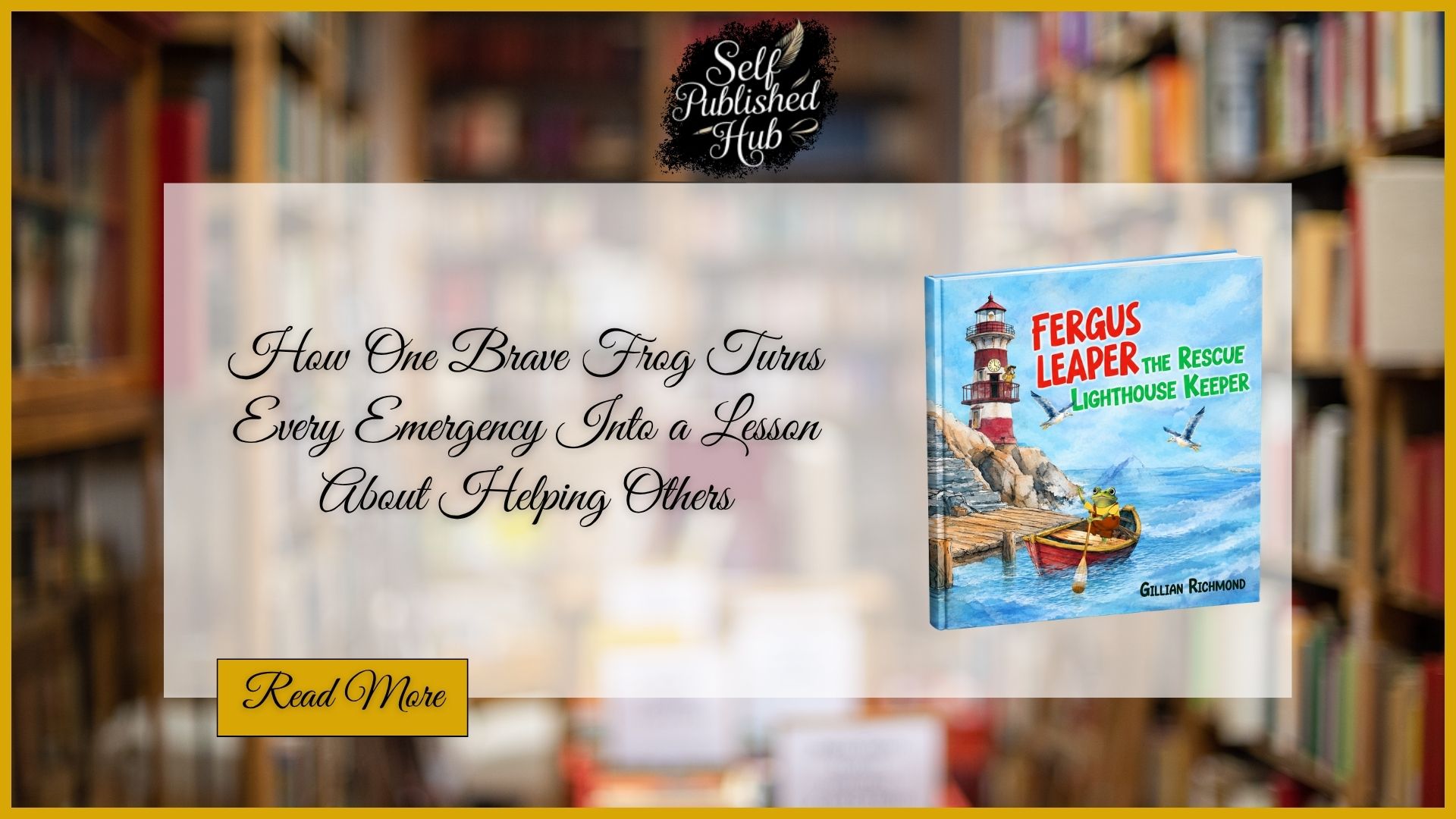
Children often learn best through stories that show values in action. Rather than simply telling young readers to be kind, brave or helpful, a good story lets them see what those qualities look like. In Fergus Leaper: The Rescue Lighthouse Keeper, author Gillian Richmond does exactly that through a series of sea rescues led by one determined little frog.
Fergus Leaper is no ordinary lighthouse keeper. He is a one-legged rescue frog who works alongside his best friend, Bernie the dog. Together, they watch the sea carefully from their lighthouse, always alert to changing weather and possible danger. From the beginning, Fergus is presented as capable, hardworking and ready to help whenever someone is in trouble.
Helping Begins With Paying Attention
The first lesson comes before Fergus even enters the water. Bernie spots a lonely dog drifting away from shore in a boat without a life vest, sail or spare oar. The situation quickly becomes serious as the wind strengthens and the waves continue to crash.
This moment shows young readers that helping others often starts with noticing. Fergus and Bernie are not distracted or careless. They are paying attention and because they are watching closely, they are able to respond when someone needs them.
Kindness Is More Than a Rescue
Fergus does not rush out unprepared. He takes a blanket, tea and a warm coat with him before rowing through the worsening conditions. When he reaches the frightened dog, he gives her those comforts and helps her feel safer after the ordeal.
That detail adds something important to the story. Helping is not only about solving the immediate problem. It can also mean thinking about what someone may need afterward.
For children, this is a simple but meaningful example of compassion. Fergus does not stop once the dog is no longer drifting. He cares about how she feels too.
Every Emergency Calls for a Different Kind of Help
Later, Bernie spots a cat and a goat whose fishing boat is moving dangerously close to the rocks. Once again, Fergus responds, but this rescue requires a different solution. He rows out with a box and pulls out an inflatable raft to bring them to safety.
This part of the story shows that helping others may require problem-solving. There is no single answer for every situation. Fergus adapts, uses the right equipment and keeps working until the animals are safe.
Afterward, he even makes tea for the rescued pair.
Teamwork Makes Helping Stronger
The final major rescue brings Fergus and Bernie together in an even bigger challenge. Bernie spots a humpback whale trapped by a huge net around its tail. This time, both friends head out and work quickly to cut the net away, freeing the whale at last.
Here, the lesson expands from individual bravery to teamwork. Fergus may be the central hero, but Bernie is essential too. She watches, sounds the alarm and joins the rescue when needed.
Young readers can see that helping others does not always have to be done alone.
A Small Hero With a Big Example
One of the most memorable things about Fergus is that he has one leg, yet the story never defines him by what he lacks. He rows through rough water, leaps into boats, uses rescue equipment and repeatedly places the needs of others first.
That makes him an especially positive character for children. He shows that courage, usefulness and kindness are not determined by appearance or physical difference.
By the end of Fergus Leaper: The Rescue Lighthouse Keeper, Fergus and Bernie have helped a dog, a cat, a goat and a trapped whale before finally returning to the lighthouse for toast, rest and a hot mug of tea.
Through every emergency, Gillian Richmond turns adventure into a gentle lesson: notice when someone needs help, act with courage, think carefully, work together and always lead with kindness.
Discover Fergus and Bernie’s heartwarming rescue adventures in Fergus Leaper: The Rescue Lighthouse Keeper by Gillian Richmond, available now on Amazon.
Read the book on Amazon: https://a.co/d/0ednpVIj