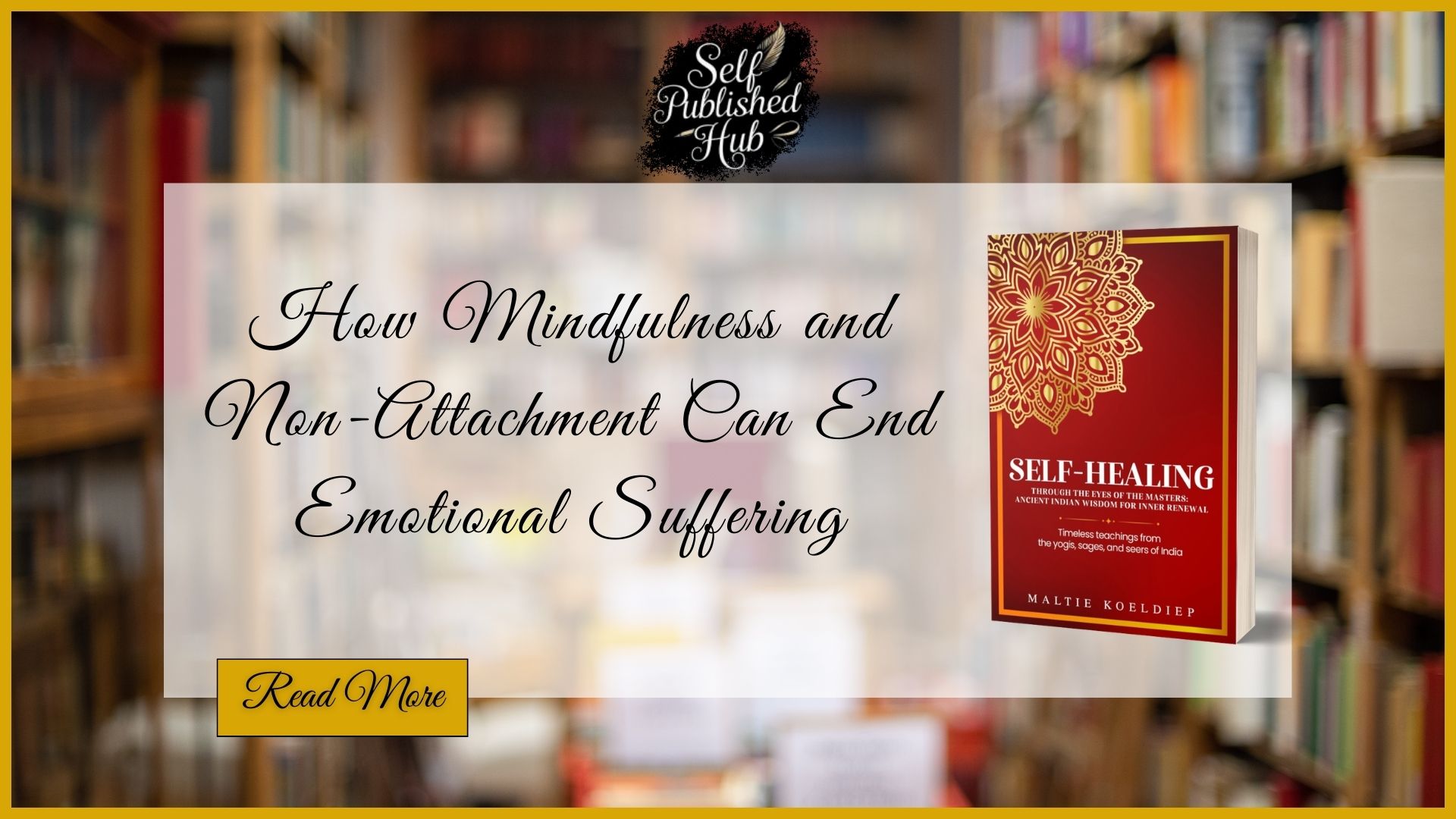
Emotional suffering often feels unavoidable. Worry about the future, regret about the past, attachment to outcomes, and fear of loss can dominate the mind. In Self-Healing Through the Eyes of the Masters: Ancient Indian Wisdom for Inner Renewal by Maltie Koeldiep, the teachings of the Buddha are presented as a powerful response to this inner turbulence. Through mindfulness and non-attachment, emotional suffering can be understood at its root and gradually released.
The Buddha began with a simple but profound observation: suffering exists. Life includes disappointment, uncertainty, aging, loss, and change. Emotional pain arises not only from external events but from the mind’s reaction to them. We want experiences to last when they are pleasant. We want them to disappear when they are uncomfortable. This constant resistance creates tension. The problem is not always the event itself, but the craving that it should be different.
Mindfulness directly addresses this pattern. Mindfulness is the disciplined practice of paying attention to the present moment without judgment. Instead of becoming entangled in thoughts, we observe them. Instead of suppressing emotions, we acknowledge them. When sadness appears, mindfulness notices sadness. When anger arises, mindfulness recognizes anger. This shift from identification to observation is transformative.
Most emotional suffering intensifies because we merge with our thoughts. A single worry becomes a narrative. A passing criticism becomes a personal identity. Mindfulness interrupts this chain. It creates space between awareness and mental activity. In that space, clarity grows. The mind no longer reacts automatically. It becomes steady.
For example, when anxiety surfaces, the untrained mind might say, I am anxious, something is wrong, this will not end. Mindfulness reframes the experience as, Anxiety is present. It is being observed. It will change. This subtle adjustment reduces fear. The emotion is no longer an enemy to defeat but a phenomenon to understand.
Non attachment complements mindfulness. It does not mean indifference or emotional coldness. Rather, it means releasing the compulsive need to control outcomes, people, or circumstances. Emotional suffering frequently arises from clinging. We cling to relationships, expectations, identities, and achievements. When reality does not match our attachment, distress follows.
Non attachment teaches flexibility. It acknowledges that everything changes. Relationships evolve. Situations shift. Success rises and falls. When we accept impermanence as a natural law, we resist less. Emotional resilience increases because our sense of stability no longer depends entirely on external conditions.
The Buddha described craving as a central cause of suffering. Craving includes the desire for pleasure to continue and the desire for discomfort to disappear immediately. Both forms create agitation. When craving softens, peace expands. Mindfulness reveals craving in action. Non attachment weakens its grip.
Together, these practices cultivate equanimity. Equanimity is not emotional numbness. It is balanced awareness. Joy is experienced without grasping. Pain is experienced without collapse. The mind remains steady in both gain and loss. This steadiness protects against extreme swings of emotional turmoil.
In practical terms, mindfulness can be developed through simple exercises. Focus on the breath for several minutes. Observe sensations in the body. Notice thoughts without following them. When the mind wanders, gently return attention to the present. Over time, this strengthens mental discipline.
Non attachment can be practiced by questioning expectations. Ask, Am I holding too tightly to a particular result? Can I allow this situation to unfold without forcing it? Can I care deeply without trying to control everything? These reflections reduce internal pressure.
Emotional suffering does not disappear instantly. However, as awareness deepens, reactions become less automatic. The mind learns that feelings rise and fall like waves. They do not define the Self. With sustained practice, emotional storms lose intensity.
Mindfulness provides clarity. Non attachment provides freedom. Together they offer a path beyond chronic emotional suffering. Rather than fighting the mind, these teachings train it. Rather than escaping discomfort, they illuminate it. Through disciplined awareness and gentle release, peace becomes less dependent on circumstance and more rooted in understanding.
Read this book, available on Amazon: https://www.amazon.com/dp/1971228133/.