Throughout modern history, political leaders have relied on armies, economies and institutions to maintain influence. Yet Fidel Castro understood something equally powerful: ideas themselves could become political weapons. For Fidel, revolutions were not won by force alone. They were sustained through ideology, education, communication and the ability to shape public consciousness.
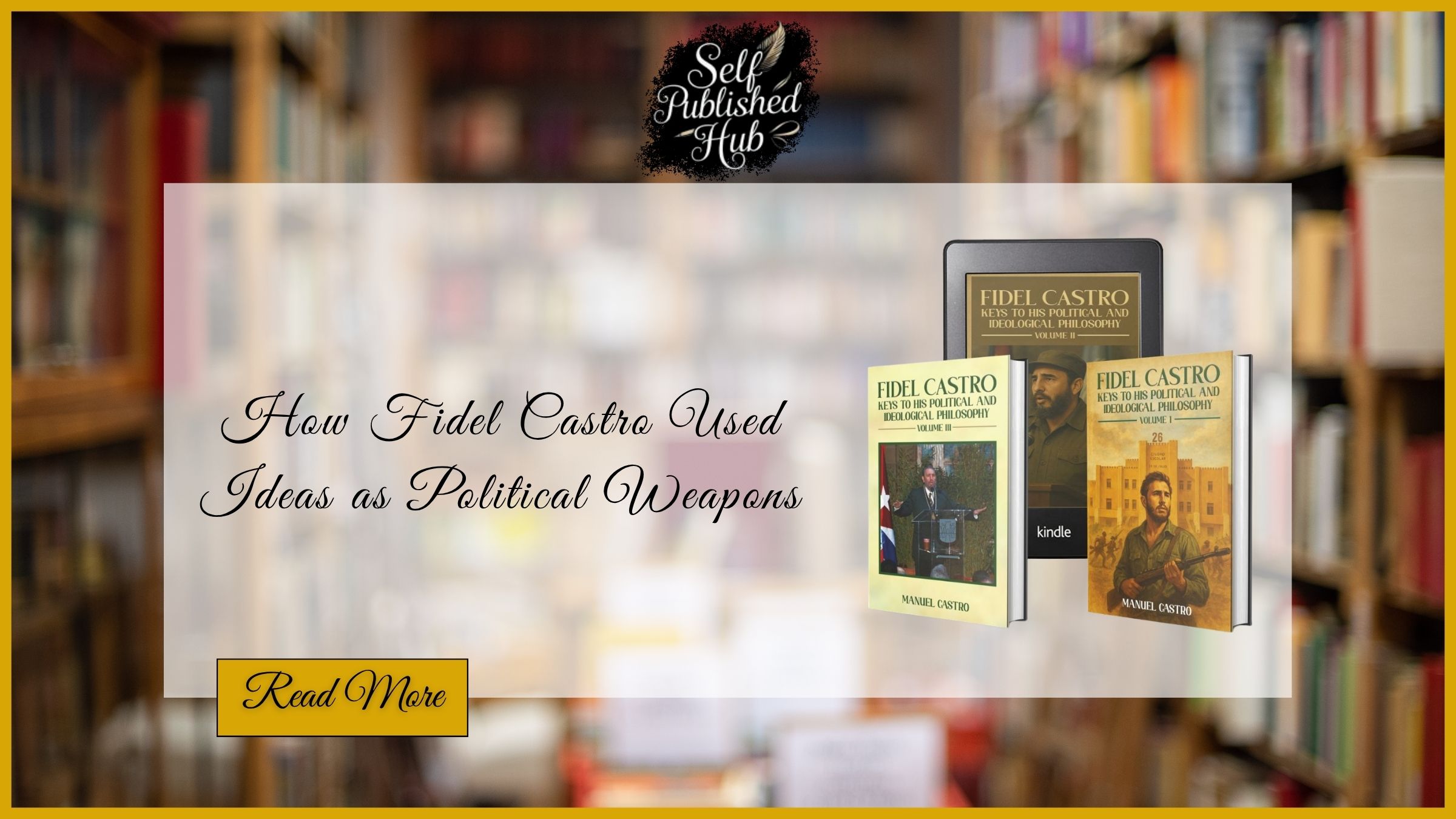
This fascinating dimension of Fidel Castro’s leadership is explored in extraordinary depth in Fidel Castro: Keys to His Political and Ideological Philosophy (Volume I), Fidel Castro: Keys to His Political and Ideological Philosophy (Volume II) and Fidel Castro: Keys to His Political and Ideological Philosophy (Volume III) by Manuel A. Castro. Together, these volumes provide an ambitious study of the political philosophy, revolutionary strategy and ideological framework that shaped Fidel Castro’s influence both within Cuba and across the world.
Rather than presenting Fidel solely as a historical figure, Manuel Castro examines him as an ideological strategist who understood the transformative power of political ideas. Across hundreds of themes and conceptual categories, the trilogy reveals how Fidel used speeches, education, historical narratives and revolutionary symbolism to mobilize society and strengthen political unity.
One of the most compelling aspects of the books is their focus on rhetoric as a form of political power. Fidel Castro’s speeches were not simple public addresses designed for short-term popularity. They were carefully constructed ideological arguments intended to educate citizens, reinforce revolutionary values and sustain national morale during moments of uncertainty and external pressure.
The trilogy demonstrates how Fidel used language to frame political struggles as moral struggles. Concepts such as sovereignty, dignity, sacrifice, social justice and anti-imperialism appeared repeatedly throughout his speeches. By connecting political goals to ethical and historical narratives, Fidel transformed abstract ideas into emotional and collective causes capable of inspiring mass participation.
Education also played a central role in Fidel Castro’s strategy. Manuel Castro’s trilogy explores how Fidel viewed political consciousness as essential to revolutionary survival. He believed citizens needed to understand history, economics and ideology in order to defend national independence and resist external influence. In this sense, education became more than academic instruction; it became a revolutionary tool.
The books further reveal how Fidel used historical memory as a political weapon. He consistently linked the Cuban Revolution to earlier struggles for national liberation, portraying revolutionary movements as part of a larger historical mission. By connecting past sacrifices to present political goals, Fidel created a sense of continuity that strengthened national identity and collective purpose.
Another important theme explored throughout the trilogy is the international dimension of Fidel’s ideological influence. His speeches addressed issues far beyond Cuba, including colonialism, globalization, economic inequality and the relationship between powerful and developing nations. These ideas resonated throughout Latin America, Africa and other parts of the developing world, helping Fidel become one of the most influential political voices of the Cold War era.
What makes Fidel Castro: Keys to His Political and Ideological Philosophy especially valuable is its organization and scope. Rather than focusing only on historical events, Manuel Castro categorizes Fidel’s thought into major themes, including revolution, ethics, nationalism, democracy, media, globalization, culture, education and leadership. This structure allows readers to study the ideological foundations behind Fidel Castro’s political strategy in a systematic and accessible way.
For historians, political science students, researchers, educators and readers interested in revolutionary movements, the trilogy offers a unique opportunity to examine how ideas can shape societies, influence political behavior and sustain movements across generations.
In today’s world of information wars, political polarization and global ideological conflict, Fidel Castro’s understanding of communication and political consciousness feels more relevant than ever. Manuel Castro’s trilogy demonstrates that Fidel did not view ideas as secondary to politics. He viewed them as the very engine of political power itself.