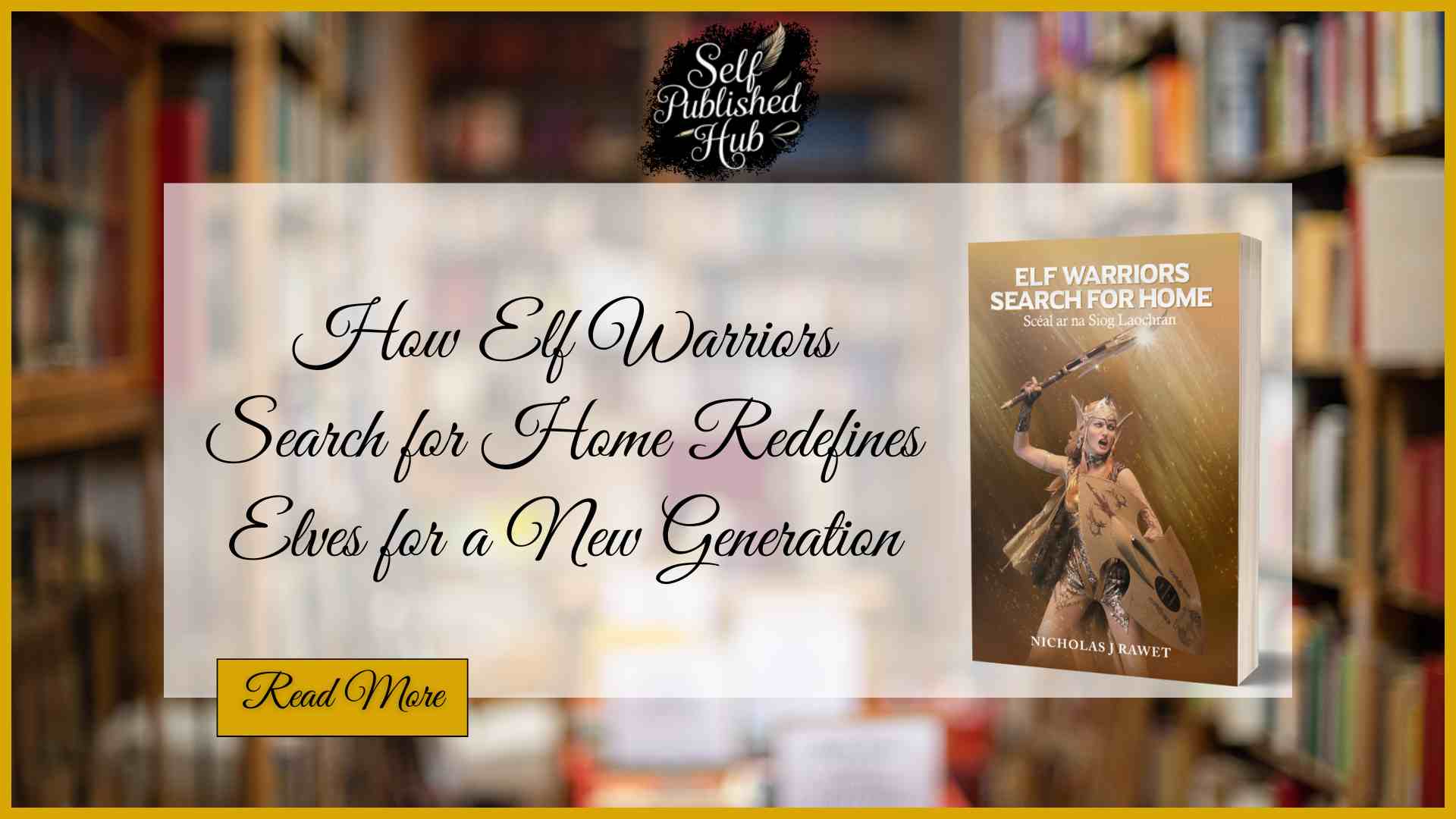
Elves have long been presented as timeless, graceful, and untouched by the harsher realities of survival. In many classic fantasy stories, they stand apart from the struggle, watching the world change while remaining largely unchanged themselves. Elf Warriors Search for Home: Scéal ar na Siog Laochran by Nicholas J. Rawet begins by breaking that expectation. From its opening premise, the book places elves at the center of collapse, forcing them to face loss, uncertainty, and difficult choices that feel immediate and human.
Traditional fantasy elves are often defined by stability. They live in ancient forests or shining cities, supported by deep magic and long memory. Their societies are slow to change, and conflict rarely poses a threat to their existence as a whole. In contrast, the Siogach (elven) in Elf Warriors Search for Home are a displaced people. Their homeworld is failing, and survival is no longer guaranteed. This shift alone reshapes how elves function in the story. They are not guardians of a fading age. They are refugees.
One of the clearest ways the book redefines elves is through the Siogach caste system. Instead of a single unified elven culture, the Siogach are divided into distinct groups, each with specific abilities, limits, and roles. These differences create tension rather than harmony. When resources are scarce and the environment is hostile, each group must decide whether loyalty lies with their own kind or with the survival of the whole. This structure contrasts sharply with traditional elves, who often act with shared purpose and near-perfect unity.
Survival pressure is another key difference. In many fantasy stories, elves are skilled warriors or powerful mages who rarely struggle to endure. In Elf Warriors Search for Home, survival is uncertain and constant. Food, shelter, energy, and safety must be earned, often through compromise and sacrifice. The elves are not portrayed as superior beings who easily adapt to their surroundings. They make mistakes. They argue. They fear what comes next. These pressures ground the Siogach in a reality that feels closer to lived experience than myth.
Moral complexity further separates the Siogach from traditional elven portrayals. There are no simple answers to the choices they face. Queen Kvinna, the central leader, must balance authority with empathy, tradition with change, and strength with restraint. Her decisions affect not only her people but also the Bodharen who depend on the elves for survival and the elves rely on them to maintain their population. This shared fate forces ethical questions that go beyond good versus evil. What must be preserved, and what can be left behind, becomes a recurring concern.
By placing elves in a position of vulnerability, Nicholas J Rawet creates a version of the species that feels relevant to modern readers. The Siogach are defined not by perfection, but by resilience and adaptation. They are shaped by loss and rebuilt through cooperation.
For readers who enjoy fantasy that explores culture, survival, and leadership without relying on familiar tropes, Elf Warriors Search for Home by Nicholas J. Rawet offers a thoughtful reimagining of what elves can be. It is well worth reading for anyone interested in seeing epic fantasy approach its most familiar beings from a new and grounded perspective.
Available on Amazon, read now: https://www.amazon.co.uk/dp/1971002615/.