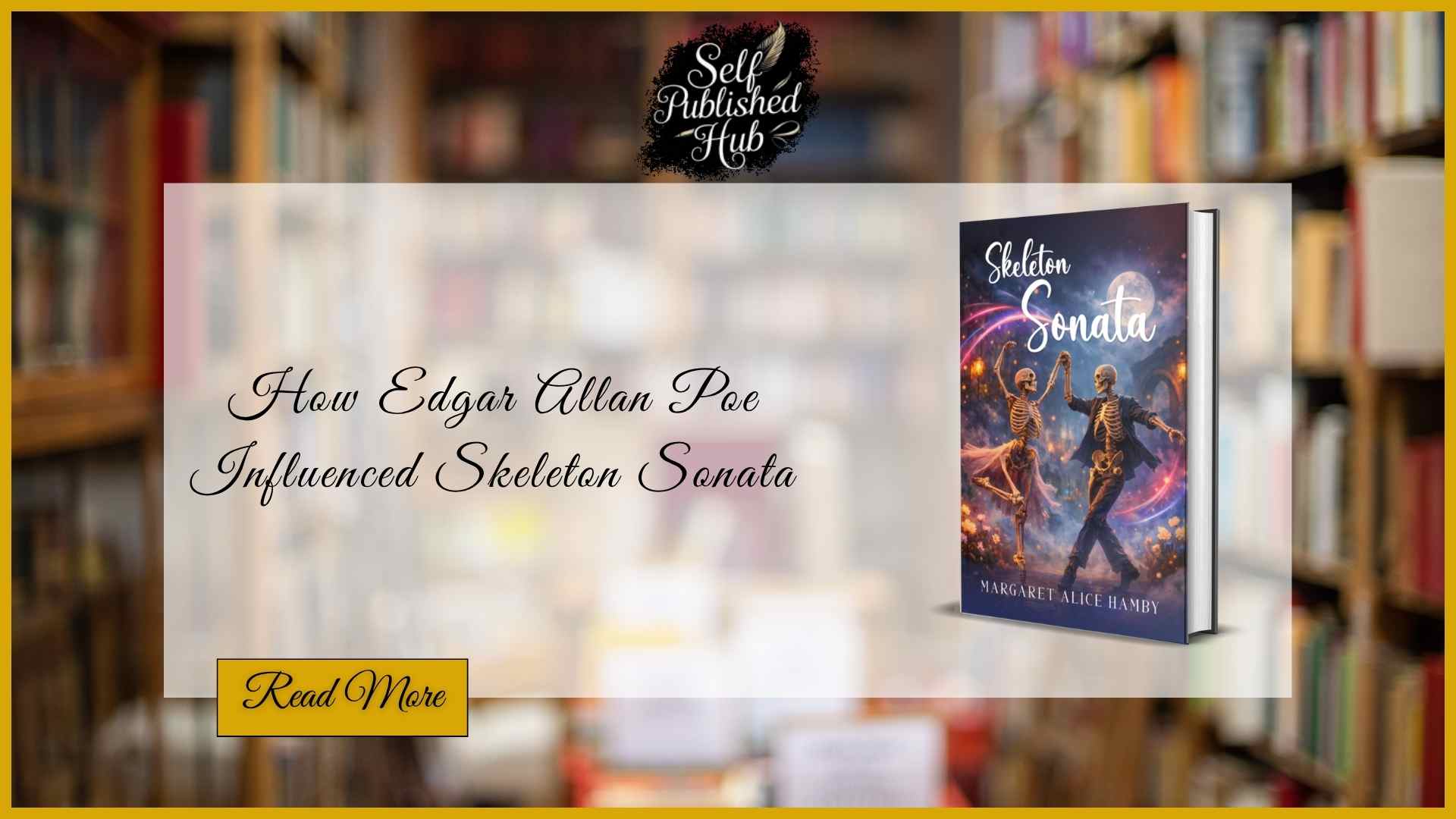
Margaret A. Hamby’s Skeleton Sonata carries the unmistakable pulse of gothic poetry, echoing the shadowed corridors, haunted minds, and mournful beauty often associated with Edgar Allan Poe. Yet this collection does not imitate Poe. It takes that tradition and reshapes it through a modern, personal, and emotionally charged voice.
Like Poe, Hamby understands that darkness is not only about death, ghosts, or graves. It is about atmosphere. It is about the feeling that something unseen waits just beyond the edge of ordinary life. In Skeleton Sonata, that feeling moves through poems filled with bones, blood, monsters, grief, madness, memory, and fragile hope. The result is a collection that feels eerie, theatrical, and strangely intimate.
Poe’s influence can be felt in Hamby’s use of musicality. The title itself, Skeleton Sonata, suggests rhythm, movement, and a strange dance between life and death. Many poems carry a chant like quality, using repetition, rhyme, and sharp imagery to create a haunting effect. The poems do not simply describe fear. They make the reader feel its beat.
Another Poe like element is the focus on the troubled mind. Hamby often writes from places of anxiety, emotional fracture, obsession, and inner conflict. Her poems explore what happens when the mind becomes a haunted house of its own. This psychological darkness gives the book depth beyond surface horror. The monsters are not always outside the door. Sometimes they live in memory, illness, grief, or the self.
Still, Skeleton Sonata has its own distinctive charm. Hamby blends the grim with flashes of whimsy, humour, and unexpected playfulness. That contrast makes the collection memorable. One moment may feel gothic and graveyard cold, while another carries a strange spark of mischief. This balance gives the book a voice that is dark without becoming lifeless.
For readers who love Poe, Skeleton Sonata offers familiar pleasures: shadowed imagery, musical lines, mortality, madness, and beauty wrapped in dread. For readers new to gothic poetry, it offers an accessible doorway into the genre through modern language and raw emotional honesty.
Margaret A. Hamby’s Skeleton Sonata is a strong choice for fans of dark poetry, horror inspired verse, emotional writing, and gothic imagination. It invites readers to step into a world where skeletons dance, shadows speak, and every poem carries the echo of something buried but not forgotten.