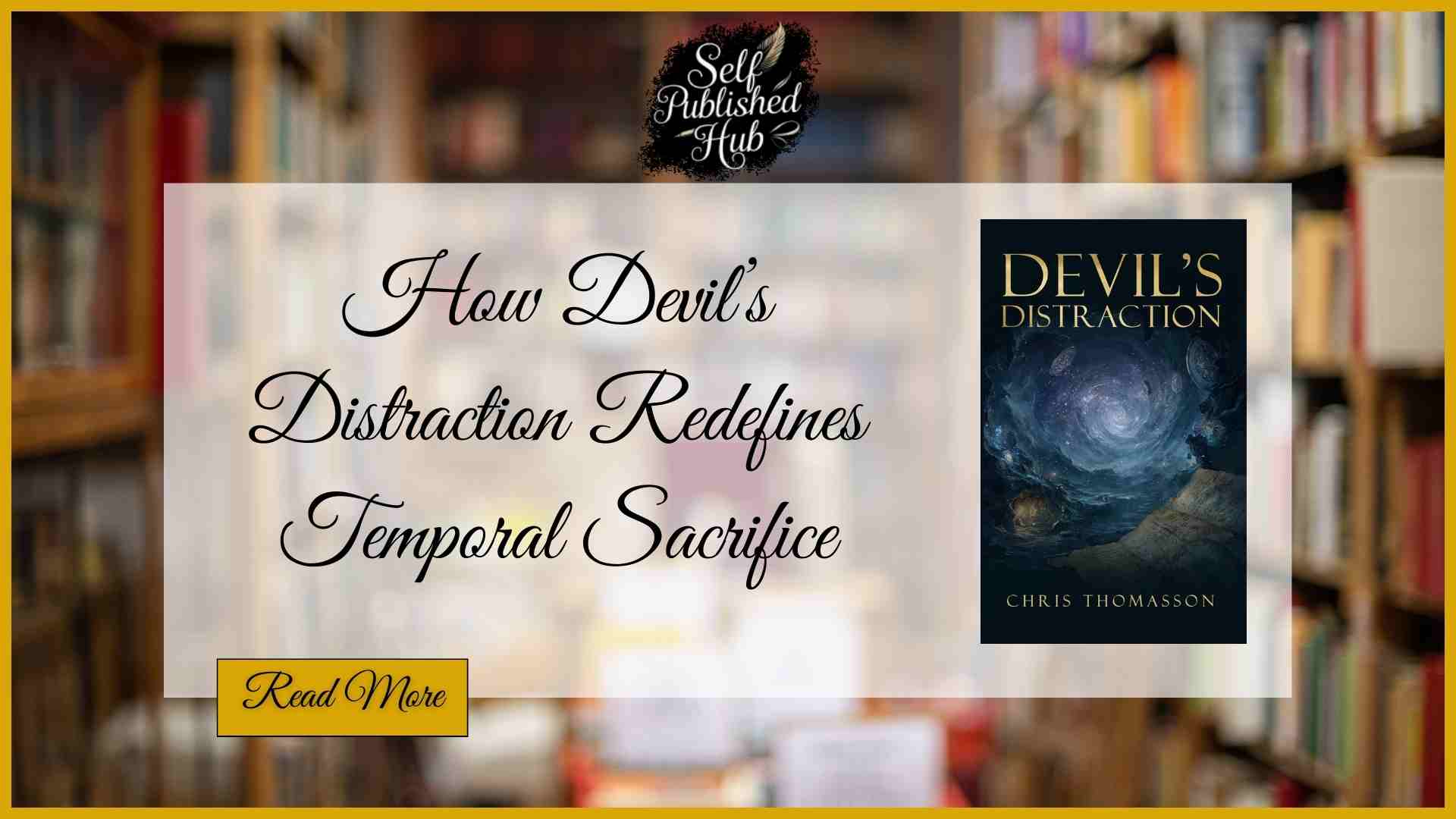
Time travel stories often focus on spectacle. Portals open, timelines bend, and characters jump between moments with surprising ease. Devil’s Distraction by Chris Thomasson takes a very different path. Time in this novel is not a playground. It is a burden. Every step backward carries weight, and every choice leaves a mark that cannot be undone.
In Devil’s Distraction, the past is not presented as something that can be reshaped freely. It comes with overbearing consequences. When Jack travels backward, he does not gain power over events. Instead, he loses certainty. He knows that one wrong action could erase not only his future, but his very existence.
This approach reframes time travel as a moral responsibility. Jack is forced to act with composure, even when he desperately wants to intervene. Seeing loved ones, witnessing suffering, and knowing what is coming does not give him permission to change everything. Often, it means doing nothing at all.
His silence becomes its own form of sacrifice.
The novel does not treat destiny as something reassuring. Prophecies exist, but they do not offer safety or clarity. Jack is told that certain events must happen, yet he is never told how much they will damage him emotionally.
That uncertainty makes every decision heavier. When destiny removes the illusion of choice, sacrifice becomes internal rather than heroic. The reader is left asking whether accepting fate is braver than fighting it.
Jack’s greatest sacrifices are not moments of loss, but moments where he chooses to continue, knowing the outcome will hurt. He carries knowledge that others do not, and that knowledge isolates him. The story makes it clear that knowing the future does not protect you from pain. In many cases, it deepens it.
By removing the safety net of reversal, the novel gives consequences real meaning. Every action feels final, even when time itself is not linear.
Rather than functioning as a device, time in this story behaves like a living presence. It resists, watches, and reacts. Jack is not bending time to his will. He is negotiating with it, often from a position of weakness.
This perspective changes how sacrifice is perceived. Jack does not give something up once. He gives it up repeatedly. Comfort, certainty, and connection are stripped away layer by layer. The sacrifice is ongoing, not momentary.
That is what makes Devil’s Distraction emotionally effective because the book understands that true sacrifice is rarely clean or complete. Instead, it lingers. By treating time as unforgiving and sacrifice as cumulative, Devil’s Distraction steps away from familiar tropes. It asks the reader to sit with dismantled thoughts rather than fast-paced lighthearted feelings after reading it.
The result is a story that feels human at its core, where time travel becomes less about changing history and more about surviving it. Sacrifice is not about saving the world in one grand act. It is about choosing to carry the cost, even when no one else will ever know.
Available on Amazon: https://www.amazon.com/Devils-Distraction-Chris-Thomasson-ebook/dp/B0G22H9S8X/