Grief often leaves us surrounded by silence and stuff. Closets full of clothes that still smell like the person we lost. Drawers filled with handwritten notes, photographs, and half-forgotten mementos. Every object becomes a whisper of what once was, and touching those items can feel like reopening a wound. But sometimes, the very act of sorting through those things, slowly, tenderly, and with intention, becomes the first step toward healing.
Decluttering is not only about creating space in our homes; it’s also about creating space within ourselves. When we begin to let go of the physical clutter that ties us to the past, we start to make emotional room for acceptance and peace. It’s not a task to rush through. It’s an act of remembrance and release, one that invites us to process grief in small, manageable doses.
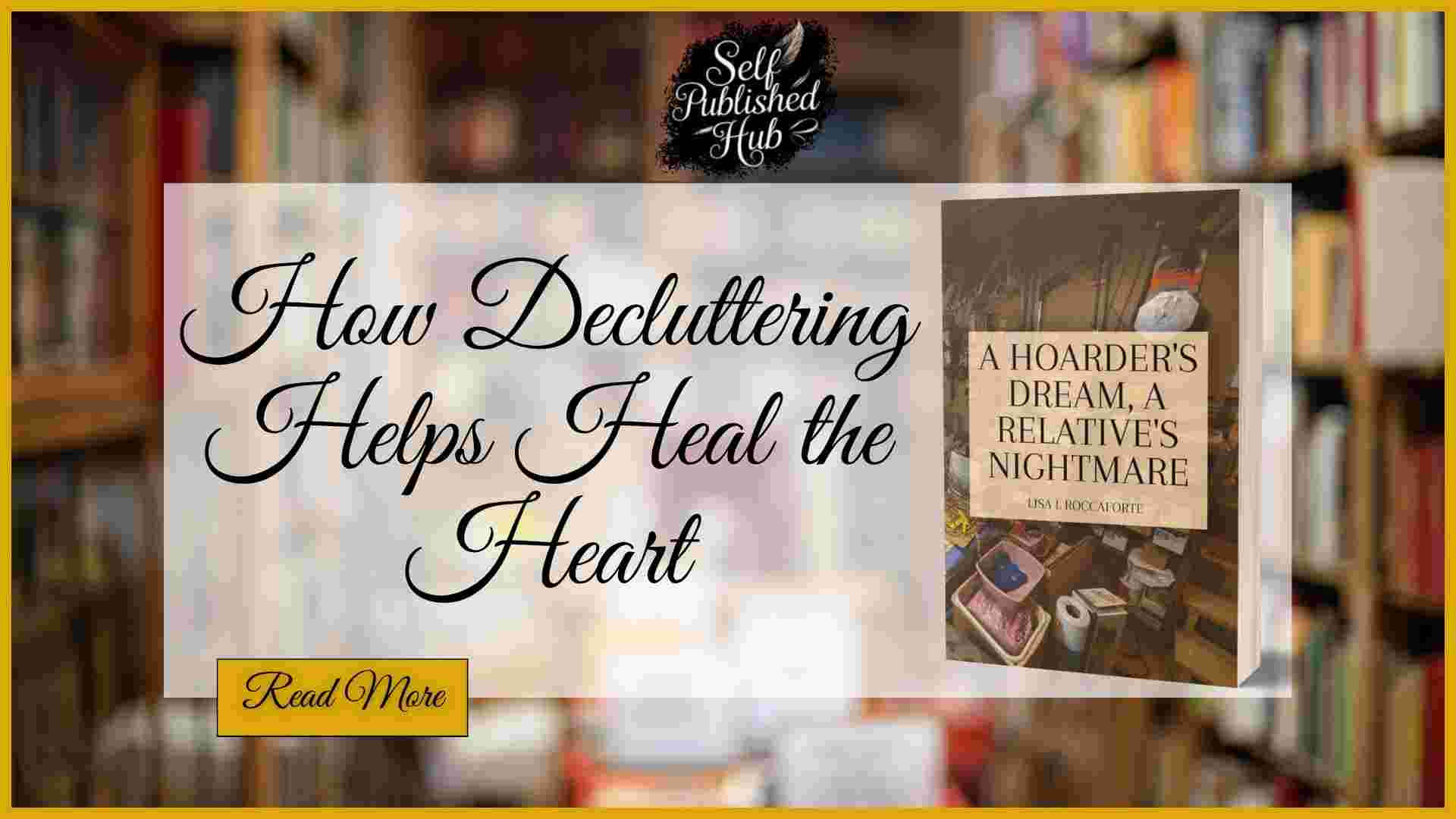
In A Hoarder’s Dream: A Relative’s Nightmare, author Lisa L. Roccaforte beautifully captures how the process of cleaning a loved one’s estate can evolve from painful obligation to profound therapy. After her Uncle Jimmy passed away, Lisa expected a straightforward cleanout. Instead, she embarked on an 80-day odyssey through homes, storage units, garages, and RVs, each packed to the brim with evidence of a life that had been fully lived.
What she found was more than clutter. Every drawer, every box told a story. A coffee can filled with coins. A dresser hiding old photographs. A box of cranberry sauce is tucked away in a corner. At first, each discovery brought exhaustion and disbelief. But soon, something shifted. As Lisa began to understand the reasons behind her uncle’s hoarding, the loneliness after his wife’s death, the sentimentality attached to every “useful” thing, she found compassion, not frustration. Decluttering became a form of dialogue between the living and the departed.
That is what makes tidying after loss such a healing process. It allows us to face our emotions one memory at a time. It gives shape to grief, transforming it from something formless and heavy into moments we can hold, examine, and finally release. Each object we choose to keep or let go of becomes a decision about what we value, what we forgive, and what we’re ready to move beyond.
Lisa’s journey also reminds us that healing doesn’t happen all at once. There were moments of laughter amid tears, and small triumphs hidden in the monotony of cleaning. Every trash bag filled, every corner cleared, was a step toward closure. By the time the process ended, she hadn’t just organized her uncle’s belongings, she had made peace with his story and her own loss.
Decluttering, when done with love and patience, becomes less about what we throw away and more about what we rediscover: strength, gratitude, and emotional clarity. It teaches us that closure doesn’t mean forgetting; it means carrying forward what truly matters.
If you’ve ever faced the heartache of sorting through a loved one’s belongings, A Hoarder’s Dream: A Relative’s Nightmare is a story that will stay with you. Lisa L. Roccaforte reminds us that even in the messiest rooms, healing can take root, and that sometimes, clearing out the past is how we make space for peace.
Read her moving journey in, and discover how decluttering can become an unexpected path to healing the heart.
Available on Amazon: https://www.amazon.com/dp/B0FDT2BD34/.