Why do children sometimes hide the truth? It is not always about being mischievous or trying to get away with something. More often, children bend the truth because they fear disappointing someone they love, or they worry about the consequences of being honest. Understanding this helps us see honesty not as a fixed rule but as a skill that children can gradually learn through practice, reassurance, and guidance.

One of the most effective ways to help children develop this skill is through storytelling. Stories allow children to see situations play out in a safe space, where they can identify with characters, understand emotions, and reflect on choices. When a character in a story makes a mistake, children can step into their shoes and imagine how they might feel or what they might do differently. This reflective process plants the seeds of honesty, empathy, and accountability.
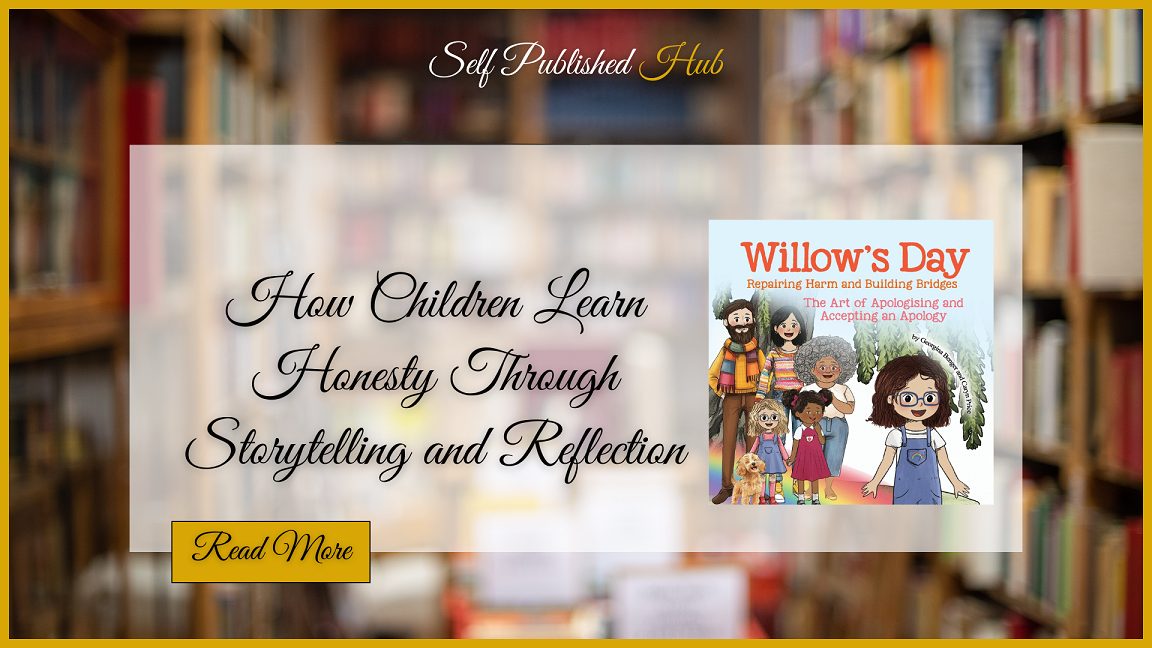
A clear example of this comes from the children’s book Willow’s Day Repairing Harm & Building Bridges: The Art of Apologising and Accepting an Apology by Georgina Benger and Caryn Price. In the story, Willow is praised by her mother for finishing all her broccoli at dinner. For a moment, she feels proud, but she quickly realises she has hidden the truth. She had actually given her broccoli to her sister. The weight of this secret becomes too heavy for Willow, and she blurts out the truth, bursting into tears. What follows is not punishment, but a gentle conversation. Her mother encourages her to reflect, apologise, and think about what she might do differently next time.
This moment in Willow’s day shows children that honesty does not mean perfection. It means learning to face uncomfortable truths, express them, and trust that love and understanding will remain. Willow’s reflection on why she lied and how to repair the situation teaches a valuable lesson: honesty grows when children feel safe enough to admit mistakes and are supported in finding better solutions.
Reflection is key here. When children are asked open questions such as “Why do you think you said that?” or “How did you feel after?” they begin to connect their choices with their emotions. Over time, this self-awareness helps them see that honesty brings relief, strengthens trust, and deepens relationships. It transforms honesty from something they are told to do into something they value themselves.
Stories, whether read aloud at bedtime or shared in the classroom, give children a mirror for their own experiences. They can identify with Willow’s guilt, feel the relief in her apology, and imagine how honesty could feel in their own lives. In this way, storytelling is more than entertainment. It is a powerful tool for teaching honesty as a skill that can be practised and strengthened.
Honesty is not about never making mistakes. It is about learning how to repair them. Through reflection, safe conversations, and stories like Willow’s Day, children discover that telling the truth is not something to fear but something that builds trust and connection. Parents, teachers, and caregivers can use these lessons to guide children towards honesty that lasts a lifetime.
If you want to know more about Willow, grab your copies from Amazon: https://www.amazon.com/dp/B0FMH45ZT3.