History remembers leaders through events, speeches and turning points. Yet to truly understand influential figures, we must go beyond timelines and headlines and ask a deeper question: What ideas shaped their actions? Few individuals invite that question more than Fidel Castro, one of the most influential and debated political leaders of the modern era. His role in global politics, revolutionary movements and ideological discussions continues to spark conversations decades later.
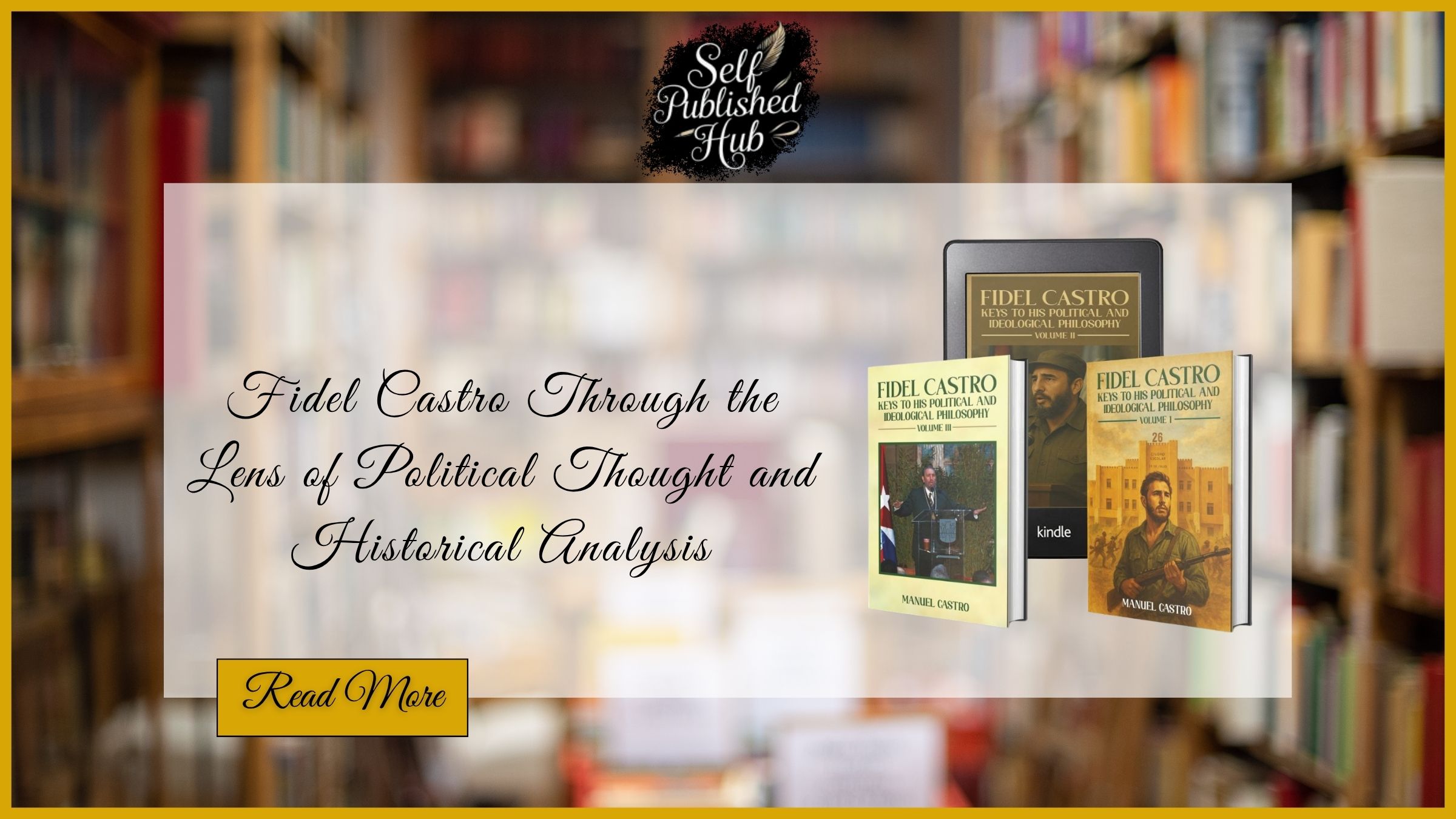
For readers looking to move beyond familiar narratives and explore the intellectual dimensions behind the leader, “Fidel Castro: Keys to His Political and Ideological Philosophy” Volumes I, II and III by Manuel Castro offer a compelling and deeply researched journey into political thought and historical analysis.
Many books about Fidel Castro focus primarily on historical events: the revolution, geopolitical conflicts or his leadership of Cuba. Manuel Castro’s trilogy takes a broader and more analytical approach. Rather than simply recounting events, these books seek to understand the principles, philosophical foundations and ideological structures that influenced Fidel’s worldview.
This distinction matters. Political figures are often remembered through outcomes, but understanding why decisions were made requires studying the ideas that drove them. Across the trilogy, Manuel Castro organizes Fidel’s speeches and concepts into thematic frameworks, exploring subjects such as revolution, sovereignty, social justice, education, leadership, nationalism and historical transformation.
What emerges is not merely the story of one leader, but the portrait of a political thinker whose ideas developed within a larger historical context.
The books also highlight an important reality: Fidel Castro’s political philosophy did not emerge in isolation. It evolved through historical struggles, revolutionary movements, international tensions and social transformations occurring throughout Latin America and beyond. Fidel Castro: Keys to His Political and Ideological Philosophy (Volume III), in particular, explores themes connected to Fidel’s legacy, historical relevance and influence on political and international thought.
Readers interested in political science and historical interpretation will appreciate how the trilogy bridges the gap between ideology and real-world events. Historical analysis becomes more meaningful when connected to the ideas that shape political action.
Another fascinating dimension of the collection is its examination of speeches as instruments of political power. Fidel’s public addresses served not only as communication tools but also as vehicles for education, mobilization and ideological formation. His speeches often became lessons in political identity, social values and collective purpose. Manuel Castro carefully studies these recurring themes, allowing readers to see patterns that may otherwise remain hidden beneath historical events.
Fidel Castro: Keys to His Political and Ideological Philosophy (Volume II) further expands the discussion through themes such as imperialism, capitalism, international relations, poverty and social systems. These topics help readers understand Fidel not only as a national figure but also as a participant in larger global debates about power, inequality and societal change.
What makes this trilogy especially valuable is that it does not demand agreement or ideological alignment. Instead, it encourages inquiry. Readers are invited to examine ideas critically, understand historical conditions and engage with political thought from a broader perspective.
Today, understanding history requires more than memorizing events. It requires understanding the philosophies and beliefs that shaped those events. Fidel Castro remains a figure whose influence extends across history, politics and ideology.
For readers, students, scholars and history enthusiasts seeking a deeper perspective, Manuel Castro’s three-volume collection provides an opportunity to explore Fidel Castro through a richer lens, one where political thought and historical analysis intersect to reveal the ideas behind the history.