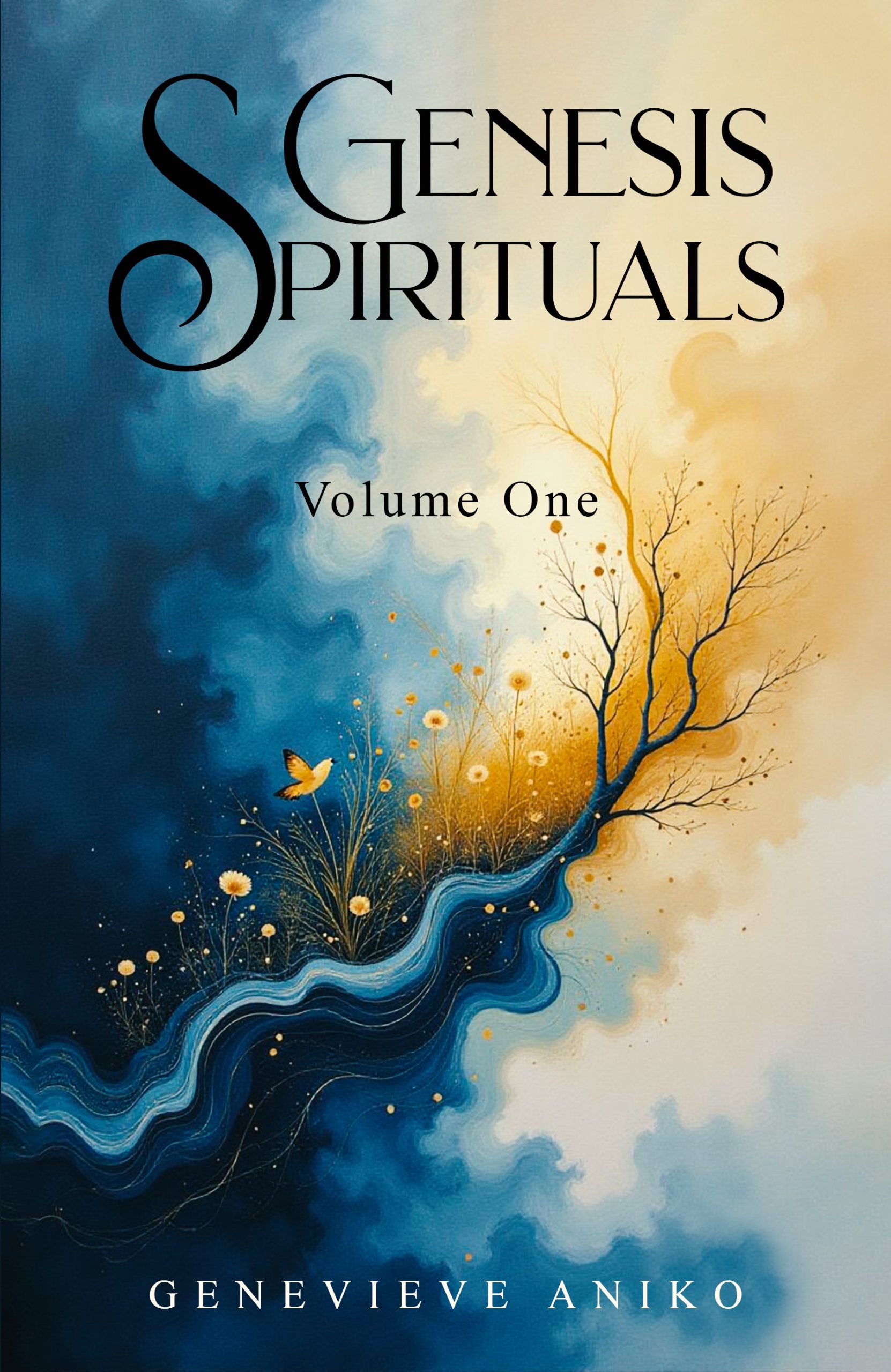
Genesis Spirituals by Genevieve Anikos is an amazing poetry collection that explores themes of identity, morality, and the quest for spiritual wholeness.
One poem, “Do We Need Permission?” emerges as a profound exploration of the intersection between faith, philosophy, and societal conflict. It tackles the tensions that arise when deeply held spiritual beliefs clash with the shifting values of modern secular society.
Through its layered verses, the poem challenges us to confront questions about morality, purpose, and the role of faith in a world increasingly defined by individualism and relativism.
The poem opens with a reflection on Paul’s letters to Timothy. This positions the biblical narrative as a foundation for understanding human nature and divine intervention, where Aniko writes, “Paul wrote to Timothy in an attempt to graft in, a reconfiguration of the natural human orientation.” Here, the reference underscores the struggle between human tendencies and spiritual discipline—which suggests that faith requires intentionality, a deliberate restructuring of life in accordance with divine principles.
This sets the stage for the erosion of spiritual values in a society that prioritizes personal autonomy over communal or divine accountability. The rhetorical question posed in the title—“Do We Need Permission?”—is as much an internal query as it is a challenge to external forces. Who grants permission for moral authority? Is it society, the self, or a higher power?
A recurring theme in the poem is the critique of moral relativism. Aniko observes, “It’s the theory of relativism working in the mind of secularism.” This line highlights how secular ideologies often blur the line between right and wrong and how they replace absolutes with subjective truths. This shift represents a dangerous departure from the anchoring principles of faith, creating a vacuum where spiritual and ethical guidance once resided.
Aniko further examines the implications of this relativism. Suggesting that it fosters a culture of superficiality—the poem critiques the rise of self-centered narratives in modern society, encapsulated in the line, “Brokering a society that worships the ‘selfie,’ reality TV and a culture of ‘look at me.’” This imagery paints a stark picture of a world obsessed with appearance and validation, disconnected from deeper spiritual truths.
The poem delves into the philosophical battle between Christian theology and secular ideologies. It positions them as competing frameworks for understanding the world. For example, Aniko’s use of scripture—“For God has not given us a spirit of fear, but of power and love and a sound mind” (2 Timothy 1:7)—reinforces the poem’s call for courage and clarity in the face of societal pressures.
Aniko contrasts the empowerment offered by faith with the confusion propagated by secular narratives. She writes, “Spending time focused on the process of persona justification… while the world wallows in depression,” which critiques the futility of constructing identities divorced from spiritual grounding and highlights the emotional and psychological toll of such endeavors.
In Do We Need Permission?, the church is presented as both a bastion of hope and a body at risk of losing its way. Aniko warns against reducing the gospel to mere ethics or political rhetoric, urging believers to remain rooted in biblical theology. The line, “It’s time to know what the church should say, so the foundations of the message don’t slip away,” underscores the need for vigilance in preserving the integrity of spiritual teachings amidst societal change.
A Call to Action?
With this final line, “We do not need permission to release people from oppression,” Aniko declares, positioning faith as an active force for liberation. This closing sentiment encapsulates the poem’s overarching message: that believers must reclaim their spiritual authority and act as agents of change in a world desperate for truth and hope.
In the end, Do We Need Permission? is a deeply introspective meditation on the challenges of navigating a world where moral and spiritual clarity often seem elusive. Aniko’s blend of biblical allusion, philosophical inquiry, and societal critique creates a poem that is both thought-provoking and empowering—which will help us to reflect on our own beliefs, question the sources of our moral compass, and embrace the transformative power of spiritual courage.
In an age of uncertainty, “Do We Need Permission?” and the entire collection of Genesis Spirituals stands as a beacon of conviction, urging us to rise above fear, embrace love and spirituality, and to live with a sound mind.
Get your copy on Amazon: https://www.amazon.com/dp/B0CF639XTG.