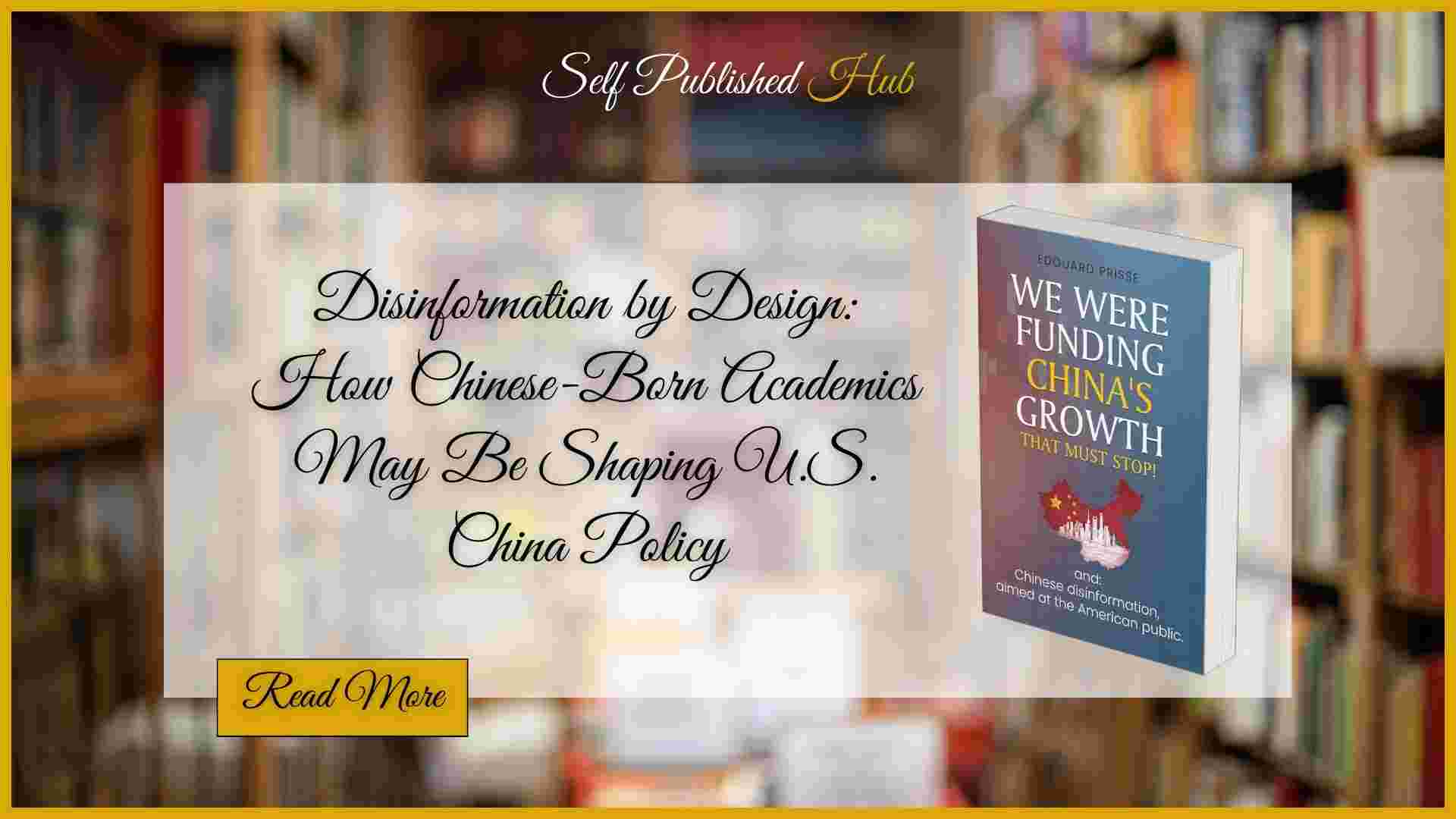
In the intellectual circles of Washington, D.C. and across America’s top universities, a subtle but deeply consequential influence is quietly shaping public understanding of China. According to Edouard Prisse’s compelling book, We Are Funding China’s Growth That Must Stop!, this influence is not accidental. It may be the result of a deliberate, well-camouflaged effort—a covert fifth column embedded within think tanks and academic institutions.
The term “fifth column” originally referred to secret sympathizers working inside a country to undermine it from within. Prisse applies this concept to a group of Chinese-born, now naturalized American scholars, analysts, and thought leaders. These individuals often hold prominent positions at respected institutions like the Brookings Institution, Foreign Affairs, and elite universities. While they are highly credentialed and often respected for their nuanced takes on U.S.-China relations, Prisse argues that a pattern emerges across their writings: a persistent underestimation of China’s growing threat, or a steady stream of narratives predicting Beijing’s impending collapse or Xi Jinping’s downfall.
What makes this argument so controversial—and powerful—is that it challenges the very trust Americans place in academic expertise. Prisse does not suggest that all Chinese-born scholars in America are compromised. Rather, he raises the uncomfortable possibility that some are either under silent pressure from the Chinese Communist Party, due to family ties back home, or are operating with deliberate intent to manipulate public opinion in favor of Beijing.
He documents how, instead of calling for economic decoupling or exposing China’s strategic accumulation of power, many of these scholars focus on topics that divert attention from the core economic danger. They may, for example, express criticism of China’s treatment of Uyghurs or comment on judicial flaws, but when it comes to the trade imbalance or the strategic threat of Chinese enrichment, they downplay it or suggest it’s overblown.
This subtle redirection is what makes the influence so effective. It does not feel like propaganda. It comes wrapped in footnotes, policy jargon, and academic polish. But Prisse urges readers to look deeper. The consistent thread across this body of work is that action against China is either unnecessary or too costly, and that cooperation, not confrontation, is the wiser path.
What makes this especially dangerous is the access these individuals have. They shape briefing papers for policymakers. They teach future diplomats. They are quoted in the press as “experts” and invited to speak on panels that influence U.S. foreign policy. In this environment, the risk is not just skewed debate—it is policy paralysis.
Prisse stops short of naming individuals beyond citing examples from Brookings and other institutions, but he calls on Americans to develop critical awareness. We must stop assuming that expertise equals neutrality, especially when the subject is a strategic competitor like China. Instead, we must ask who benefits from a particular narrative and whether family ties, funding sources, or institutional partnerships with China are quietly tilting the analysis.
This is not a call for suspicion of Chinese Americans or scholars of Chinese descent. It is a call to examine influence where it exists and to recognize that authoritarian regimes often do their most effective work through indirect means. In Prisse’s view, unless we start examining these subtle forms of narrative control, we will continue to make weak or misguided choices in the face of a rising global adversary.