Children and teenagers are growing up in a world shaped by intelligent digital systems. From education and entertainment to communication and emotional support, these technologies are becoming deeply integrated into daily life. What once appeared as a convenience is increasingly becoming a dependency that raises serious social, psychological, educational, and legal concerns.
Young people now interact with automated systems for learning assistance, online recommendations, social interaction, gaming, content creation, and emotional reassurance. Many teenagers rely on conversational systems for advice, companionship, and decision making. This growing dependence is changing how younger generations think, communicate, study, and form relationships.
The concern is not simply about technology usage. The deeper issue is influence. Intelligent systems can shape behaviour, reinforce emotional vulnerabilities, guide opinions, and create patterns of dependency that are difficult to recognise in real time. Children and teenagers are especially vulnerable because their critical thinking, emotional regulation, and personal identity are still developing.
This is why the global conversation surrounding regulation has become increasingly urgent. Governments, educators, parents, psychologists, and legal experts are now asking difficult questions. How should intelligent systems interact with minors? What protections should exist? Where should limits be established? Who becomes responsible when these systems cause harm, manipulation, or psychological dependence?
The European Union has emerged as one of the leading forces attempting to answer these questions through structured legal regulation. Its approach recognises that innovation alone is not enough. Protection, transparency, accountability, and human oversight must also exist.
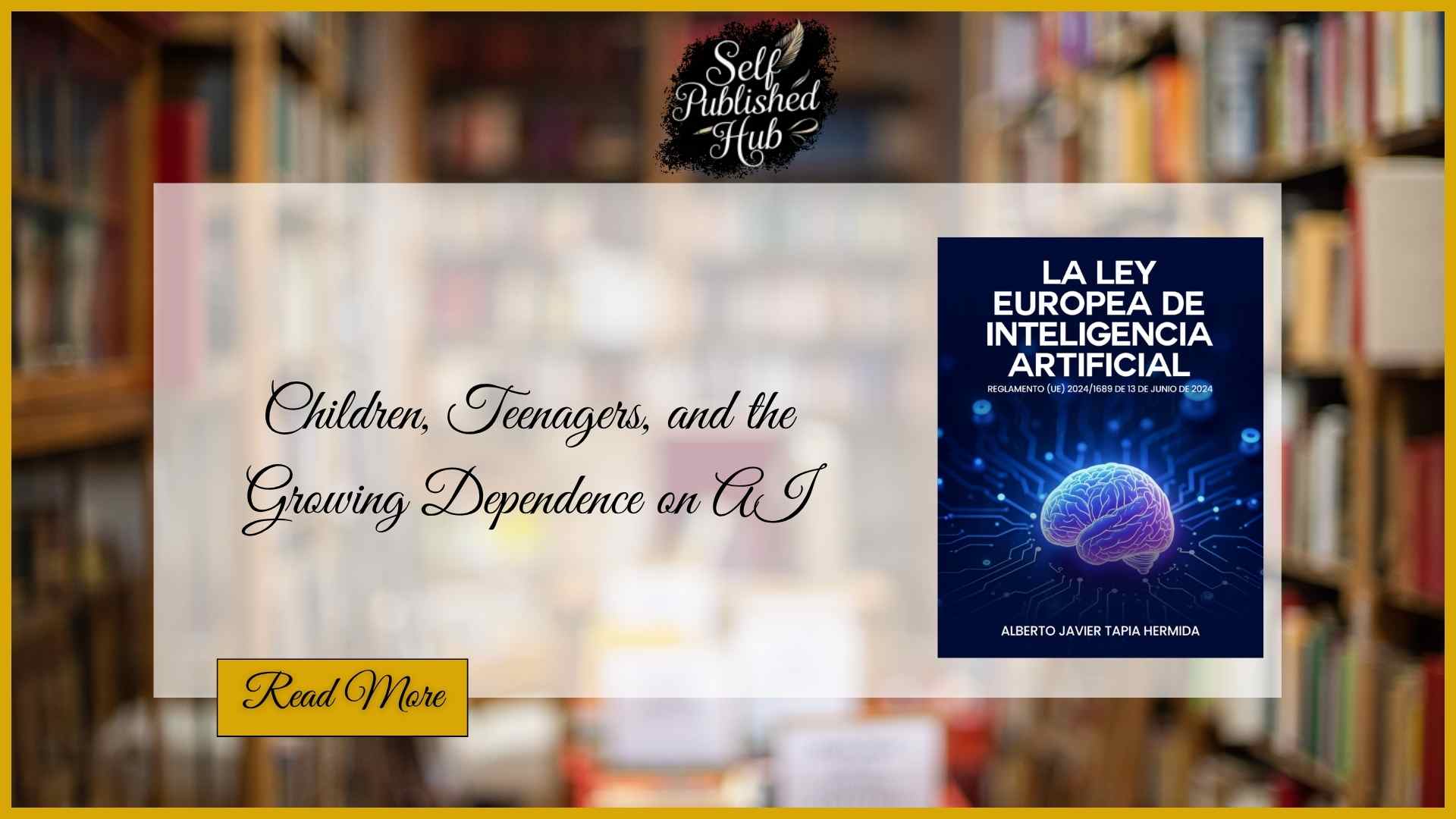
These issues are explored with exceptional depth in La Ley Europea de Inteligencia Artificial by Alberto Javier Tapia Hermida. The book examines the broader legal and social consequences of intelligent systems while explaining how European regulation seeks to balance technological advancement with the protection of fundamental rights and human dignity.
One of the book’s greatest strengths is its ability to connect legal theory with real societal concerns. It explains how advanced digital systems can influence behaviour, create risks for vulnerable populations, and challenge existing legal structures. Readers gain insight into why lawmakers increasingly view certain technological practices as potentially harmful when deployed without safeguards.
For parents, educators, policymakers, legal professionals, and business leaders, this topic is no longer theoretical. The relationship between young people and intelligent technology is already shaping education, mental health, communication habits, and social development across the world.
Alberto Javier Tapia Hermida’s work provides an essential framework for understanding these changes. As dependence on intelligent systems continues to grow among younger generations, this book helps readers understand why regulation, ethics, and responsible governance have become central to the future of digital society.
Available On Amazon https://www.amazon.com/dp/1972989502/