Love stories often end when two people are separated.
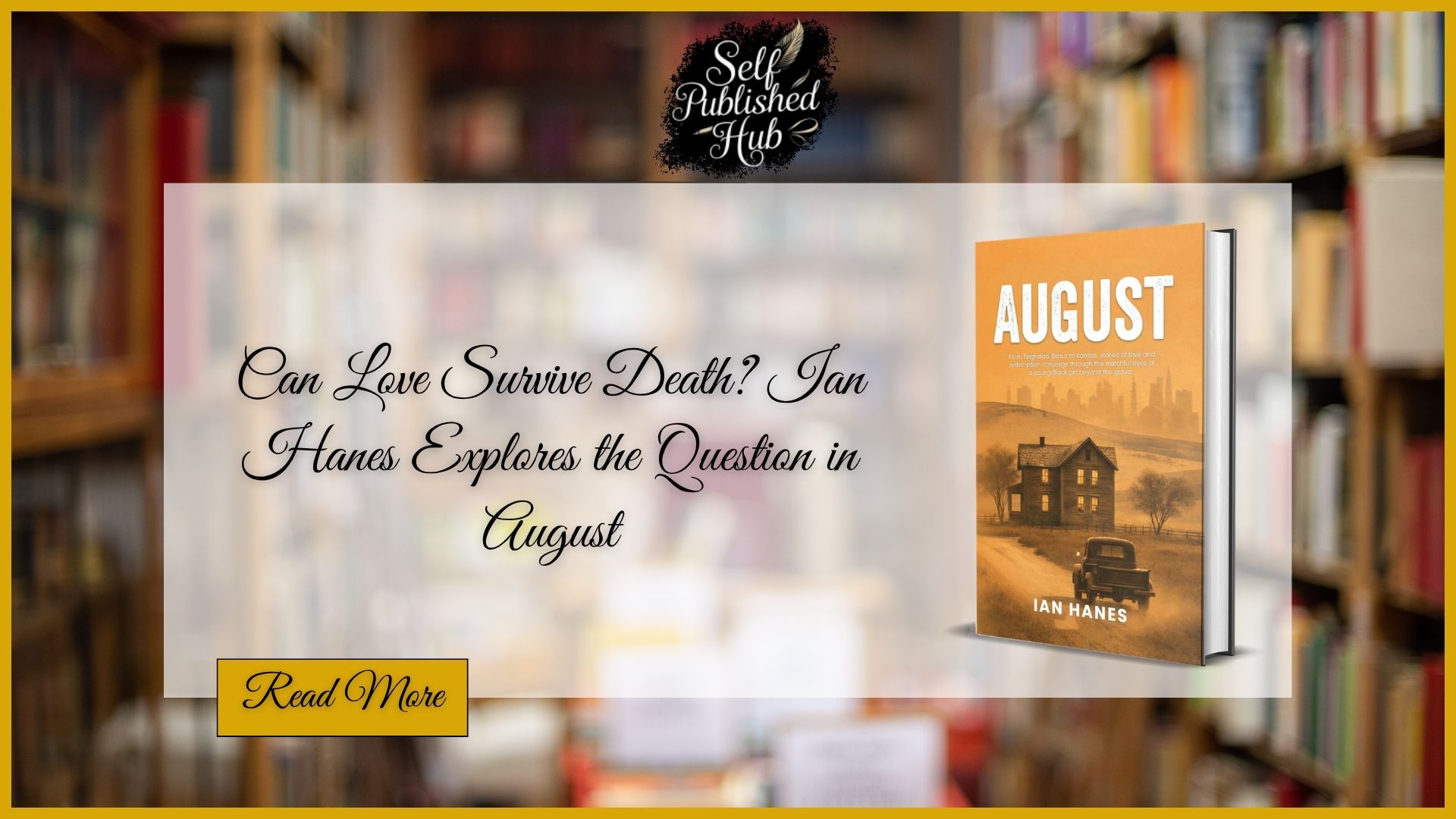
Ian Hanes’s August: We Carry What We Bury asks a harder question: what if love does not end at all?
At the heart of the novel is the relationship between August Harper and Rosalind, known as Rose. Their story begins in Lebanon, Kansas, in the 1970s, where August is a gifted basketball player with the possibility of a bright future and Rose is a determined young Black woman with ambitions of her own.
Their love develops quietly.
Rose watches August play basketball. They talk after practice. They exchange glances at school when no one else is watching. They dream about what might come next.
August hopes basketball will take him to the University of Kansas. Rose wants to become a civil rights lawyer and perhaps enter public life. When she doubts how far someone like her could realistically go, August encourages her to imagine a bigger future. Their conversations reveal a relationship built not only on attraction, but on respect, curiosity and hope.
But their happiness exists inside a world that is not entirely ready to accept them.
Rose understands the danger of becoming the subject of small-town gossip. August understands it too. Their affection is often expressed privately, in stolen moments and quiet conversations rather than public declarations.
Then comes the night that changes everything.
Rose is trying to reach the championship game where August and the Lebanon Bronchos are playing for the state title. After being delayed, she catches a later bus and runs toward the arena.
She never makes it.
Rose is struck by a car and killed before she can reach August.
Inside the arena, August and his team win. What should have been one of the happiest nights of his young life immediately becomes inseparable from loss. When August hears that a girl has died, he searches the crowd and realizes Rose is missing. Soon afterward, college scouts arrive with opportunities, but he turns them away.
His future changes, but his love for Rose does not simply disappear.
August remains in Kansas and carries her memory through the decades. He visits her unmarked grave repeatedly, standing there in silence through mornings, evenings and winters. He does not need an audience. He does not even need words. The act of returning says enough.
Yet Hanes takes the idea of enduring love even further.
Rose continues to narrate and observe the world after her death. She watches August grow older. She watches his life change. She sees his son, John, become part of the story. Her presence transforms the novel from a simple tragedy into something more reflective: a meditation on memory, connection and whether the people we lose truly leave us.
By the novel’s later chapters, John comes to understand who Rose was and how deeply her life shaped his father. That recognition allows something buried for decades to finally be acknowledged and Rose reaches a long-awaited peace.
So, can love survive death?
August: We Carry What We Bury suggests that perhaps it can’t survive death by denying loss, but by showing how love continues through memory, choices, stories and the lives that come afterward.
Ian Hanes has created a novel about what remains when someone is gone.
And sometimes, what remains is love.
Discover August: We Carry What We Bury by Ian Hanes, available now on Amazon: https://www.amazon.com/dp/B0H3M2GCJJ/