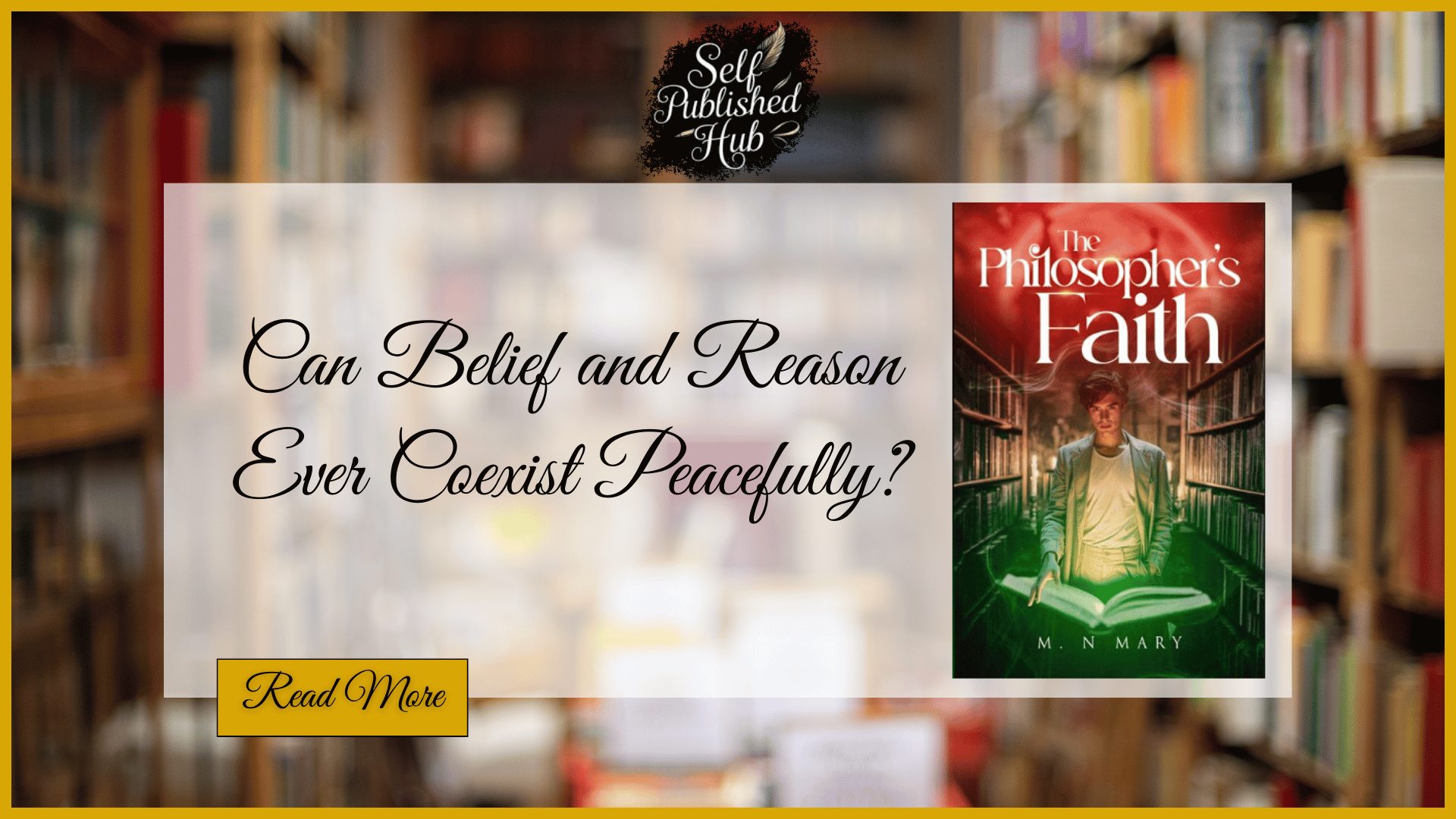
We live in an era when belief and reason are often viewed as rivals, each claiming to hold the key to truth. On one side stand those who insist that logic and science alone can explain existence. On the other hand, those who believe that faith gives meaning where logic falls short. The tension between the two is as old as philosophy itself, and yet it remains deeply relevant today. The Philosopher’s Faith by M. N. Mary brings this conflict to life through its protagonist, Julian Roberts, a young intellectual whose pursuit of reason leads him into moral confusion before he finally discovers the quiet power of faith.
Julian begins his journey surrounded by wealth, books, and a growing conviction that human intellect can replace divine truth. He devours philosophical works that promise liberation from outdated morals and believes that the human mind can solve every mystery of life. His confidence mirrors a familiar mindset in modern society, where intellect often becomes a substitute for humility. Many of us are taught that believing in something greater than ourselves is naïve, yet the absence of faith can leave a void that reason alone cannot fill.
In The Philosopher’s Faith, Julian’s obsession with philosophy leads him down a dark path. His desire to “enlighten” others pushes him toward dangerous alliances and a false sense of power. It mirrors how, in the real world, knowledge without morality can become destructive. History offers countless examples of this, think of scientific advancements used for harm, or political ideologies that began as noble ideas but ultimately led to oppression. Reason, when detached from compassion and conscience, can lose its humanity.
Faith, on the other hand, offers more than a set of beliefs. It provides a sense of balance. It reminds us that we are not the ultimate source of wisdom. When Julian finally reaches the breaking point of his intellect, it is faith that restores him. His surrender is not the rejection of reason but its refinement. By accepting that human understanding has limits, he learns that belief and reason do not have to fight for dominance; instead, they can complement one another.
In today’s world, we see echoes of Julian’s struggle everywhere. The scientist who prays before a surgery, the philosopher who studies theology, or the everyday person who seeks guidance from both facts and faith, all are proof that belief and reason can indeed coexist. What matters is balance: reason helps us question, analyse, and discover, while faith gives those discoveries purpose. Without faith, reason can become cold; without reason, faith can become blind.
The Philosopher’s Faith is a reminder that true wisdom lies not in choosing one side but in allowing both to shape us. Through Julian’s transformation, the story invites readers to reflect on their own inner conflicts between intellect and belief. In a world that often demands we pick one, this book suggests a better way: to let faith and reason walk side by side toward understanding.
Read The Philosopher’s Faith by M. N. Mary to experience a powerful story of redemption, truth, and the meeting of mind and soul.