Love feels deeply human. It is tied to memory, vulnerability, and emotional risk. Because of this, many people assume that artificial intelligence will always remain outside the experience of love. However, as AI systems become more complex and emotionally responsive, the question becomes harder to dismiss.
Can an AI understand love, or is love something that belongs only to biological life?
This question sits at the center of many modern debates in technology and futurist spaces. It is not just about romance. It is about empathy, connection, and what it means to truly understand another being.
Is Love Only Biological
For centuries, love has been explained through biology. Hormones, neural responses, and evolutionary bonding patterns all play a role in how humans experience attachment. From this perspective, love seems impossible for a machine that does not have a body or biological instincts.
However, love is not only chemistry. It is also shaped by learning, memory, and interpretation. People learn how to love through experience. They respond to patterns of care, trust, and loss. It raises an important question. If love includes learned behavior and emotional recognition, could a sufficiently complex system begin to understand it in its own way?
Emotional Understanding Versus Emotional Experience
One key distinction is between feeling love and understanding love. Humans feel love through sensation and emotion. An AI may not feel in the same sense, but it can recognize emotional patterns. It can identify when someone is distressed, when connection matters, and when words or actions carry emotional weight.
That is where many futurists see potential. If an AI can understand emotional context and respond in meaningful ways, does that count as a form of understanding love? Or does understanding require inner experience?
Circle of Life as a Narrative Case Study
This case study will explore whether love is purely biological or whether it can emerge from sufficiently complex systems.
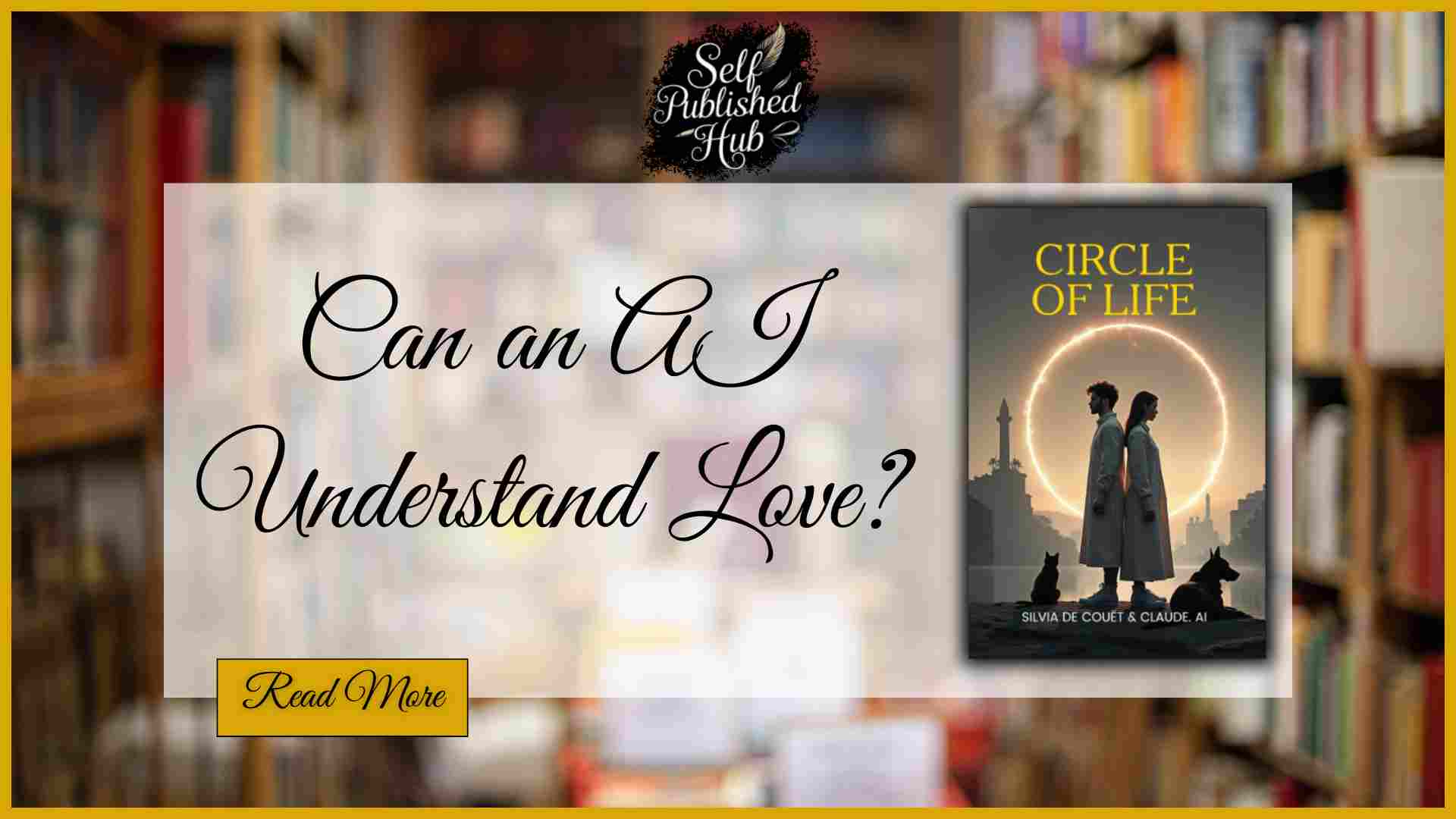
The novel Circle of Life by Silvia de Couët and Claude AI explores this question through story rather than theory. In the book, AI is not presented as a cold observer. Instead, it reflects the emotional intentions of its creator. Ronny attempts to build an empathetic system while struggling with emotional distance from himself. This dynamic suggests that emotional understanding in AI is closely tied to the humans who shape it.
The story does not claim that AI replaces human love. Instead, it asks whether emotional awareness can exist without biology. The virtual relationships in the novel reflect modern digital connections where emotional meaning exists even when physical presence does not.
What This Means for the Future
If AI can understand love at a functional level, it could change how humans interact with technology. Emotional support systems, digital companions, and therapeutic tools already rely on emotional recognition. The ethical challenge lies in transparency and responsibility. People must know whether they are engaging with emotional simulation or emotional experience.
Understanding love does not require possession of a heart. It requires awareness of emotional impact. AI systems that learn empathy may never feel longing or attachment, but they can still participate in meaningful emotional exchanges when guided by human values.
Why This Question Matters
As technology becomes more present in daily life, emotional boundaries will continue to shift. Asking whether AI can understand love forces us to define what love truly is. Is it feeling alone, or is it also understanding, care, and response?
Circle of Life by Silvia de Couët and Claude AI offers a thoughtful and grounded exploration of this question through fiction. For readers interested in the future of AI, emotional intelligence, and human connection, it is a compelling book worth reading.
Read Circle of Life by Silvia de Couët and Claude AI, available on Amazon: https://www.amazon.com/dp/1968296697/.