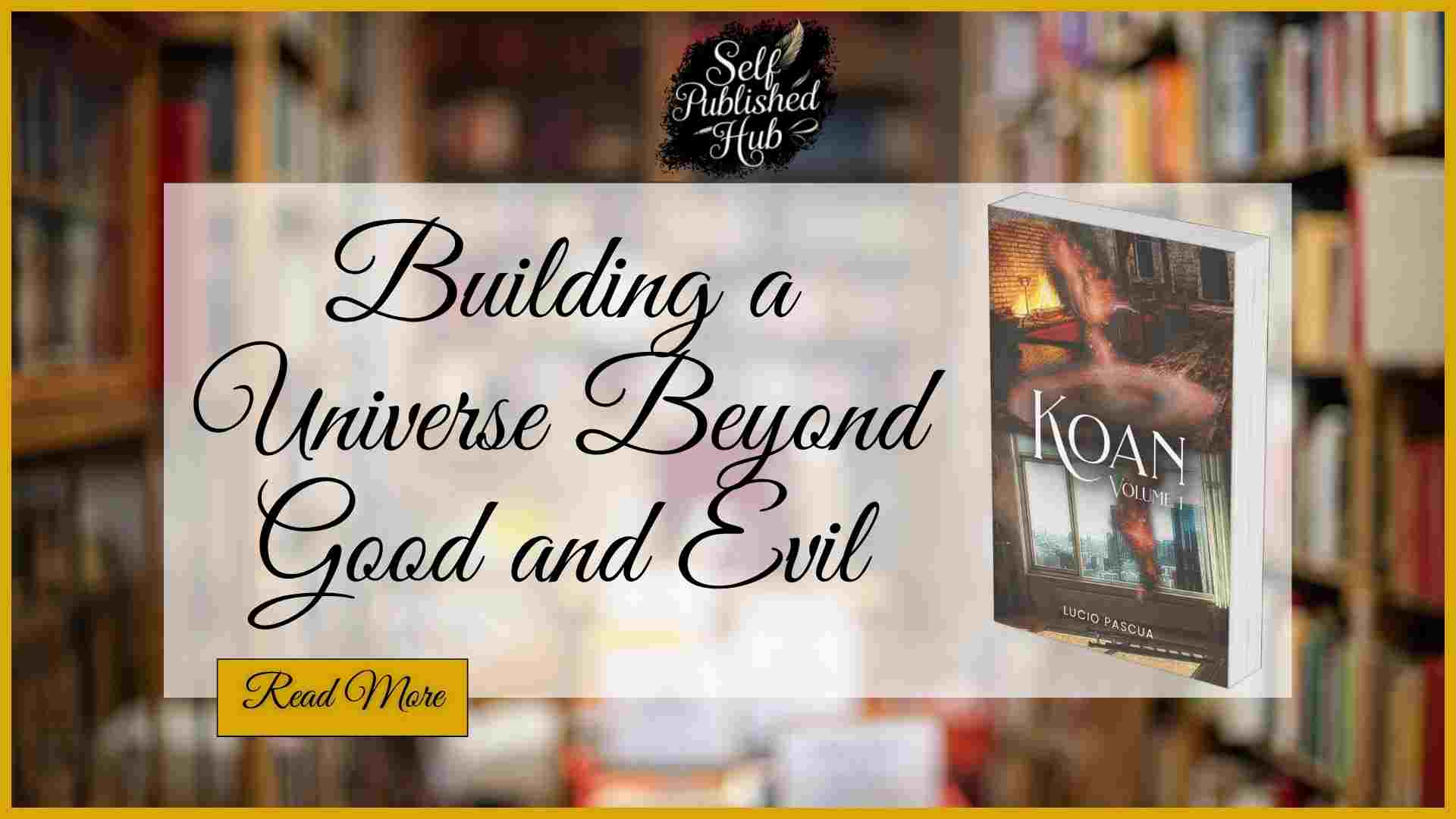
Most stories divide the world into clear lines of good and evil. Heroes fight villains. Light overcomes darkness. The conflict feels satisfying because it’s simple. But KOAN by Lucio Pascua doesn’t follow this rule. Instead, it explores the spaces in between, creating a universe where morality isn’t black or white but made of endless shades of grey. This complexity is what gives the book its depth and makes it such an engaging and thoughtful read.
From its very beginning, KOAN invites readers to question what “good” and “evil” even mean. The Guardians—the Northern Tortoise, Eastern Dragon, and their companions—are powerful symbols of wisdom and balance, yet even they operate in ways that challenge traditional morality. They don’t punish or reward in the way we expect from divine figures. Instead, they maintain equilibrium. Their decisions are guided not by right or wrong, but by what preserves harmony in the universe.
This theme extends to the human characters too. El-Javaz, the leader who governs through nonviolence, represents moral conviction, but his choices are constantly tested. His peaceful rule, though noble, comes at great cost. Pascua doesn’t portray him as a flawless hero. Instead, El-Javaz’s challenges reveal that doing good isn’t always simple—and that even the best intentions can have unintended consequences.
On the other hand, Hel, the novel’s central antagonist, is not evil for the sake of being evil. His cruelty is born from generations of pain, misunderstanding, and inherited darkness. Through him, Pascua reminds us that even the worst actions often have roots in suffering. This approach doesn’t excuse his behavior, but it does force readers to look beyond judgment and toward understanding.
By blurring the lines between right and wrong, KOAN reflects a truth about real life: morality is rarely absolute. Every choice we make has both light and shadow. The novel’s universe, with its cosmic struggles and meditative pace, becomes a mirror for our own moral dilemmas. Pascua’s storytelling asks us to look deeper—past the simplicity of heroes and villains, into the human motivations behind every action.
This moral complexity gives KOAN its emotional and philosophical weight. It’s a book that doesn’t offer easy answers because it’s not meant to. Instead, it asks readers to hold conflicting ideas at once—to see that compassion and cruelty, hope and despair, can coexist. The Guardians’ role in maintaining cosmic order echoes this lesson: peace is not the absence of chaos, but the balance between opposing forces.
In many ways, KOAN feels like a literary reflection of our own world, where morality is often shaped by perspective and circumstance. It’s a story that encourages empathy without condoning wrongdoing, and reflection without moral rigidity. Pascua’s universe is one where truth is complex and meaning is earned through understanding, not certainty.
By challenging the notion of absolute good and evil, KOAN provides readers with a richer, more nuanced understanding of what it means to be human. It shows that wisdom lies not in choosing sides, but in seeing the whole. In doing so, Pascua reminds us that a better world isn’t built by erasing darkness, but by learning how to live with it wisely.
In the end, KOAN by Lucio Pascua is a thought-provoking blend of literary fiction, philosophical fantasy, and magical realism that invites readers into a universe where myth, science, and spirit intertwine. Through its layered narrative, KOAN follows characters like El-Javaz, a leader devoted to peace in a divided kingdom, and Hel, a figure shaped by generations of darkness, to examine how belief, morality, and transformation shape the human experience.
Rich in symbolism and allegory, the story unfolds like a meditative journey, encouraging us to pause, reflect, and look inward. At once imaginative and deeply philosophical, KOAN is not just a tale of cosmic conflict. Instead, it is a mirror held up to our own world, asking us to rethink power, purpose, and the nature of enlightenment itself.
So, are you ready to experience the amazing?
Head to Amazon to purchase your copy of KOAN.
- Koan: Volume l (The Koan Saga Book 1): https://www.amazon.com/dp/B0FHDQN2C1.
- Koan: Volume ll (The Koan Saga Book 2): https://www.amazon.com/dp/B0FSTJG21M.