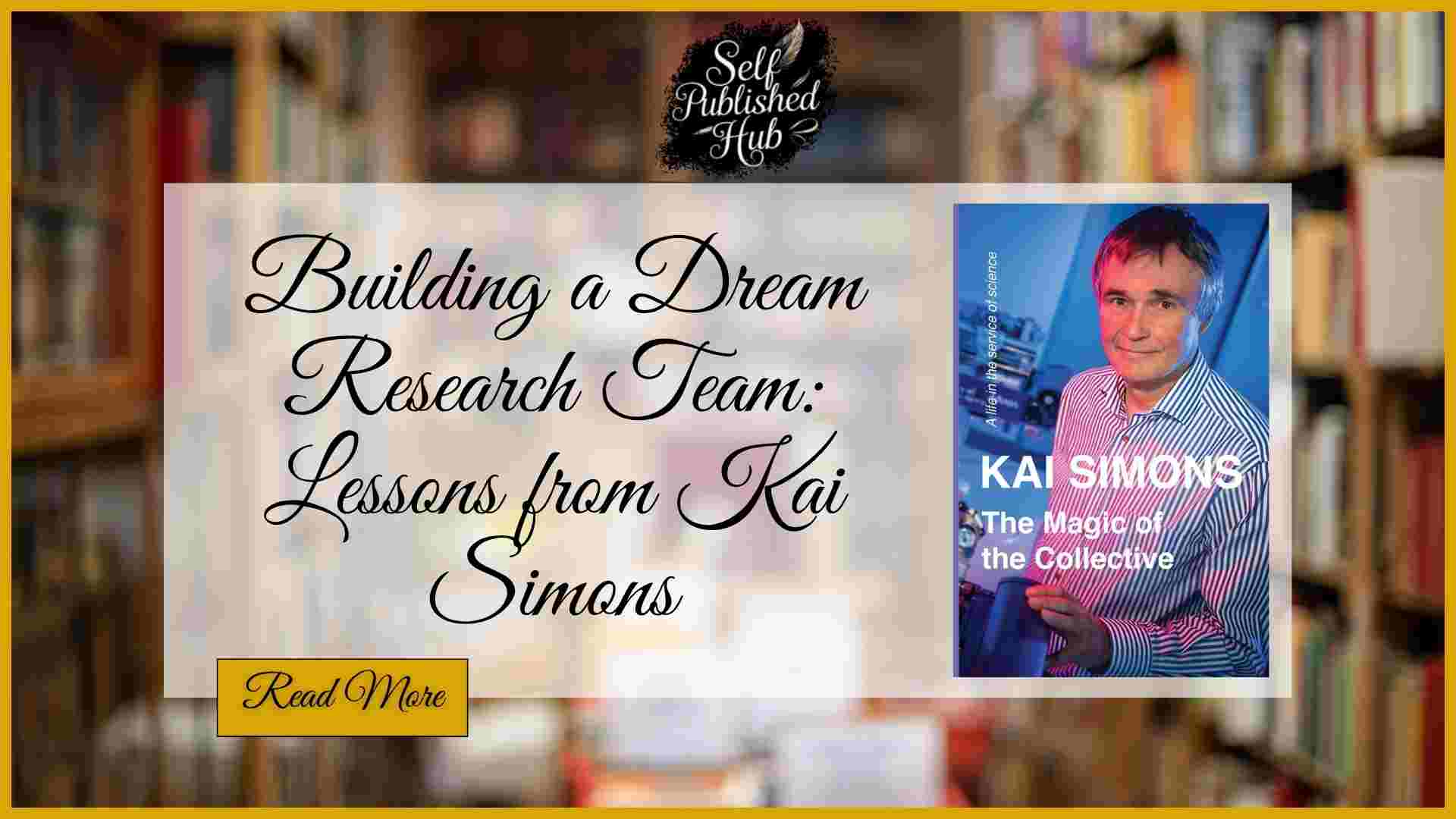
Kai Simons’ journey in science was not just about discovery—it was about creating environments where discoveries could happen. Throughout The Magic of the Collective, he highlights the importance of collaboration, leadership, and research culture in shaping successful scientific teams. Here’s a practical guide based on his experiences assembling high-performing research groups in Helsinki, Heidelberg, and Dresden.
1. Vision: Define a Purpose Beyond Individual Success
Simons saw that the hyper-competitive environment in science often led to isolation and inefficiency. His goal was to build collective research habitats, where scientists could thrive by working together.
- Lesson: Define a clear, shared mission for your team. Is it solving a fundamental problem? Pioneering a new technique? Your team needs a common “why” to stay motivated.
2. Recruitment: Find the Right Mix of Skills and Mindsets
Simons had a talent for recognizing potential. His early recruits—Carl Gahmberg, Ari Helenius, and Henrik Garoff—went on to become top scientists in their fields. He looked beyond just talent; he sought people who would thrive in a collaborative setting.
- Lesson: Look for diverse skill sets (technical expertise, creativity, leadership). Ensure that new members fit into the team’s culture and share the vision.
3. Mentorship: Guide Without Controlling
At the Max Planck Institute in Dresden, Simons empowered young researchers rather than micromanaging them. He encouraged his students to take ownership of their projects while providing support when needed.
- Lesson: Mentor, don’t dictate. Offer guidance and autonomy in balance, letting team members take the lead when ready.
4. Foster Collaboration Over Competition
In many research environments, competition is the norm. Simons believed that this damaged innovation and led to wasted efforts. Instead, he promoted cross-disciplinary collaboration, ensuring that expertise from different fields came together to solve problems.
- Lesson: Encourage open idea-sharing. Create spaces—meetings, retreats, casual discussions—where ideas flow freely between team members.
5. Secure Funding and Resources Strategically
Simons understood that funding dictates a team’s success. In Helsinki, he leveraged government grants and hospital partnerships. In Dresden, he helped shape the Max Planck Institute into a top-tier research center.
- Lesson: Don’t just rely on traditional funding. Look for industry partnerships, interdisciplinary grants, and institutional collaborations.
6. Build a Positive Research Culture
Simons observed that toxic research environments—filled with ego clashes and competition—drive away brilliant scientists, especially those who are less aggressive. He worked to create inclusive, welcoming spaces.
- Lesson: Celebrate successes, no matter how small. Foster a culture where every contribution matters, reducing unnecessary pressure.
7. Adapt and Innovate
Simons’ biggest strength was his ability to adapt. Whether it was shifting from vitamin B12 research to cell biology or championing the controversial lipid raft theory, he always remained open to change.
- Lesson: Encourage your team to embrace uncertainty. Be willing to pivot when new insights emerge.
Simons’ career proves that scientific breakthroughs don’t happen in isolation. They happen in thriving, collaborative teams with strong leadership and clear goals. By following these principles, today’s scientists can create the next great research environments.
Get Your Copy On Amazon: www.amazon.com/dp/1917007027