Today, video editors can rearrange scenes, synchronize sound and revise an entire production with a few clicks. Images are stored on memory cards, footage appears instantly on a screen and complex edits can be changed without physically touching the original material.
For Daniel Arie, none of that was normal when he began imagining a different future.
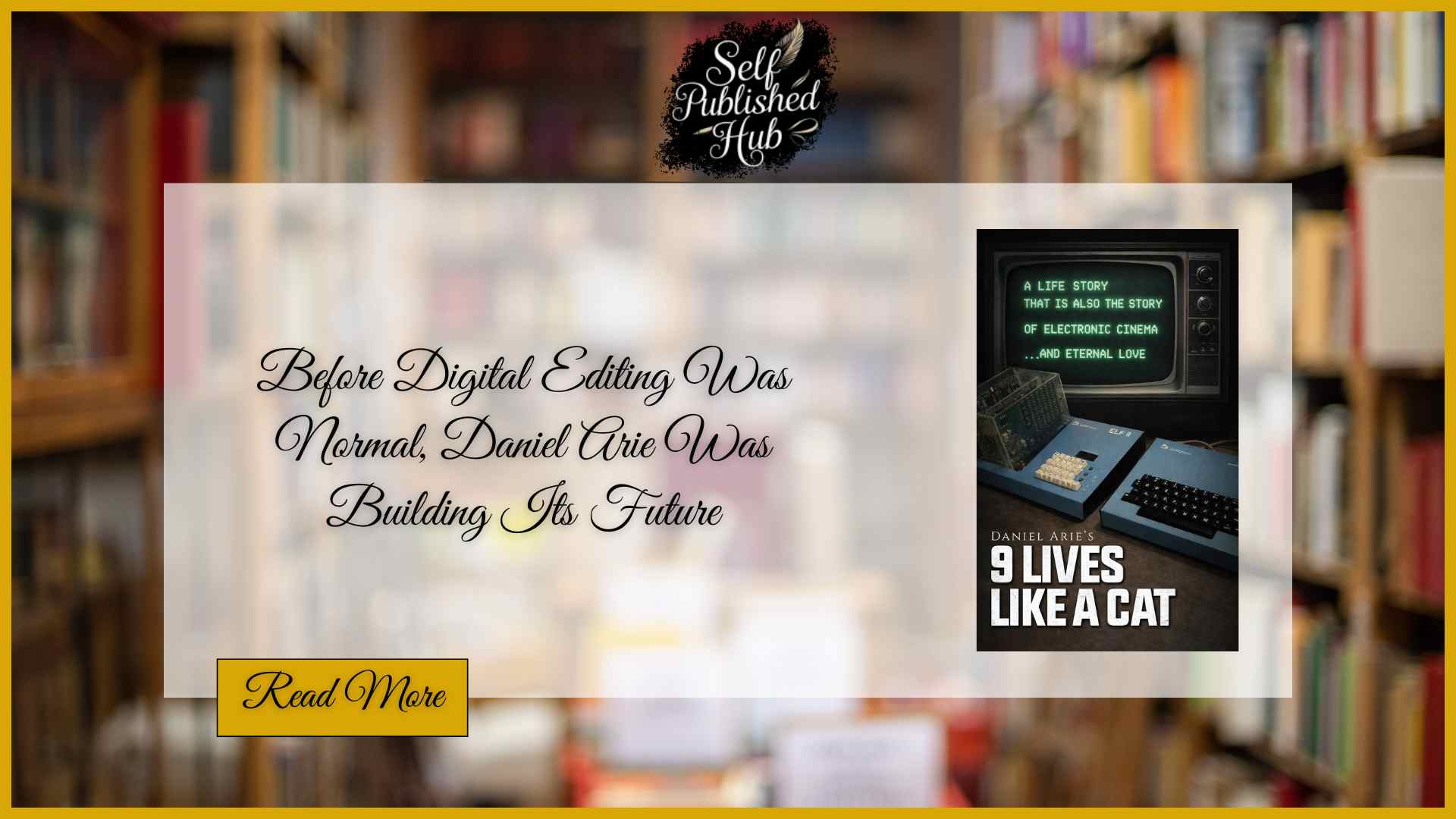
In 9 Lives Like a Cat: A Life Story That Is Also the Story of Electronic Cinema … and Eternal Love, Arie takes readers inside an era when film editing was a physical craft. Editors handled strips of celluloid, marked frames, cut material by hand and relied on laboratories to assemble the final negative. The process demanded precision, patience and a deep familiarity with the mechanics of film.
Arie respected that tradition, but he was never satisfied with doing something a certain way simply because it had always been done that way. His guiding belief was simple: there must be a better way.
During the 1970s, Arie began experimenting with the emerging relationship between film, videotape and computers. He learned about facilities using electronic scanners to transfer film onto video. This offered producers the possibility of viewing and editing footage electronically before making irreversible cuts to the original negative.
However, there was a significant problem. Film and video measured images differently. Film was calculated in feet and frames at 24 frames per second, while NTSC video operated at approximately 29.97 frames per second. An electronic edit could only guide the cutting of the original film if the two systems corresponded with complete accuracy.
Arie decided to solve the problem himself.
Using an ELF II home-computer kit that he assembled by hand, he learned machine language and BASIC programming. He then developed a program capable of converting video time-code information into precise film measurements. His system could generate lists that allowed laboratory technicians to locate and cut the correct sections of film based on an edit created on videotape.
The lists were printed by an old, noisy Teletype machine. The technology may sound primitive today, but the thinking behind it anticipated the computerized workflows that would eventually transform post-production.
Arie did not stop with picture editing. He also explored methods of recording digital sound as a video signal. By synchronizing audio stored on videocassettes with the edited images, he gave assistants the ability to see sound visually, including the clap used to synchronize a shot. Advertising agencies soon adopted the method and electronic editing with digitally recorded sound became increasingly common.
In 1981, another chapter began with the opening of Telepoint, an electronic editing facility equipped with touchscreen systems. There, Arie’s computer program helped connect electronic edits with traditional film negatives. The facility became part of a technological shift that reduced costs, accelerated production and challenged long-established professional practices.
Not everyone welcomed the change. Traditional editors argued that electronic systems removed the texture, ritual and even the smell of working with film. Some feared that skills developed over decades were becoming accessible to newcomers who understood computers. Arie recognized the controversy, but he also understood that technological change rarely waits for universal approval.
That is what makes 9 Lives Like a Cat more than a personal memoir. It preserves the story of an experimental age when digital cinema was not yet an industry standard, but an uncertain idea being tested by curious people willing to improvise.
Before digital editing became ordinary, Daniel Arie was already helping build the path toward it.
Available On Amazon: https://www.amazon.com/dp/B0H6R4ZVGK/