Almost every child has a fear they struggle to explain, but for many, that fear takes a very specific form. It might be the sudden sight of a spider skittering across the floor, the thought of one hiding beneath the bed, or the sticky shimmer of a cobweb brushed against in the dark. Unlike imagined fears, spiders feel real, unpredictable, and impossible to ignore, that fear can be overwhelming, especially when it is laughed off or dismissed as something silly or childish.
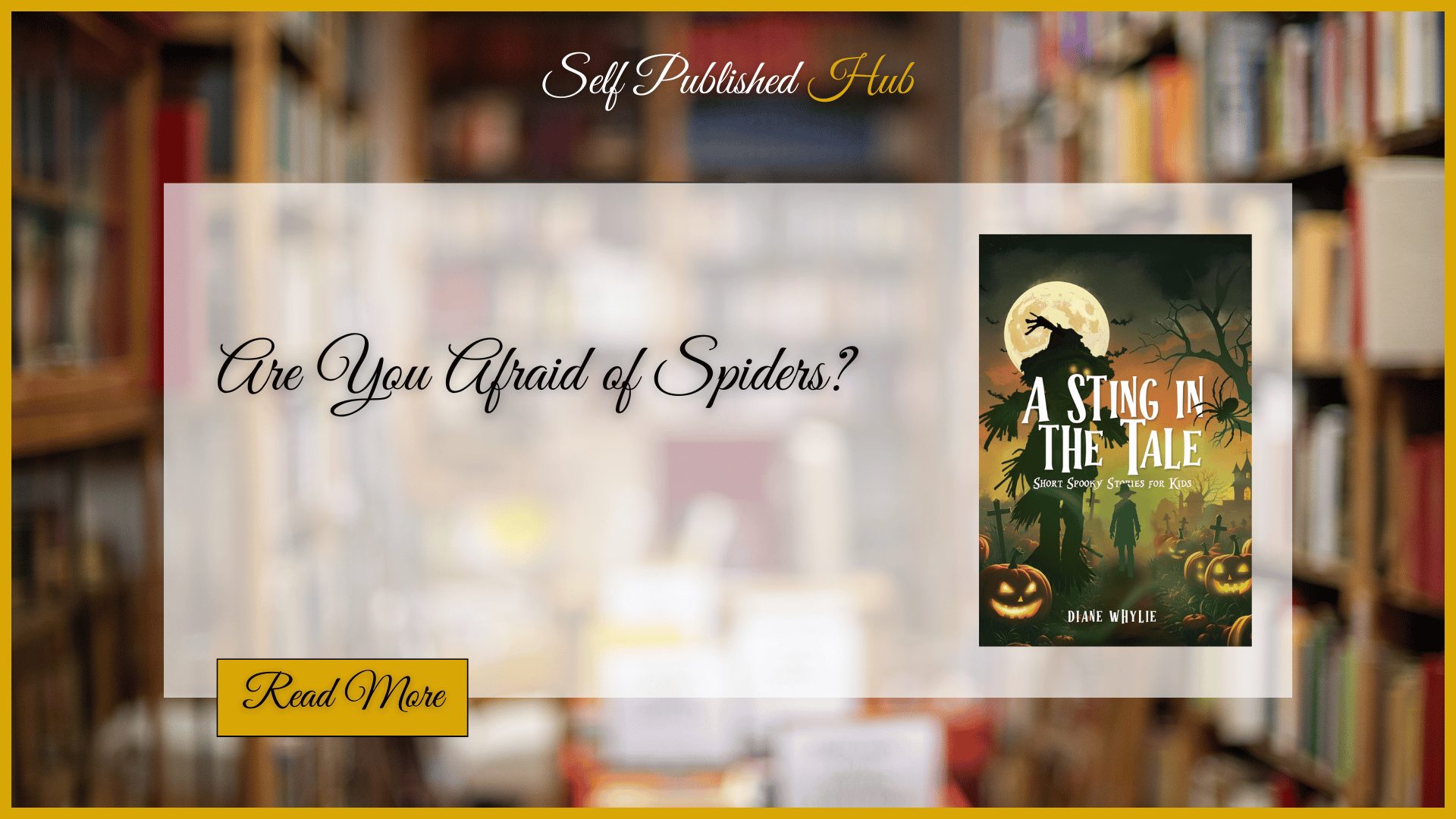
This common childhood anxiety is explored with striking clarity in Who’s Afraid of Spiders?, a standout story from A Sting in the Tale: Short Spooky Stories for Kids by Diane Whylie. The story does more than frighten. It acknowledges fear as genuine and deeply personal, while gently exploring bravery, curiosity, and the quiet pressure children feel to prove they are not afraid.
Fear as a Shared Childhood Experience
Daniel’s fear of spiders is intense and deeply personal. He is teased for it, challenged by peers, and quietly ashamed of something he cannot control. This emotional setup immediately resonates with young readers who have felt judged for their fears.
Rather than minimizing Daniel’s anxiety, the story treats it as real and significant. This approach builds trust. Children reading the story feel seen rather than lectured.
Curiosity Versus Fear
What makes Daniel’s journey compelling is the tension between fear and curiosity. He is fascinated by the abandoned house, even though it terrifies him. This push and pull mirrors real childhood experiences where growth often requires stepping into discomfort.
Diane Whylie captures this moment beautifully. Daniel does not suddenly become fearless. He hesitates. He doubts. He proceeds anyway. This realistic portrayal of bravery makes the story relatable and empowering.
Facing Fear Does Not Mean Conquering It
The encounter inside the house pushes Daniel’s fear to its extreme. The spiders are overwhelming, inescapable, and horrifying. When he finally strikes back, it feels like a moment of triumph.
Yet the story does not end with a neat victory. The final twist suggests that fear does not disappear simply because it has been confronted once. Instead, fear changes shape. It follows us. It challenges us again.
This message is crucial. It teaches children that bravery is not a one-time achievement. It is an ongoing process.
Who’s Afraid of Spiders? resonates because it does not promise easy answers. It acknowledges that fear can return, that courage can waver, and that confidence is built slowly. Within A Sting in the Tale, this story stands out as one of the most psychologically grounded. Its horror is effective because it is rooted in emotion rather than spectacle. The story also encourages children to face their fears without shaming them for having them. It suggests that curiosity can coexist with anxiety and that growth often happens in uncomfortable spaces.
For parents and teachers, this makes the story an excellent starting point for conversation, where they could ask their children, “What fears do you have?” “What helps you face them?” and “What does bravery look like to you?”
By blending suspense with emotional honesty, Diane Whylie creates a story that stays with readers. Who’s Afraid of Spiders? reminds children that fear is part of being human and that facing it, even imperfectly, is something to be proud of.
Within A Sting in the Tale, it reinforces the collection’s central strength. Using spooky storytelling not just to entertain, but to help young readers better understand themselves.
Read the full story in A Sting in the Tale: Short Spooky Stories for Kids. Read this book now and purchase your copy from Amazon: https://www.amazon.com/dp/B0G36DMKNZ/.