The question is uncomfortable, but it refuses to go away. As migration continues to dominate headlines, Western nations find themselves caught between moral obligation and political pressure. Policies grow stricter, borders tighten, and rhetoric hardens. Yet the flow of people fleeing conflict, persecution, and economic collapse does not stop. Instead, it adapts, often becoming more dangerous, more desperate, and more costly in human terms.
For governments, the challenge is framed as control. National security, economic strain, and public opinion all demand attention. Leaders promise solutions, yet those solutions rarely address the root causes of migration. Instead, they focus on deterrence. The result is a cycle where policies aim to push people away, while circumstances continue to push them forward.
For refugees, the journey is rarely a choice in the true sense. It is survival. Families leave behind everything familiar, navigating routes controlled by traffickers, risking exploitation, violence, and death. By the time they reach the borders of Western nations, they have already endured what most cannot imagine. What they encounter next is often uncertainty, suspicion, and systems that are slow, complex, and difficult to navigate.
This tension creates a deeper problem. When systems fail to manage migration effectively, they do not just fail refugees. They undermine themselves. Public trust weakens when policies appear ineffective or inconsistent. Communities become divided, caught between compassion and concern. Political discourse shifts from solutions to blame. Over time, the issue stops being about migration alone and becomes a symbol of broader institutional failure.
The real danger lies in what follows that loss of confidence. When people believe that governments cannot manage borders, protect communities, or uphold fairness, they begin to look elsewhere for answers. That shift can lead to more extreme views, harsher policies, or even the rise of movements that reject established systems entirely.
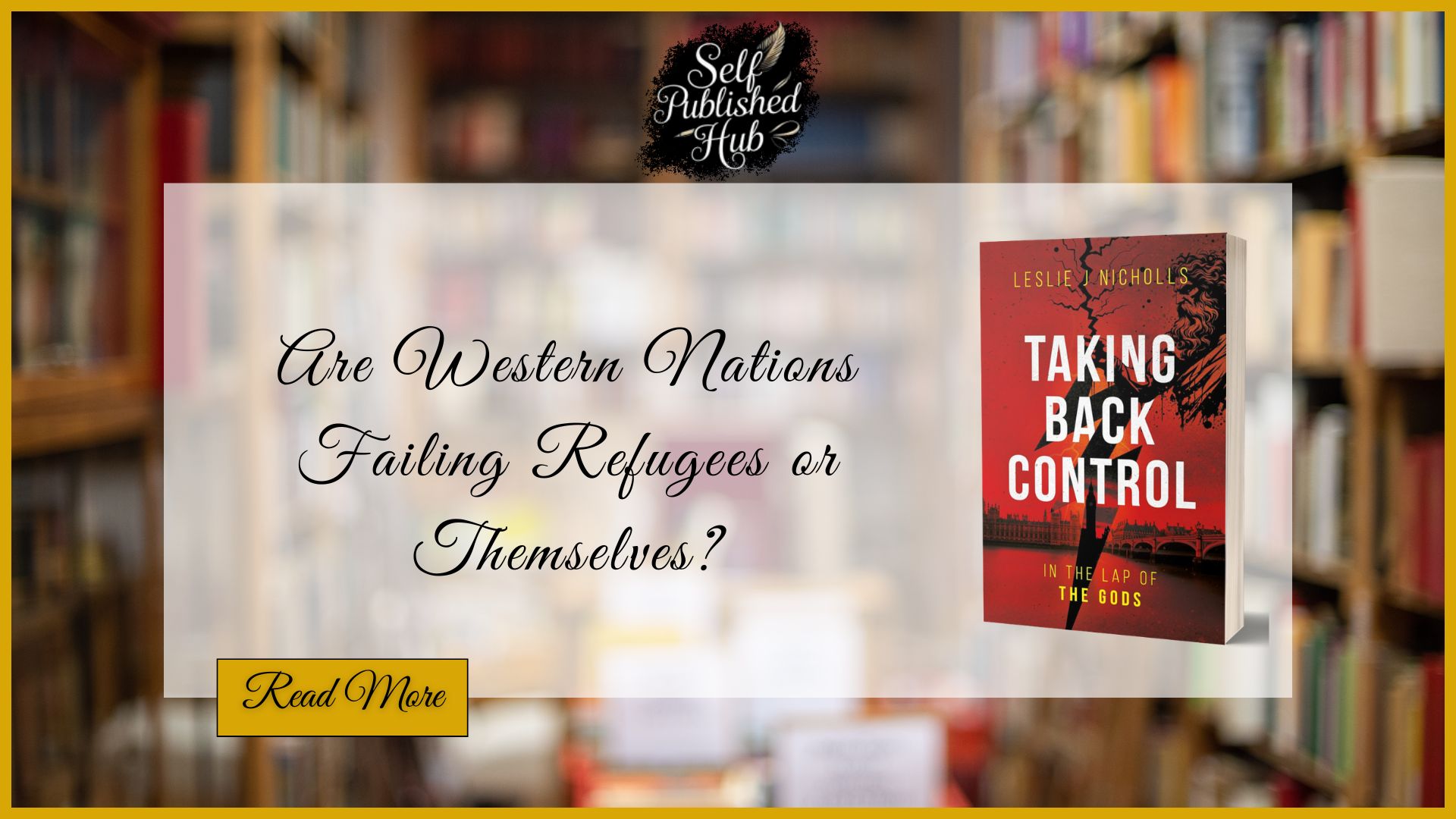
This is the space explored with unsettling clarity in Taking Back Control by Leslie J Nicholls. The book does not present migration as a simple issue with clear sides. Instead, it places it within a wider landscape of political failure, public frustration, and shifting power. Through its narrative, readers witness the human cost of broken systems and the consequences when trust in authority begins to collapse.
Nicholls captures both sides of the dilemma. The vulnerability of those seeking refuge and the growing unease within societies struggling to respond. The story reveals how easily these tensions can escalate when solutions are delayed or avoided. It shows how fragile stability becomes when competing pressures are left unresolved.
What makes Taking Back Control so compelling is its refusal to offer easy reassurance. It reflects a world where decisions carry weight and where inaction can be just as dangerous as the wrong action. The characters move through a reality shaped by fear, hope, and survival, forcing readers to confront the complexity of the issue.
The question remains difficult to answer. Are Western nations failing refugees, or are they failing themselves? The truth may lie somewhere in between. What is clear is that the longer the question goes unanswered, the greater the consequences will become.
Taking Back Control invites readers to step into that reality, to examine it closely, and to consider what happens when systems designed to manage crises begin to break under their own weight.
Explore the full story here: https://www.amazon.com/dp/B0G4F2KTJC.