For much of the past century, liberal democracy seemed secure. It withstood social change, economic downturns, and world wars. Its institutions, a free press, independent courts, and free elections, all were viewed as the cornerstones of development. However, cracks have started to appear in recent years. Leaders claiming to speak for “the people” are pushing the boundaries of democratic norms from Washington to Warsaw. The center ground that once held politics together is disintegrating, truth is becoming negotiable, and institutional mistrust is growing.
The question now feels unavoidable: are we watching the last stand of liberal democracy?
Across the world, populism has filled the space where trust once lived. Voters, tired of economic inequality and political arrogance, have turned to leaders who promise simple answers. These leaders speak directly to frustration. They say the system is rigged, that the elites have stolen power, and that only they can return it to “the people.” The message resonates because it taps into something real: a sense that democracy has stopped delivering for ordinary citizens.
Yet, in promising to fix democracy, populists often undermine it. When leaders dismiss the press as enemies, weaken the courts, or question election results, they erode the very foundations that make democracy work. It happens gradually, through small changes that seem harmless at first. One rule is bent, one institution is ignored, one critic is silenced. Before long, the spirit of democracy is hollowed out, replaced by loyalty to the leader rather than to the law.
The rise of authoritarian populism is not limited to one country. In Hungary, Viktor Orban has turned elections into rituals with predictable results. In Turkey, President Erdogan controls media and opposition voices. In Russia, democracy is little more than a performance. Even within established democracies such as the United States, the United Kingdom, and France, public trust is falling fast. Surveys show that fewer young people today believe democracy is the best form of government. That loss of faith may be the most dangerous sign of all.
Technology and social media have made things worse. What was once a public square for debate has become a battlefield of misinformation. Falsehoods travel faster than facts. Algorithms feed division instead of understanding. The result is a society where shared truth is replaced by competing realities, each one reinforced by anger and fear. In this climate, reasoned debate struggles to survive.
Still, the end of democracy is not inevitable. History shows that democratic systems often stumble, but they also adapt. They depend not only on institutions but on citizens willing to defend them. That defence starts with honesty: recognising where democracy has failed as well as where it has succeeded. It means reforming political systems that serve parties instead of people. It means rebuilding economic fairness so that democracy feels worth protecting again.
Education also matters, as a population that understands how democracy works is less likely to be fooled by those who seek to dismantle it. Civic education, critical thinking, and open dialogue are the quiet tools that keep societies free. They may not be as dramatic as populist rallies, but they are far more effective in the long run.
The battle for liberal democracy is not fought only in parliaments or courts. It happens in conversations, classrooms, and communities. It is won or lost in how we treat one another and how much we still believe in compromise. Democracy cannot survive if citizens see opponents as enemies rather than as fellow participants in a shared project.
So, are we witnessing its last stand? Perhaps not yet. But we are certainly seeing its greatest test in generations. The answer will depend on whether people still care enough to defend the principles that built it.
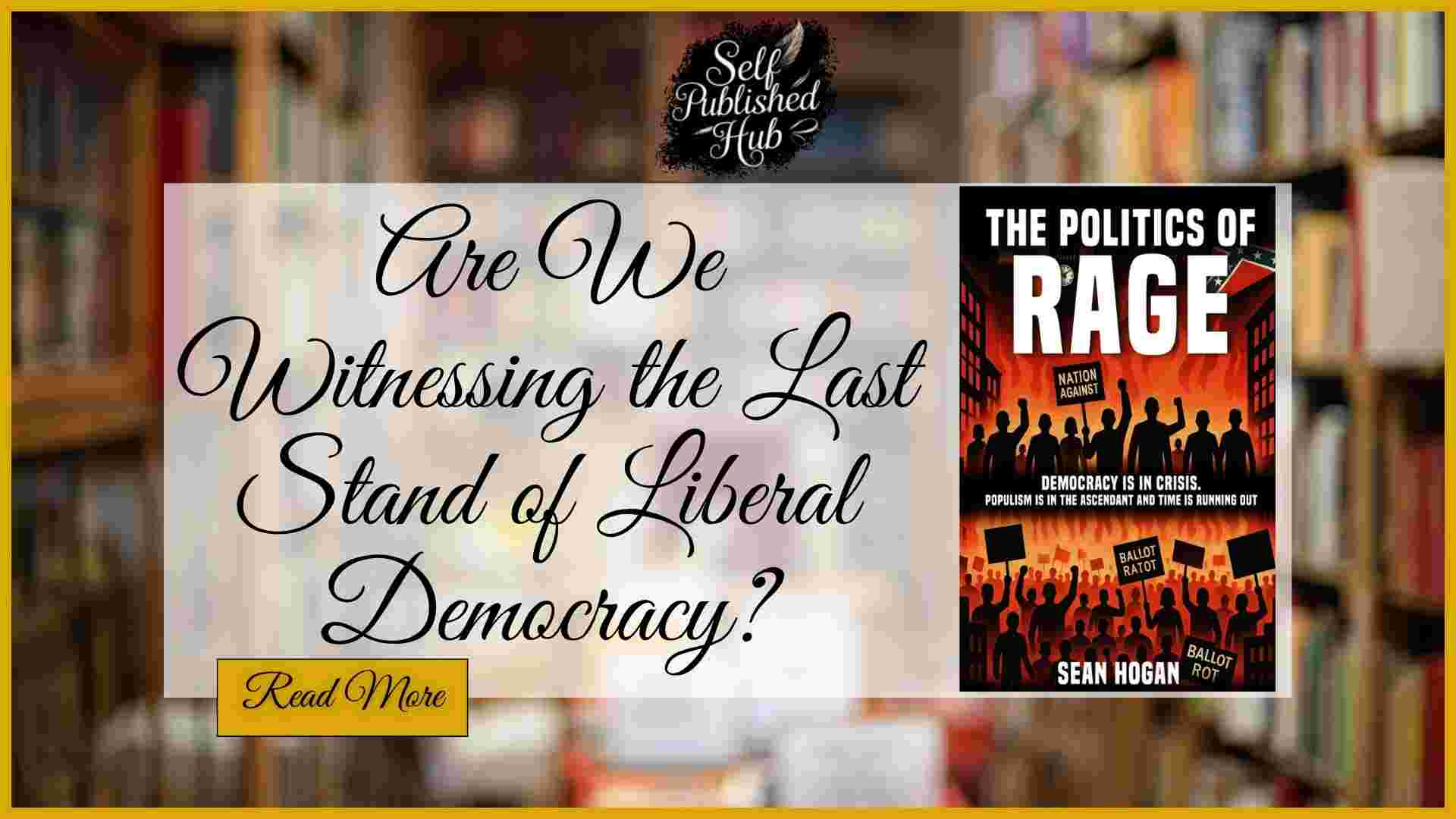
If these questions trouble you, The Politics of Rage offers deeper insight into how we reached this moment and what must be done to restore balance. Sean Hogan’s book examines the global rise of populism and highlights the urgent need for democratic renewal. Read it to grasp what’s at stake and how democracy can still regain its momentum.
Head to Amazon to purchase your copy: https://www.amazon.com/dp/B0FH5N8FVQ/.