Modern life has taught us to think of nature as something “out there.” We visit forests, admire rivers, protect wildlife and talk about the environment as though it exists separately from us.
But what if that separation is only an idea?
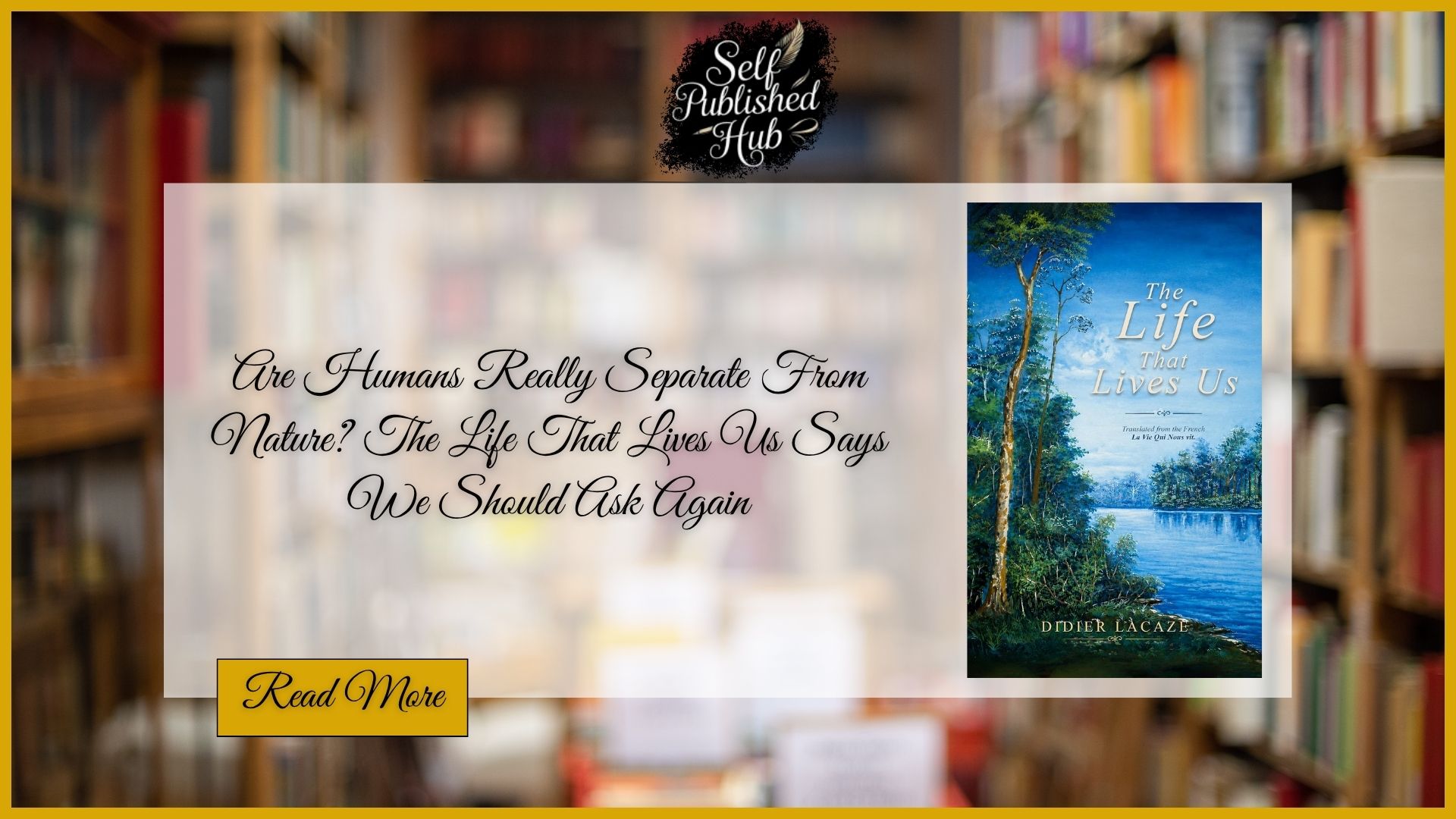
That question runs through The Life That Lives Us: Translated from the French La Vie Qui Nous vit by Didier Lacaze. Drawing from decades of travel, spiritual inquiry and life among Indigenous communities in the Amazon, Lacaze challenges readers to reconsider one of humanity’s most deeply rooted assumptions: that people stand apart from the natural world.
What If Separation Is the Real Problem?
In one of the book’s most thought-provoking reflections, Lacaze considers humanity’s tendency to view nature as something external. He asks what might happen if we stopped seeing ourselves as separate from it.
The question is not merely philosophical.
Lacaze connects this sense of separation to environmental destruction, conflict, greed and the way modern societies often exploit forests, rivers, animals and land as resources rather than parts of a shared living system. He suggests that when people see themselves as outside nature, it becomes easier to damage the very systems that make human life possible.
That perspective becomes even more powerful because it emerges from lived experience rather than abstract theory.
Learning From People Who Still Live Close to the Forest
Didier Lacaze spent roughly four decades working in the Amazon, supporting Indigenous peoples and organizations in their efforts to preserve and strengthen traditional health and medicine systems.
Through those relationships, he encountered cultures in which forests, rivers, plants, animals and human beings were understood as parts of a larger interconnected reality.
The book does not romanticize Indigenous life or pretend that traditional societies are untouched by modern pressures. In fact, Lacaze describes how many communities face the difficult challenge of maintaining ancestral knowledge while also responding to changing economies, technology and the desire for modern lifestyles.
That tension gives the book much of its relevance.
The question is not whether humanity should somehow return to the past. It is whether we have forgotten something important along the way.
Nature as a Relationship, Not a Resource
Lacaze also reflects on Ecuador’s recognition of the legal rights of nature. Yet he pushes the discussion further. Granting nature legal protection is important, but what happens if people still think of themselves as separate from the natural world they are trying to protect?
For Lacaze, the deeper issue is perception.
If we see a forest only as timber, land only as property or plants only as commodities, we may miss the larger relationships that sustain life.
Throughout The Life That Lives Us, the Amazon becomes more than a setting. It becomes a teacher.
Rivers flow without asking permission. Forests adapt, renew, decay and regenerate. Life continues through cycles that existed long before us and will likely continue after us.
A Question Worth Asking Again
The Life That Lives Us does not offer easy environmental slogans. Instead, Didier Lacaze invites readers to question how they understand themselves.
Are we individuals living inside nature?
Or are we expressions of nature itself?
That distinction may seem small, but it could change how we think about responsibility, progress, health, community and the future of the planet.
Through memoir, travel, Indigenous knowledge, spirituality and reflection, Didier Lacaze asks readers to reconsider something modern life often encourages us to forget: perhaps nature is not something we need to reconnect with.
Perhaps we were never truly separate from it in the first place.
Discover The Life That Lives Us: Translated from the French La Vie Qui Nous vit by Didier Lacaze and explore a remarkable journey through the Amazon, Indigenous wisdom, spirituality, healing and the deeper questions that shape human existence.