WHEN MONEY CAN NO LONGER BUY WHAT WE NEED
Imagine having money in your wallet but being unable to purchase food, fuel, or basic necessities. Grocery shelves are empty, electronic payment systems have stopped functioning, and businesses cannot replenish their supplies. Suddenly, the value of money becomes less important than access to the things people actually need.
Modern economies depend on functioning infrastructure, transportation, communication, and reliable supply chains. When these systems collapse, familiar financial arrangements can quickly become ineffective.
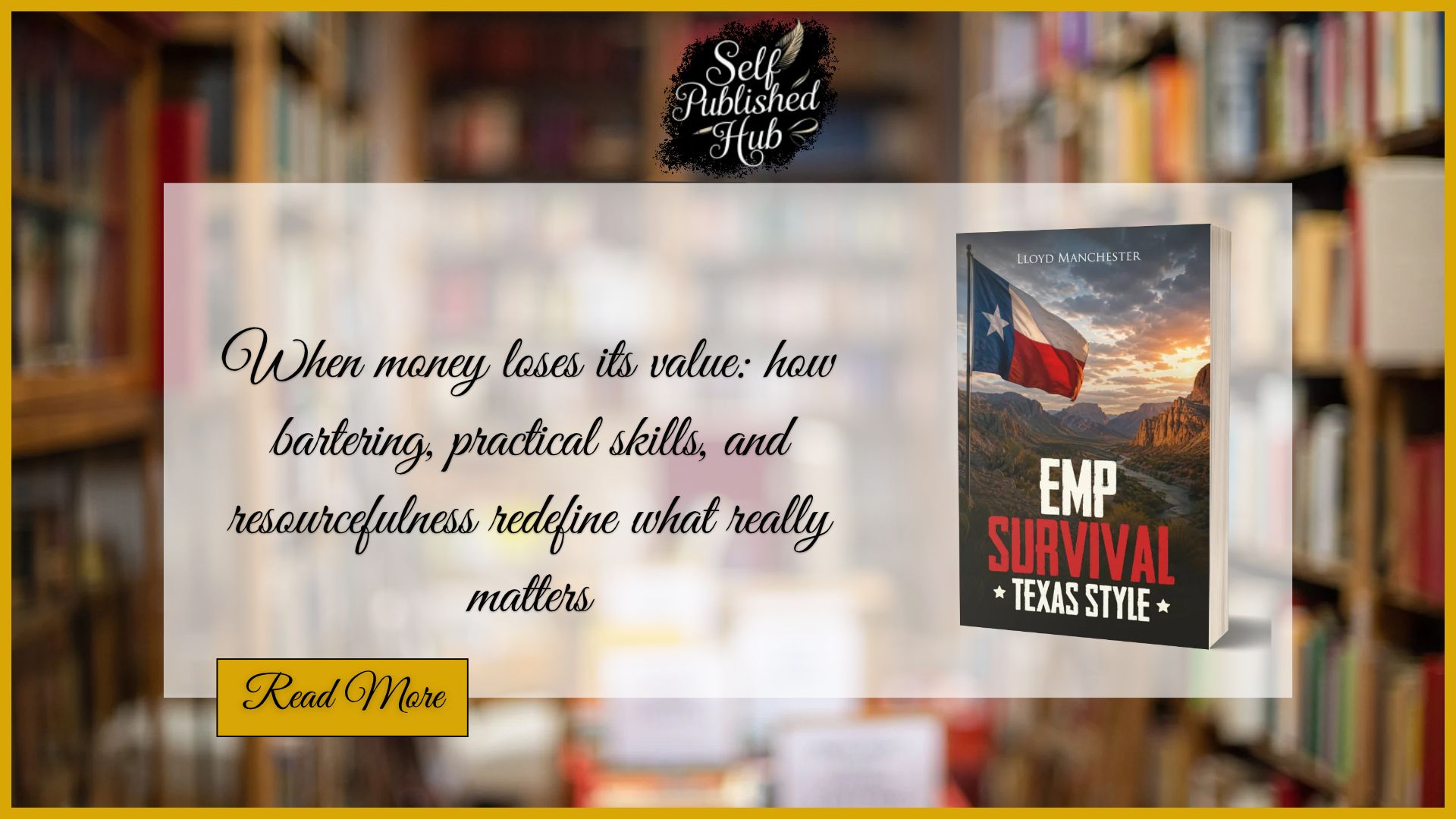
In EMP Survival Texas Style, an electromagnetic pulse disrupts everyday life, forcing individuals to reconsider how they obtain essential goods and services. The fictional crisis raises an important question: What becomes valuable when money alone can no longer guarantee survival?
THE RETURN OF BARTERING AND PRACTICAL EXCHANGE
Before modern payment systems became widespread, communities frequently exchanged goods and services directly. Bartering allowed people to obtain necessities by offering something useful in return.
Lloyd Manchester explores this approach through a rural community where traditional financial transactions gradually give way to practical exchanges.
Fresh milk, butter, eggs, and cheese become valuable trading resources. Families exchange available supplies for food, while mechanical parts, farming equipment, and household necessities take on new importance.
These situations highlight a simple principle: An item’s value depends not only on its monetary price but also on its usefulness and availability.
When resources become scarce, practical needs can reshape what people are willing to exchange.
WHY PRACTICAL SKILLS BECOME A FORM OF WEALTH
Possessing valuable goods is one advantage. Knowing how to produce, maintain, or repair them offers another.
When modern infrastructure becomes unreliable, skills such as farming, mechanical repair, animal care, and food preservation become increasingly important.
A mechanic who can restore old machinery contributes something that cannot easily be replaced. Someone who understands how to preserve meat or produce cheese helps extend the usefulness of available food.
In EMP Survival Texas Style, older farming equipment and traditional agricultural methods provide alternatives as fuel supplies become limited.
The broader lesson is that practical knowledge represents a form of wealth that does not depend entirely on financial institutions.
RESOURCEFULNESS CHANGES HOW WE DEFINE VALUE
A prolonged crisis also encourages people to reconsider what they discard, preserve, or overlook.
Tools, spare parts, building materials, clothing, and books may seem ordinary during comfortable times. Under difficult conditions, these same items can become essential resources.
Manchester’s fictional community demonstrates how repairing equipment, repurposing materials, and sharing expertise help reduce dependence on unavailable products.
Resourcefulness involves recognizing possibilities in what already exists rather than continually relying on replacement purchases.
It also requires thinking beyond immediate needs and considering what might become useful months or years later.
HUMAN RELATIONSHIPS BEYOND FINANCIAL TRANSACTIONS
Bartering is not simply an exchange of objects. It can also strengthen relationships through cooperation, mutual understanding, and trust.
The story includes families who cannot offer payment but still receive food, illustrating how compassion remains important even when resources are limited.
This distinction matters because a functioning community needs more than transactions. It needs people willing to recognize one another’s circumstances and contribute where possible.
RETHINKING WHAT MAKES US TRULY SECURE
Money remains an important part of modern life, but financial resources are not the only foundation of security.
Practical abilities, dependable relationships, adaptable thinking, and access to essential resources can provide additional forms of stability.
The most meaningful takeaway is not that money lacks value, but that its usefulness depends on the systems and circumstances surrounding it.
Preparing for uncertainty begins with a different question: Beyond what we can afford to buy, what do we know how to create, repair, preserve, and share?
EXPLORE THE BOOK
Hardcover: Buy the Hardcover on Amazon
Paperback: Buy the Paperback on Amazon