Science has transformed the way we understand the universe. It explains why planets move, how stars produce energy, how species evolve, and how living organisms inherit traits across generations. Questions once answered through myth or speculation can now be examined through evidence, observation, and experiment.
Yet some questions remain stubbornly open.
How did life first emerge from nonliving chemistry? What is consciousness? Is time exactly what it appears to be? Why does anything exist at all?
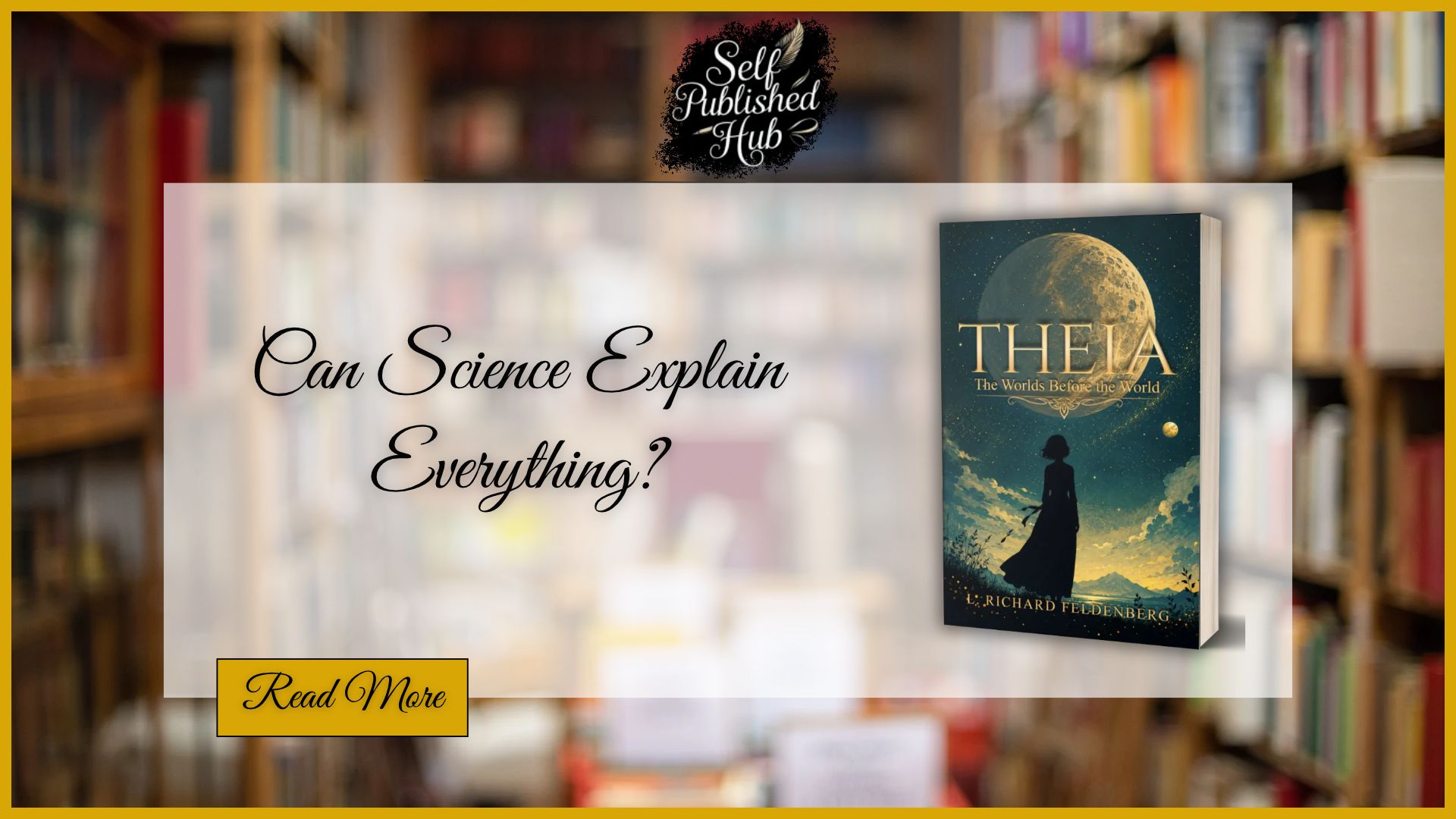
These questions sit near the heart of Theia, a science fiction novel where scientific curiosity collides with experiences that seem impossible to explain.
Theia Soul lives with something she has never been able to fit neatly into ordinary reality. She can communicate mentally with companions from distant periods of evolutionary history. She experiences their surroundings, senses their danger, and forms relationships with creatures separated from her by millions of years.
To a scientist, such claims demand evidence.
To Theia, they are simply part of her life.
That conflict becomes especially important as her world begins to intersect with people devoted to science. Astrobiology, evolutionary biology, physics, origins of life research, and questions about the nature of time all become part of a larger search for understanding.
The novel does not treat science as an enemy of mystery. Instead, it asks what happens when honest scientific inquiry reaches something it cannot immediately explain.
A strange experience does not automatically prove the supernatural. At the same time, dismissing something simply because it does not fit current knowledge can close the door on discovery.
Science itself advances because people continue asking questions.
There was a time when humanity did not understand microbes, genetics, radio waves, black holes, or the mechanisms driving evolution. The universe did not change when those discoveries were made. Our understanding changed.
That distinction matters throughout Theia.
Theia’s abilities force those around her to decide how much evidence they need before reconsidering what they believe. Some approach her experiences with skepticism. Others see possibilities that conventional explanations cannot easily contain.
The deeper Theia goes into the mystery, the greater the stakes become. Her connection with prehistoric life may have something to do with extinction, survival, and a threat reaching far beyond her personal struggles.
The question is no longer simply whether people believe her.
It is whether humanity understands enough about reality to recognize something important before it is too late.
Theia brings science, evolution, consciousness, love, and mystery into the same story without demanding that one erase the others.
Science can explain an astonishing amount.
But perhaps the most interesting discoveries begin with the things it cannot explain yet.
Want To Discover More? Head Over To Our Website: https://www.librarything.com/profile/RichFeldenberg