Most people think of England as a royal English land, with sophisticated people, language, culture, royalty, and humour, of course, to say the least. But did you know that England’s landscape is layered with ancient ruins? And almost every state has some famous haunted folklore and centuries of overlapping history that continue to capture the imagination of travelers, historians, and storytellers alike…
Then be it exploring the mist-shrouded megaliths standing in silent defiance of time or subterranean passages carved by ancient waters, the English land is filled with locations thrill seekers would love to explore. If you have guts, we have listed these eight fascinating sites that offer a direct, tangible glimpse into the mysteries that still need to be solved.
Stonehenge, Wiltshire: Perhaps England’s most iconic prehistoric monument, this massive ring of standing stones was constructed in distinct phases starting around 3100 BCE, with the famous sarsen stones erected between 2600 and 2400 BCE. It remains an enduring astronomical puzzle and spiritual focal point, aligning precisely with the summer and winter solstices.
Glastonbury Tor, Somerset: Steeped in Arthurian legend and ancient Christian folklore, this striking hill topped by St. Michael’s Tower is said to be the gateway to the Celtic underworld and the mystical isle of Avalon.
Hadrian’s Wall, Northumberland: Stretching 73 miles (118 kilometers) or 80 Roman miles across the rugged northern frontier from Wallsend to Bowness-on-Solway, this monumental barrier, begun by Emperor Hadrian in AD 122, evokes the raw history of ancient imperial defense, borderland isolation, and tactical control.
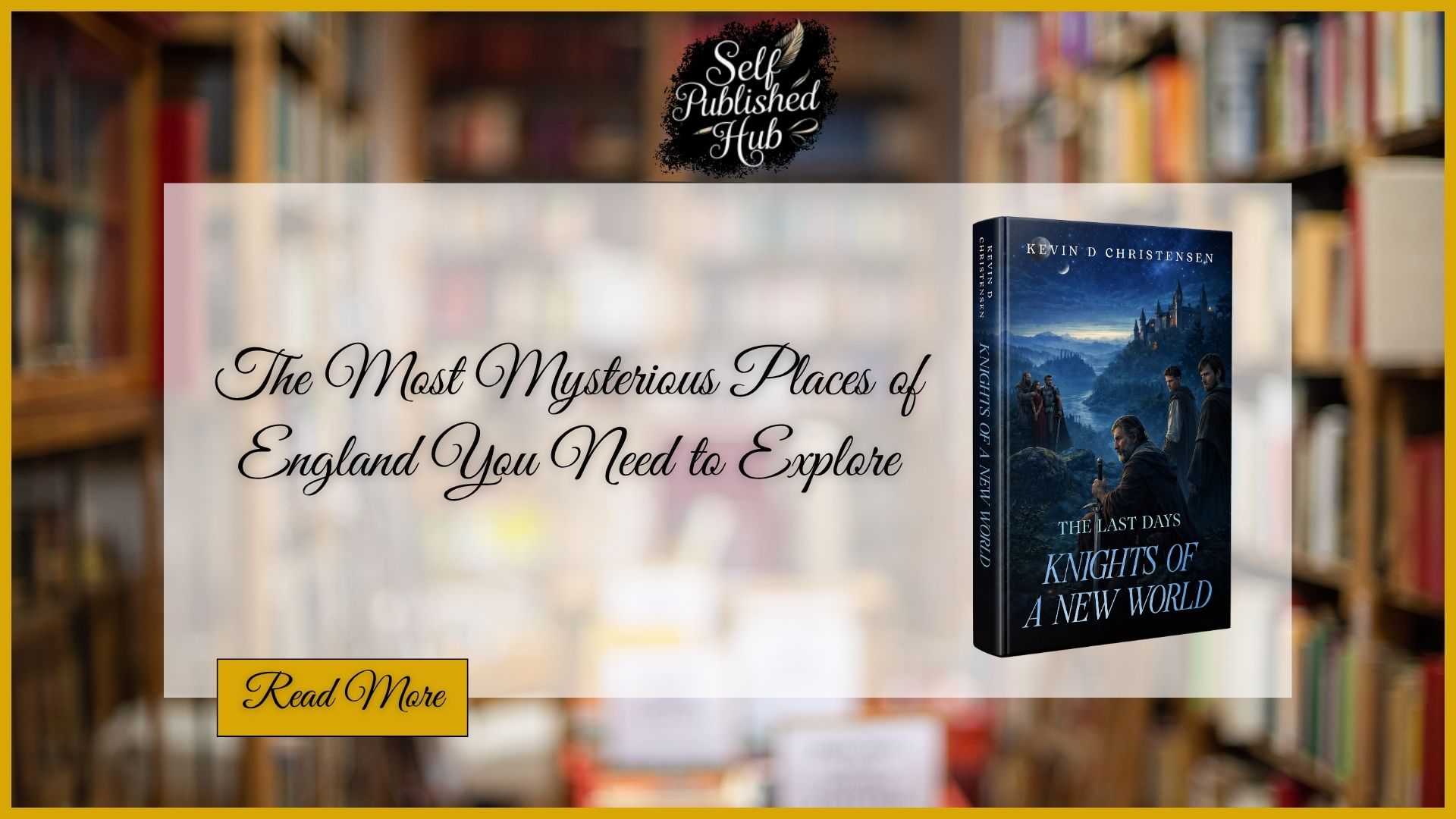
The Lost Land of Atlantis: While classical tradition places Atlantis in the Atlantic Ocean, what if Atlantis was always a part of Britain??? And instead of a sunken city, it features a futuristic tech civilisation that has landed on British territory, combined with elements of ancient sub-island mysteries and high-tech off-lander influences that are woven into the speculative backdrop, paralleling how futuristic capabilities and corporate-political powers disrupt historical settings like Roman-occupied Britain. Could that be possible? Yes, only if you read Knights of A New World.
If you are tired of predictable tropes and want a story that boldly defies genre boundaries, this book is a masterpiece that demands your undivided attention. Set against the atmospheric, mud-and-blood landscape of a fractured, sub-Roman Britain, the story takes a twist when the sky opens up, and Atlantis appears as a hyper-advanced, industrialized, spacefaring superpower. When these “Off-Landers” descend upon Britain, they bring atmospheric aircraft, data files, and corporate banking clans demanding resource rights. What follows is an incredible clash of civilizations where ancient prophecies are weaponized as political propaganda. Blending the sweeping tension of a space opera with the gritty reality of ancient warfare and modern political issues, Knights of A New World is an absolute must-read that redefines speculative fiction and will provide you with a great time.
Visit the author’s website, https://authorkevinchristensen.com/ to learn more.
Wookey Hole Caves, Somerset: A dramatic network of limestone caverns carved by the River Axe, wrapped in dark local legends involving witches, subterranean rivers, and thousands of years of ancient human habitation.
Avebury Stone Circle, Wiltshire: Encompassing 28.5 acres and featuring a massive circular chalk bank 1,400 feet in diameter alongside stones weighing up to 50 tons, this neolithic henge monument actually encircles an entire village and is larger and older than Stonehenge, offering an immersive, untamed historical experience.
Tintagel Castle, Cornwall: Clinging dramatically to rugged, wave-battered coastal cliffs, these medieval ruins are famously linked, through centuries of tradition, to the birth, reign, and legacy of King Arthur. If you want to find King Arthur’s legendary sword, perhaps you could find it embedded in a stone…If you do, good luck with obtaining it.
The Roman Baths, Bath: Deep in Somerset, these remarkably preserved ancient thermal springs are fed by natural hot water bubbling up at 46°C. This place reveals how sophisticated Roman engineering fused seamlessly with sacred Celtic rituals dedicated to the goddess Sulis Minerva.