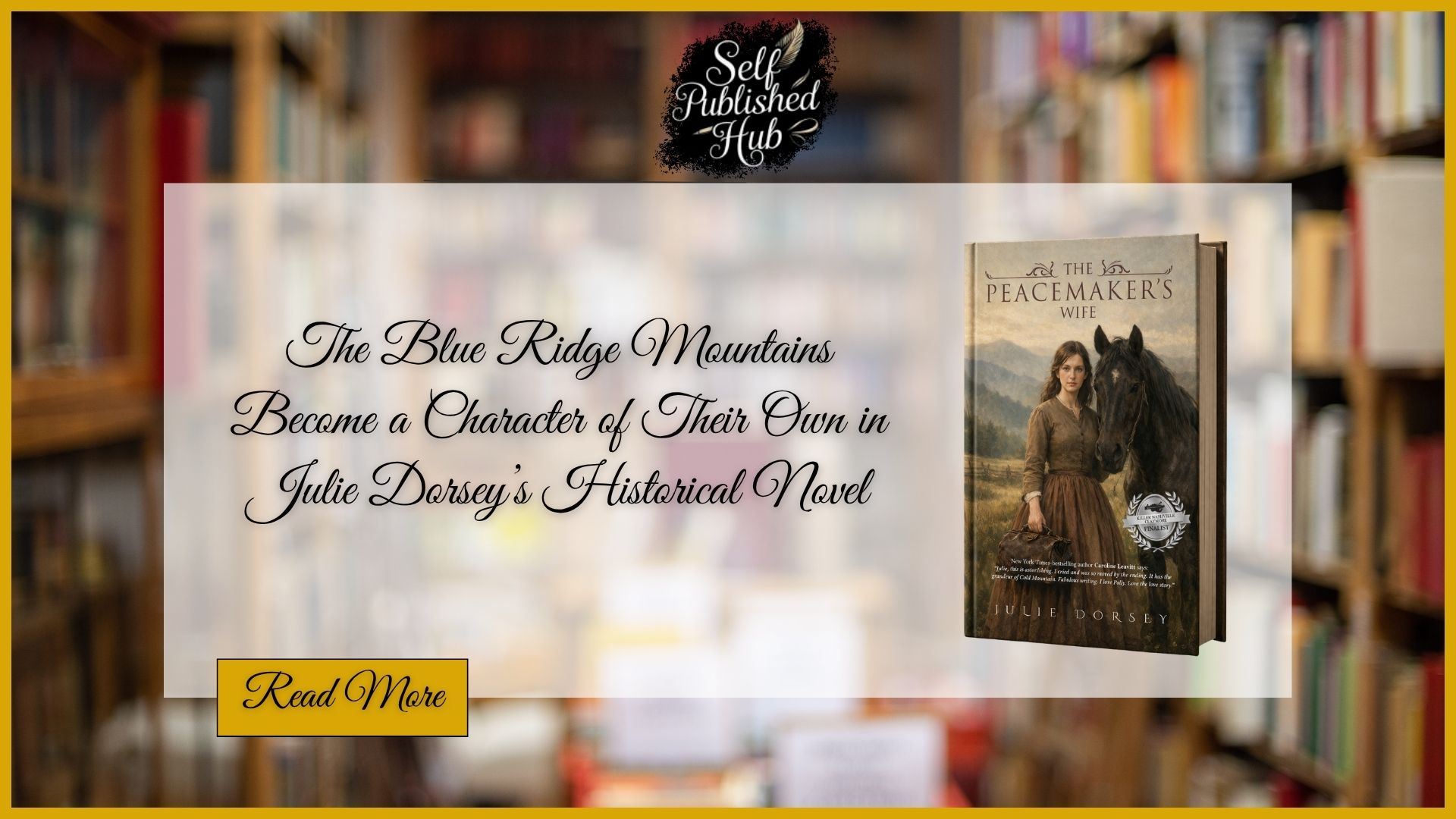
Some stories simply take place in a setting. Others seem to grow directly out of the land.
Julie Dorsey’s The Peacemaker’s Wife belongs to the second kind.
Set in the Blue Ridge Mountains of North Carolina, the novel uses the region not merely as a backdrop but as a living presence that shapes the lives, fears, beliefs and choices of its characters. From the first pages, the mountains feel ancient, beautiful, mysterious and sometimes threatening. The forests are filled with laurel, pine, oak, maple, ginseng, berries and medicinal plants but also with darkness, decay, hidden bodies and danger.
That contrast mirrors the novel itself.
At the center of the story is Polly Justice, a young woman determined to become a healer. Her life is closely tied to the land because so much of what she learns comes from it. Under the guidance of Nan Clark, the experienced healer of Blue Ridge, Polly studies herbs, roots, plants and traditional remedies gathered from the surrounding woods.
The mountains provide medicine.
They also hide secrets.
Early in Polly’s journey, a dead man is discovered beneath leaves in the forest. That unsettling discovery becomes part of a larger mystery involving suspicious deaths, black feathers, strange clues and the growing fear that someone dangerous may be moving among familiar neighbors.
In this way, the woods become both sanctuary and threat.
Polly often finds peace outdoors. Streams, trees, ridges and open skies offer her moments of calm when her home life becomes unbearable. Her marriage to John Justice, known throughout the community as “The Peacemaker,” grows increasingly troubled by his drinking, jealousy and violence. The natural world gives Polly space to think, breathe, learn and sometimes escape.
But the mountains are never entirely safe.
Remote roads, dense forests, isolated cabins and long distances between neighbors create vulnerability. A person can disappear. A murderer can hide. A woman traveling alone can be followed without anyone nearby to hear her call for help.
Then the Civil War adds another layer of danger.
The relative isolation of Blue Ridge cannot completely protect its people from soldiers, violence, loss and political conflict. As the war reaches closer to home, the mountains become a place people are both defending and trying to survive.
Yet Julie Dorsey also fills the setting with warmth and community.
There are crowded cabins, church gatherings, barn dances, funerals, births, shared meals and neighbors who know one another’s business. The harshness of mountain life is balanced by connection. People may quarrel, gossip and carry grudges, but they also come together when someone is sick, grieving, injured or in need.
That rich sense of place gives The Peacemaker’s Wife much of its personality.
The Blue Ridge Mountains are beautiful but unforgiving. They nurture life and conceal death. They offer healing plants and dangerous hiding places. They shelter families while trapping others in difficult circumstances.
Most importantly, they shape Polly herself.
She becomes Doctor Polly not in spite of the mountains, but because of what life there demands from her.
For readers who love historical fiction with vivid landscapes, strong women, mystery, romance, family drama and a deep sense of place, Julie Dorsey’s The Peacemaker’s Wife offers a journey into a Blue Ridge world that feels almost as alive as the people who inhabit it.