Poetry has a unique way of reaching places that ordinary language cannot. It does not simply describe emotions. It reflects them, often with surprising clarity. When written with honesty and depth, poetry becomes a mirror, revealing thoughts, memories, and feelings that may not even be fully understood until they appear on the page.
At its core, poetry captures the inner landscape. Emotions rarely exist in neat, logical patterns. They shift, overlap, and sometimes contradict one another. Poetry allows for this complexity. A single image can hold both beauty and sadness. A quiet scene can carry tension beneath its surface. This fluidity makes poetry a natural form for expressing what lies within.
One of the most effective ways poetry reflects emotion is through imagery. Instead of stating a feeling outright, it presents a scene that carries that feeling. A deserted street may echo loneliness. A fading light may suggest loss or change. These images act as emotional translations, turning internal experiences into something visible and tangible. The reader does not just understand the feeling. They experience it.
Memory also plays a powerful role. Emotions are often tied to moments, places, or fragments of the past. Poetry captures these fragments without needing to explain them fully. A brief recollection, a passing detail, or a fleeting thought can hold immense emotional weight. This approach mirrors how the mind works, moving between past and present without clear boundaries.
Another important element is ambiguity. Emotions are rarely simple, and poetry does not force them into clear definitions. Instead, it leaves space for interpretation. This openness allows readers to connect their own experiences to the words. A poem becomes both personal and universal, reflecting not only the writer’s inner world but also the reader’s.
Rhythm and pacing further shape emotional expression. Short, abrupt lines can create tension or urgency, while longer, flowing lines may suggest calm or reflection. Even silence between words carries meaning. The structure of a poem often echoes the emotional state it represents, reinforcing the connection between form and feeling.
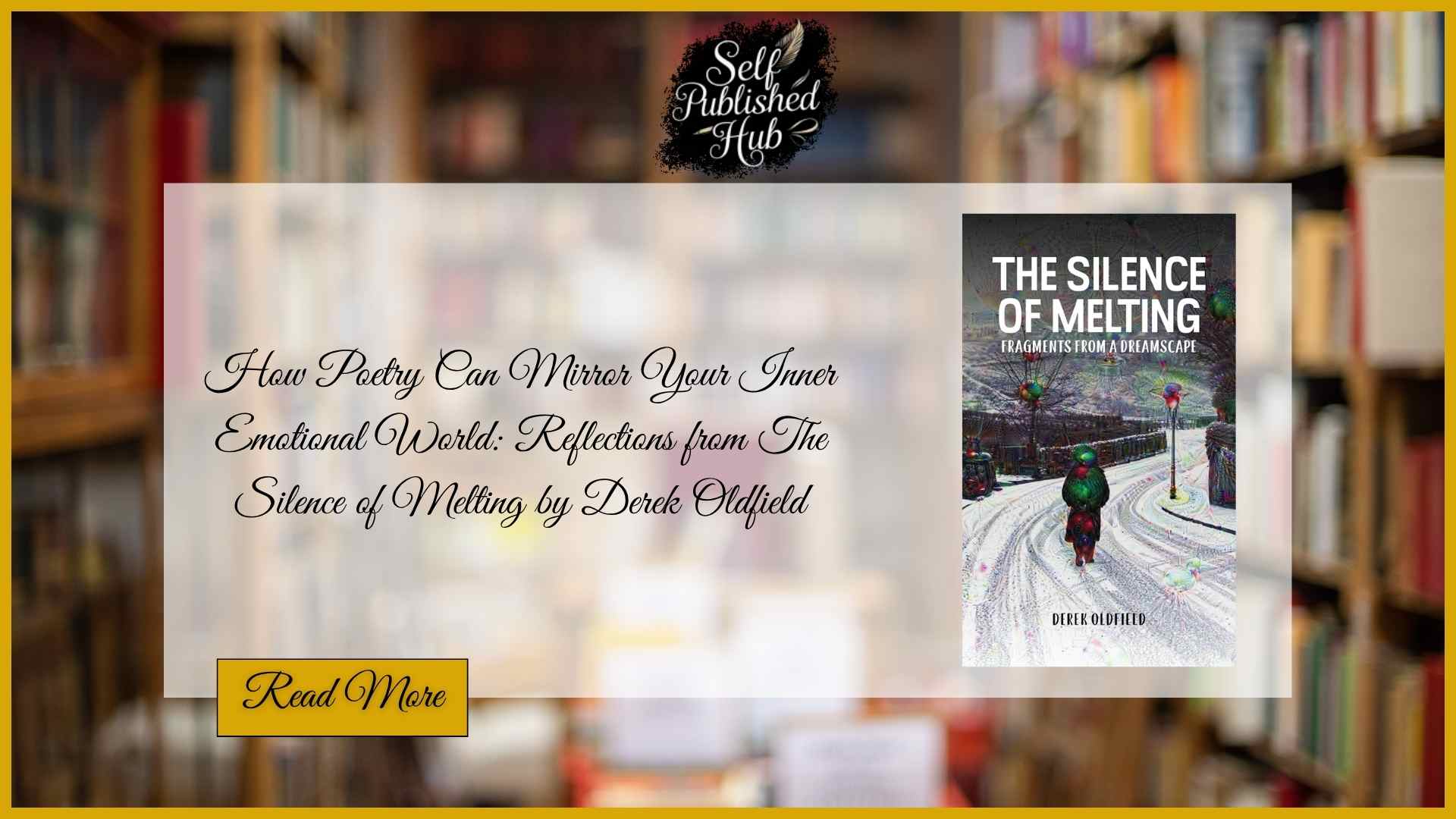
What sets The Silence of Melting by Derek Oldfield apart is its ability to capture these inner reflections with striking clarity. The poems do not simply tell stories. They present moments suspended between reality and imagination, where emotions take on visual and sensory form. Colours shift, spaces dissolve, and memories surface in unexpected ways, creating a reading experience that feels both intimate and expansive.
This kind of poetry invites readers to look inward. It encourages them to recognise their own emotions within the imagery and to see familiar feelings from a new perspective. It is not about finding clear answers. It is about understanding the depth and complexity of what it means to feel.
For anyone seeking a deeper connection with their inner world, poetry offers a path that is both honest and transformative. Through works like The Silence of Melting by Derek Oldfield, readers are reminded that their emotions, no matter how complex, can be seen, shaped, and expressed in ways that resonate far beyond the page.
Discover this book now, available on Amazon: https://www.amazon.com/dp/B0GT8Y5X8B/