For many parents, one of the most anticipated milestones is hearing their child speak. A first word carries meaning far beyond language. It represents connection, recognition, and a shared understanding of the world. When raising a child with autism, that moment often takes longer to arrive. And when it does, it rarely follows a predictable path.
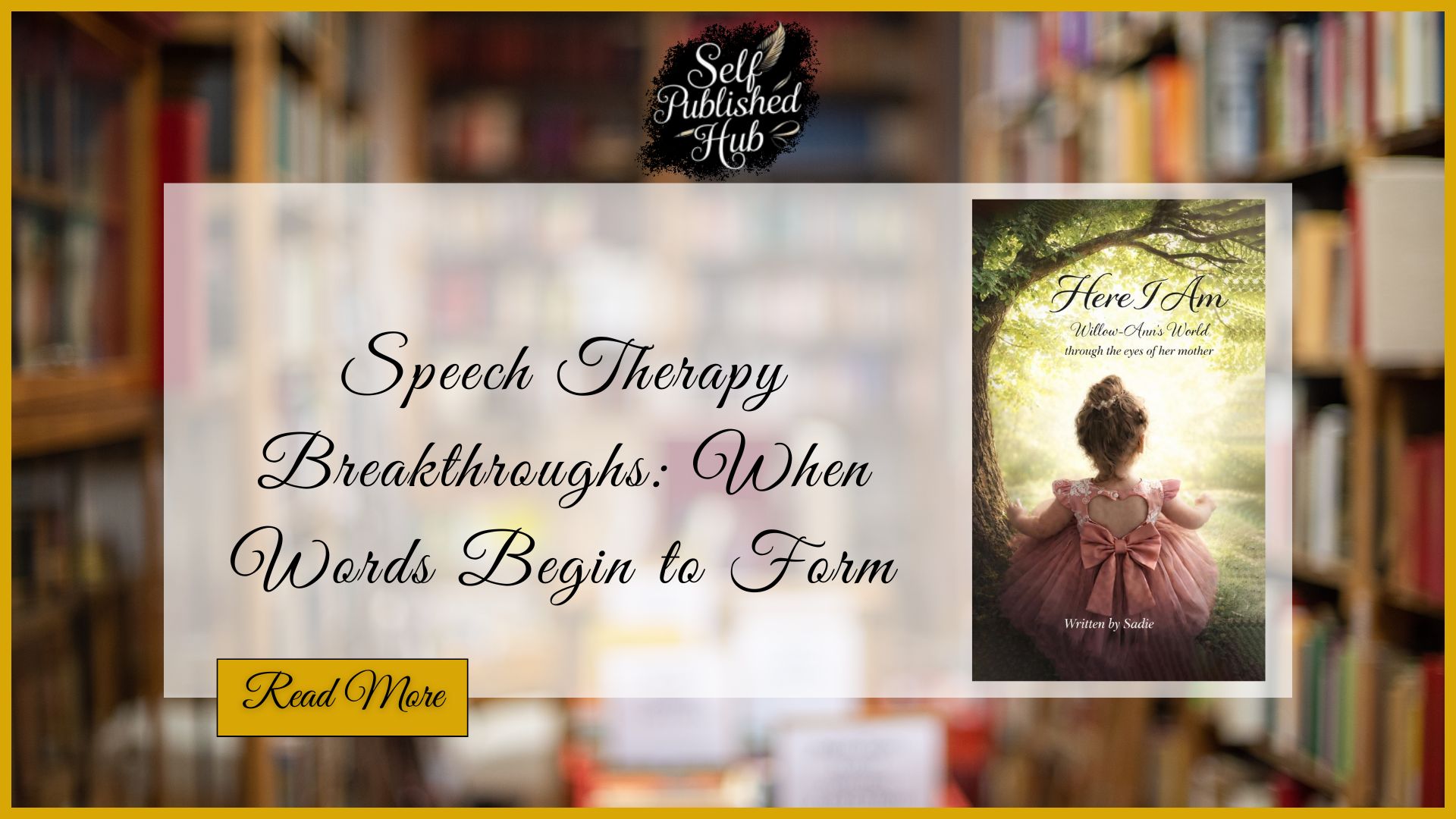
In Here I Am: Willow-Ann’s World So Far, Sadie McGloin captures this journey with honesty and depth. Speech is not presented as something that appears suddenly. It builds slowly, often in ways that are easy to miss if you are only listening for clear, structured sentences.
The early stages can feel uncertain. A child may remain silent for longer than expected. Words may not come when prompted. Questions may go unanswered. This can lead to concern, frustration, and a sense of not knowing how to help.
But beneath that silence, something is happening. Children who struggle with expressive language are often still processing everything around them. They are listening, observing, and storing information. The challenge is not always understanding. It is expressing that understanding in a conventional way. Speech therapy becomes a bridge.
It is not about forcing words. It is about creating opportunities for communication to emerge. Through repetition, play, and carefully guided interaction, children begin to explore language at their own pace.
One of the key insights from Sadie’s experience is that progress does not always look linear. Words may appear in fragments. A sound here, a repeated phrase there. Sometimes a child may echo words they have heard without fully breaking them down.
This is not meaningless. It is part of how language develops. Over time, these repeated phrases begin to shift. They become more intentional. They start to connect with real situations. A word that once seemed random suddenly fits perfectly in context. These moments are powerful.
A single word can change everything. Not because it solves all communication challenges, but because it opens a door. It shows that connection is forming in a new way.
What makes these breakthroughs even more significant is the effort behind them. For a child who processes language differently, producing a word can require intense focus and coordination. It is not just speaking. It is translating thought into sound.
Speech therapists play an important role in supporting this process. They introduce structure while allowing flexibility. They follow the child’s lead, building on interests and strengths rather than forcing rigid patterns.
This approach creates trust. When a child feels safe and understood, they are more likely to engage. They begin to take risks with language. They experiment, repeat, and gradually expand their ability to communicate. Parents are a central part of this journey.
Much of the progress happens outside of therapy sessions. It happens in everyday moments. During play, mealtimes, routines, and quiet interactions. These are the spaces where language is reinforced naturally. Patience becomes essential.
There are no quick fixes. No guaranteed timelines. Each child develops at their own pace, and comparison only adds unnecessary pressure. What matters is recognising progress in its smallest forms. A new sound. A shared word. A moment of understanding.
In Here I Am: Willow-Ann’s World So Far, these moments are not treated as minor achievements. They are celebrated for what they truly are. Evidence of growth, effort, and connection.
Speech, in this context, is not just about talking. It is about being heard. And when words begin to form, even in the simplest way, they carry the weight of everything that came before them.
Amazon Book Link : https://www.amazon.com/dp/B0GX7PZYBM/