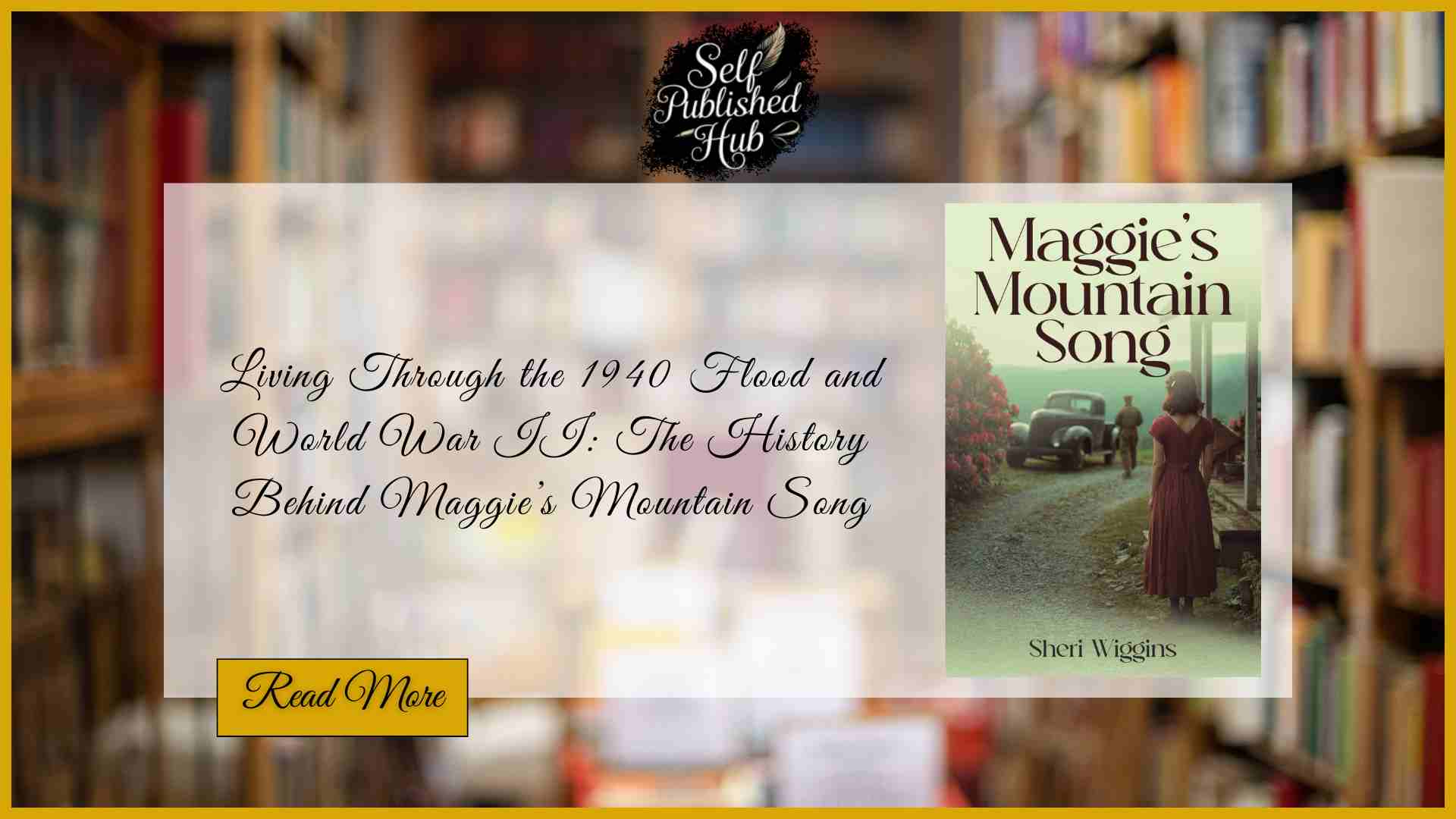
Set against the rugged beauty of Boone, North Carolina and the surrounding Appalachian highlands, Maggie’s Mountain Song by Sheri Wiggins is more than a personal coming-of-age story; it is also a vivid historical portrait of life during two defining events of the early 20th century: the devastating Appalachian floods and the global upheaval of World War II.
Through Maggie Spencer’s deeply personal narration, readers are transported into a time when history was not something distant or abstract, but something that arrived in the form of rising waters, breaking storms and letters from faraway battlefields. The novel captures how ordinary families in the Appalachian Mountains experienced extraordinary events with courage, faith and resilience.
One of the most powerful historical moments woven into the story is the 1940 Appalachian flood. In the novel, relentless rain transforms familiar creeks and hollows into dangerous, uncontrollable forces of nature. Landslides tear through mountainsides, rivers overflow their banks and families are forced to seek shelter as the world they know begins to shift beneath them. For Maggie and her family, the flood is not just a weather event; it is a moment of fear, survival and spiritual surrender.
The depiction of this disaster reflects the real struggles faced by communities across the Appalachian region during that period. Homes were damaged, farmland was lost and lives were forever changed. In Maggie’s Mountain Song, the flood becomes a symbol of both destruction and unity, as families come together in prayer, protection and mutual care. It is in these moments of crisis that Maggie’s faith deepens, shaped strongly by her Granddad Spencer, who anchors the family with prayer and ancestral wisdom.
Alongside natural disasters, the novel also explores the global impact of World War II. While the war takes place oceans away, its presence is felt deeply in the mountains of Appalachia. Young men from small rural communities begin preparing for military service and conversations about Europe, duty and national uncertainty find their way into everyday life.
Maggie’s close relationship with Robbie Bruce becomes especially meaningful during this time. As Robbie grows into adulthood, he becomes connected to a world shaped by military service and responsibility. Though the novel is grounded in Maggie’s perspective at home, the emotional weight of separation is felt through the uncertainty of war and the letters that bridge the distance between loved ones. These communications serve as lifelines, carrying hope, fear and love across continents.
World War II in Maggie’s Mountain Song is not just a historical backdrop; it is an emotional force that reshapes relationships and defines choices. It influences families, alters futures and accelerates the passage from youth into adulthood. For Maggie, it deepens her understanding of sacrifice and endurance, especially as she learns to hold on to love even when distance and uncertainty intervene.
What makes the historical elements of this novel especially compelling is how seamlessly they are woven into everyday Appalachian life. The hardships of farming, family responsibilities and community bonds continue even as floods rage and war unfolds. This contrast highlights the strength of rural families who lived through extraordinary times without losing their sense of identity or faith.
Ultimately, Maggie’s Mountain Song offers readers a powerful blend of personal narrative and historical reality. It reminds us that history is not only written in textbooks, but also lived in kitchens, barns, churches and mountain homes. Through Maggie’s voice, the 1940 flood and World War II become more than events; they become lived experiences shaped by love, resilience and unshakable faith.
For readers who appreciate historically grounded fiction with emotional depth, this novel offers an unforgettable journey into a time when the world changed and so did everyone living within it.
Get Your Copy On Amazon Today: https://www.amazon.com/dp/1971228125