Love is often described as effortless, natural, and magical, thanks to the movies and K-dramas we have been bombarded with recently. It is also portrayed as something that has the power to change a person completely. While some of these attributes might be true and can be applied in our daily lives, in a realistic scenario, love has many aspects that are directly connected to us and our emotional consciousness.
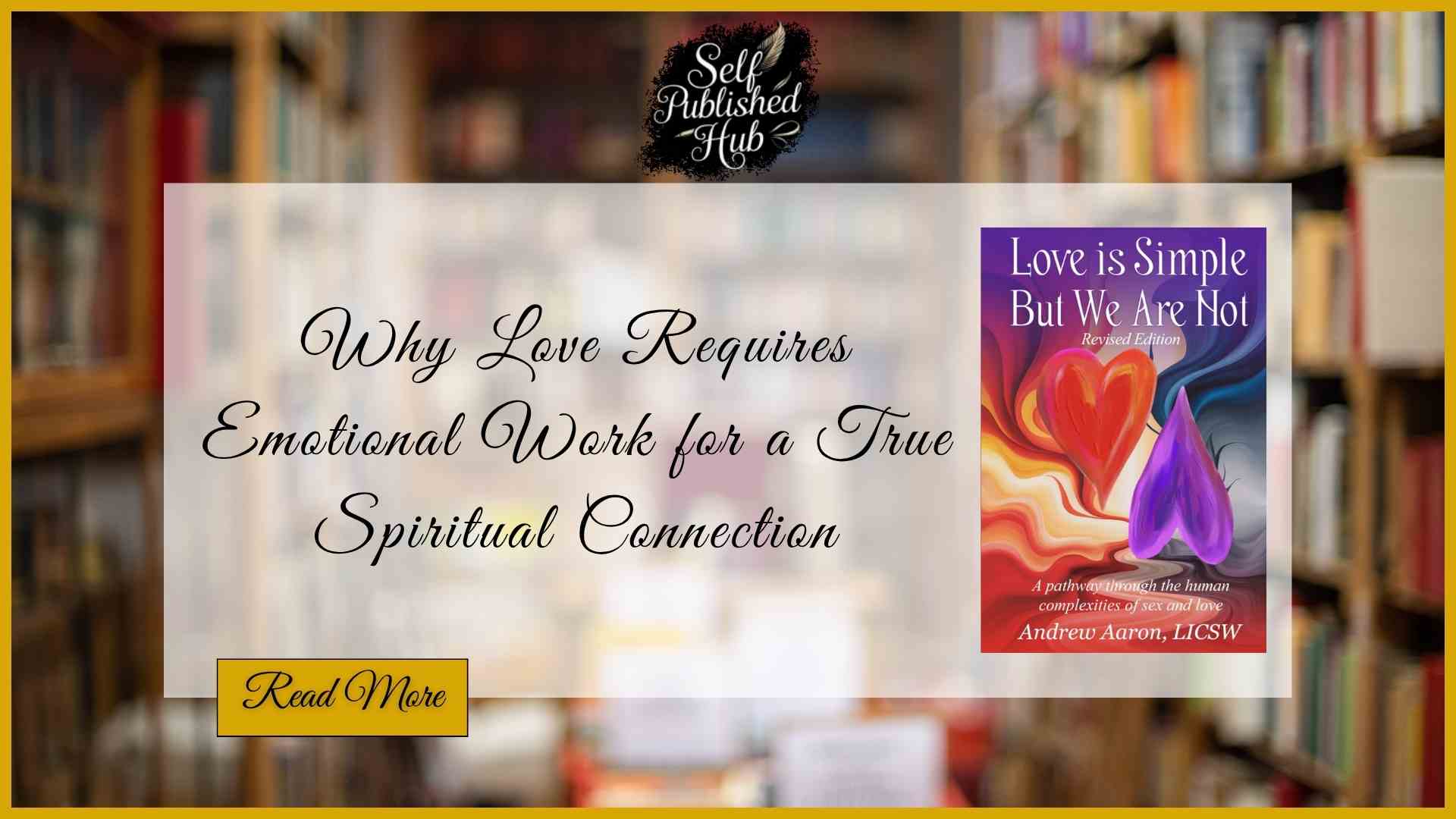
If you are struggling in love, intimacy, or maintaining a true emotional and spiritual connection with your partner, Love Is Simple, But We Are Not by Andrew Aaron, LICSW challenges that idea and argues that love may be simple in essence, but experiencing it fully requires deep emotional work.
Many people believe that love should feel easy all the time. When it becomes difficult, they assume something is wrong. The book dismantles this belief. Love is not just a feeling you fall into. It is something you actively build. It requires effort, awareness, and intentional growth.
Emotional work is the process of:
- Understanding your reactions
- Facing your fears
- Letting go of harmful patterns
Without this work, love remains shallow. It may feel good in the beginning, but it cannot sustain depth or connection. And a true spiritual connection between partners depends on emotional openness. However, most people carry unresolved emotions from their past. These include:
- Fear of rejection
- Shame and insecurity
- Unresolved childhood experiences
When these emotions remain unexamined, they create barriers, and partners may appear close on the surface but remain emotionally distant underneath. By highlighting such cases and real-life experiences, the author is able to share a real and more precise look, emphasizing that intimacy often brings these hidden emotions to the surface. This is not a flaw in the relationship. It is part of the process.
Why Love Feels Difficult Over Time
In the early stages of a relationship, connection feels effortless. This is because partners have not yet fully revealed themselves. As time passes, deeper layers emerge. This is where emotional work begins.
You start to see:
- Your partner’s imperfections
- Your own triggers and sensitivities
- Patterns that repeat in conflict
Many people interpret this stage as a sign that love is fading. In reality, it is an invitation to grow. A spiritual connection is not created through perfection. It is created through authenticity. To reach that level, both partners must be willing to:
- Be seen fully, including flaws
- Express their needs honestly
- Accept each other without judgment
This level of openness is uncomfortable. It requires courage. But it is also what transforms a relationship from ordinary to meaningful. The book makes it clear that avoiding vulnerability prevents love from deepening. Growth only happens when you allow yourself to be fully known.
The book emphasizes that relationships are designed to foster our growth. They encourage us to strive for self-improvement. This means choosing growth over comfort. Then, be it addressing conflict instead of avoiding it, communicating honestly instead of staying silent, or taking responsibility instead of blaming, your every effort to strengthen and communicate yourself to your partner will enhance the emotional connection that will evolve over time.
The effort required for emotional growth is significant, but so is the reward. When both partners commit to this process, they create:
- A deeper emotional bond
- A stronger sense of trust
- A more fulfilling connection
And when this happens, love becomes stable, meaningful, and resilient. In Love Is Simple, But We Are Not, Andrew Aaron shows that the goal is not to avoid difficulty. The goal is to grow through it.
Please head to Amazon to purchase your copy: https://www.amazon.com/dp/1972134183/.
For additional resources and insights, readers can visit Andrew’s website at : https://www.helpforpassion.com/