We are standing at the edge of a transformation that rivals any shift in human history. Artificial intelligence (AI) and humanoid robotics are no longer distant possibilities; they are active forces reshaping how industries operate, how decisions are made and how humans experience work itself. From manufacturing floors to hospital operating rooms, from logistics networks to emergency response systems, intelligent machines are becoming embedded in the operational core of modern society.
Yet, amid this rapid acceleration, a critical question emerges: Will the next industrial revolution remain human-centered or will it gradually drift away from human needs, values and well-being?
The answer is not determined by technology alone. It will be determined by design by the frameworks, ethics and safety systems we choose to implement today.
Historically, every industrial revolution has delivered both progress and unintended consequences. The steam engine revolutionized production but introduced dangerous working conditions. Electrification expanded global productivity but created new forms of occupational exposure. Even the digital revolution improved efficiency while introducing ergonomic strain and cognitive overload. Each era demanded a new approach to safety and risk management.
Today, we face a similar turning point but with far more complex implications.
AI systems now influence hiring decisions, monitor worker performance, optimize production lines and even assist in healthcare diagnostics. While these technologies improve speed and accuracy, they also introduce risks that traditional safety models were never designed to address. These risks are no longer limited to physical harm. They extend into psychological stress, algorithmic bias, surveillance pressure, cognitive overload and the gradual erosion of human autonomy in decision-making.
Without intentional safeguards, the workplace of the future could become one where humans are not central participants but peripheral observers in highly automated systems.
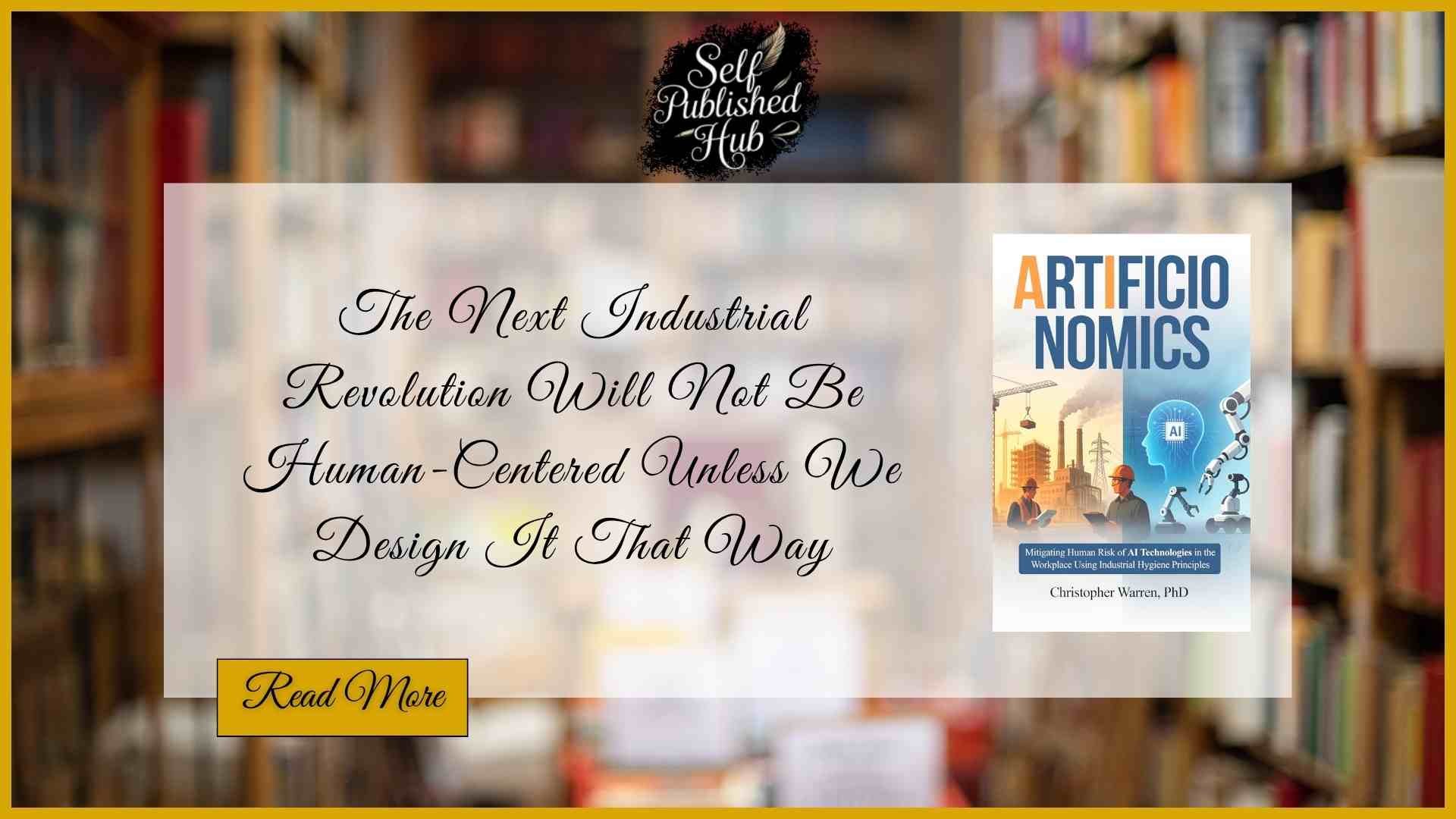
This is where the emerging discipline of ArtificIonomics, introduced by Christopher Warren, becomes critically important. ArtificIonomics is a groundbreaking framework that applies industrial hygiene principles to the age of artificial intelligence and robotics. It reframes workplace safety by recognizing that human risk in AI-driven environments is not only physical but also cognitive, emotional and ethical.
Unlike traditional safety approaches that focus primarily on chemical, biological or mechanical hazards, ArtificIonomics expands the lens to include the invisible risks of intelligent systems. It asks a fundamental question: How do we protect human well-being in environments where machines think, learn and act alongside us?
The framework is built on three foundational principles: identify, evaluate and control.
First, organizations must identify AI-related hazards beyond the obvious technical failures. These include stress caused by constant surveillance, overreliance on automated decision systems and the psychological strain of working alongside autonomous machines.
Second, risks must be evaluated not only through quantitative metrics like error rates or productivity gains but also through human-centered indicators such as trust, mental fatigue and perceived fairness.
Finally, control strategies must evolve. Eliminating or redesigning harmful systems, engineering transparent AI interfaces and supporting workers with mental health resources and adaptive training programs become essential components of modern occupational safety.
The urgency of this shift is underscored by global labor forecasts. According to the World Economic Forum, automation could displace tens of millions of jobs while simultaneously creating new roles centered on human-machine collaboration. Meanwhile, research from firms such as McKinsey & Company highlights the growing risk of stress, burnout and emotional fatigue if AI adoption is not responsibly managed.
But beyond statistics lies a deeper concern: the question of purpose. If machines increasingly perform both physical and cognitive labor, what becomes of human identity in the workplace? What happens to meaning, dignity and fulfillment when productivity is no longer uniquely human?
These are not abstract philosophical concerns; they are urgent design challenges.
The next industrial revolution will not automatically be human-centered. It will reflect the priorities embedded in its systems. If efficiency is the only goal, humanity may be reduced to a supporting role. But if well-being, dignity and ethical responsibility are built into the foundation of AI systems, then technology can become a powerful extension of human capability rather than a replacement for it.
This is the central vision of ArtificIonomics: a future where innovation does not come at the expense of human experience, but enhances it. A future where safety professionals, engineers, policymakers and organizations work together to ensure that technological progress remains aligned with human values.
The future is not something we inherit; it is something we design.
And if we fail to design it with intention, it will design us instead.
Available On Amazon: https://www.amazon.com/dp/B0GFY4RL6B/