Many people think of spirituality as something that happens in quiet places. Churches. Nature trails. Meditation rooms. But for those who care for animals, spirituality often shows up in far less formal settings. It appears while refilling a water bowl, cleaning a cage, or sitting quietly beside an animal that needs comfort.
Caring for animals is not usually framed as a spiritual act, yet it carries many of the same qualities. Presence. Responsibility. Humility. It asks for consistency rather than performance. You cannot rush it or fake it. The animal knows.
Animals live fully in the moment. They do not dwell on yesterday or plan for tomorrow. When you care for them, you are invited into that same mindset. Feeding, grooming, and tending injuries require focus. Distraction does not help. This kind of attention grounds you in the present, which is where most spiritual traditions place their emphasis.
There is also surrender involved. You cannot control everything when caring for an animal. You can provide safety, nourishment, and love, but you cannot dictate outcomes. Illness happens. Aging happens. Loss happens. Learning to accept this without hardening yourself is a quiet spiritual lesson.
Animals also teach compassion without conditions. They do not care about status, productivity, or past mistakes. They respond to tone, consistency, and care. Showing up for them day after day builds a form of devotion that does not require belief or ritual. It requires action.
For people involved in rescue, this becomes even clearer. Rescuing animals often means stepping into uncomfortable situations. Neglect. Fear. Injury. You do not walk away unchanged. You learn to act even when the outcome is uncertain. That willingness to engage with suffering rather than avoid it is deeply spiritual, even if it is never labeled that way.
Small animals often teach this most clearly. Rabbits. Birds. Bees. Creatures that are easily overlooked depend entirely on humans to notice when something is wrong. Choosing to care for them is choosing awareness. It is choosing to see what others pass by.
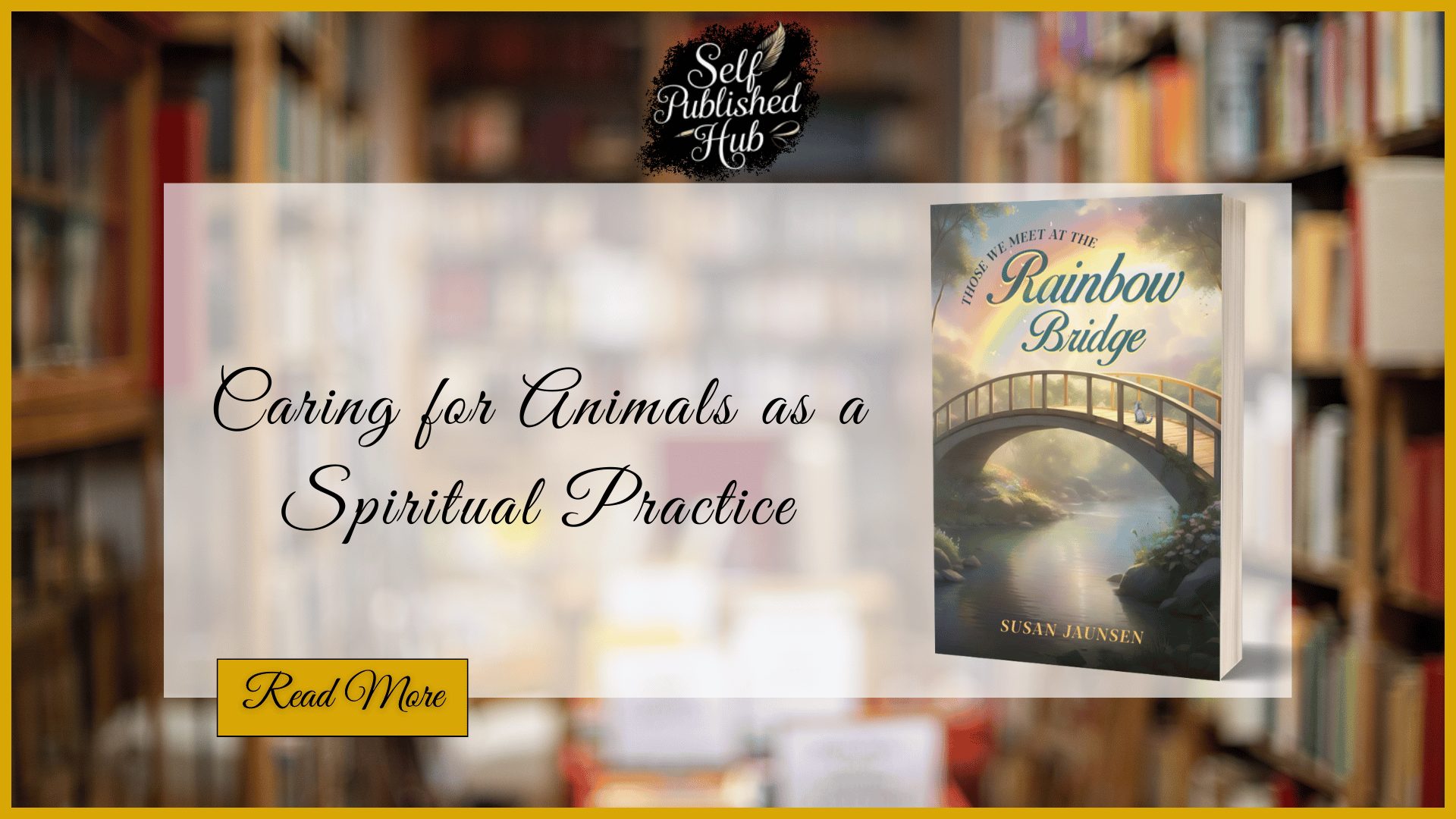
In Those We Meet at the Rainbow Bridge by Susan Jaunsen, caring for animals is not presented as heroism. It is presented as responsibility and relationship. The animals are not props for spiritual insight. They are partners in it. Through care, the author learns patience, restraint, and accountability. These lessons arise naturally from the act of caring itself.
There is also grief woven into this practice. Loving animals means accepting that loss will come. Spiritual growth is not about avoiding pain; it is about embracing it. It is about learning how to hold it without becoming closed. Animals teach this gently. They ask us to love fully even when we know the ending.
Caring for animals also shifts how people see themselves. You begin to measure your days differently. Success looks like comfort provided. Fear eased. Life protected. These are quiet achievements, but they shape character deeply.
Over time, this kind of care alters how you navigate the world. You become more attentive. More patient. Less reactive. You learn that service does not require recognition to be meaningful.
Spiritual practice does not always involve words or beliefs. Sometimes it involves showing up. Sometimes it involves cleaning, feeding, waiting, and staying when it would be easier to look away. Animals teach this through their needs and their trust.
Caring for animals is not about perfection. It is about presence. And presence, repeated over time, becomes a form of devotion.
Head to Amazon to purchase your copy: https://www.amazon.com/dp/B0GBPTBPP5/.