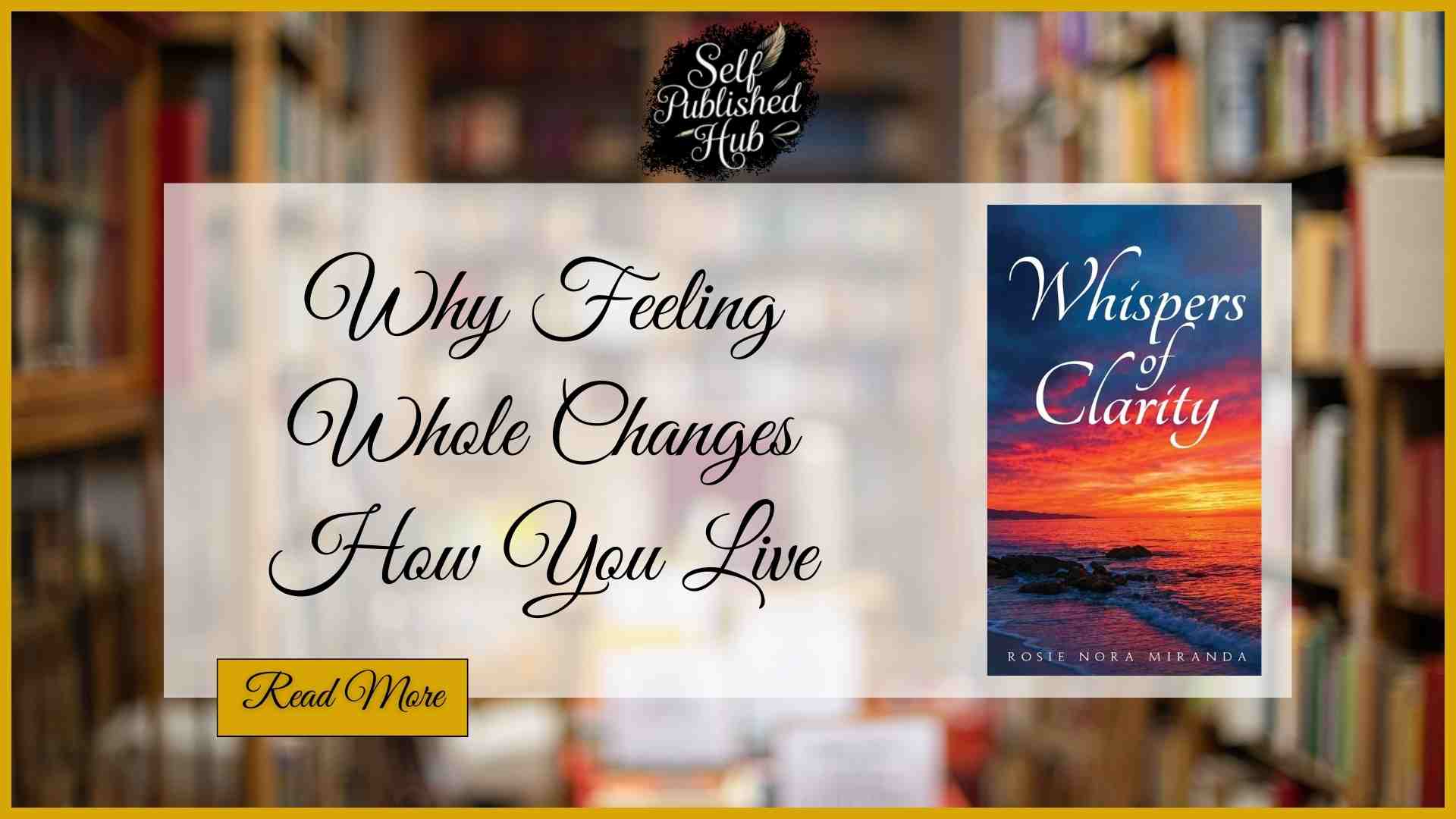
Feeling whole changes how you live because it shifts your relationship with yourself, your choices, and the world around you. When a person feels incomplete, life is often approached from a place of lack. Decisions are driven by the need to fix, prove, or fill something missing. When wholeness is recognized, life is no longer about becoming enough. It becomes about expressing what is already present.
Many people move through life believing they must earn peace, confidence, or spiritual connection. This belief creates constant striving. When someone feels whole, that striving softens. There is less urgency to chase validation, approval, or certainty. Actions begin to flow from clarity rather than fear. Life feels less reactive and more intentional because decisions are no longer shaped by inner fragmentation.
In Whispers of Clarity by Rosie Nora Miranda, wholeness is not presented as a future destination but as an inner truth waiting to be acknowledged. Through stillness, breath, and reflection, the reader is guided to recognize that nothing essential is missing. This realization is transformative. When wholeness is felt, the internal dialogue changes. Self criticism loses its grip. Compassion replaces judgment. The mind becomes a place of support rather than conflict.
Feeling whole changes how challenges are perceived. Instead of viewing difficulties as evidence of failure or inadequacy, they are seen as experiences to move through with steadiness. A person who feels whole understands that setbacks do not define their worth. This perspective builds resilience. Problems still arise, but they no longer threaten identity or self value. Life becomes less about surviving challenges and more about responding wisely to them.
Relationships also shift when wholeness is present. When someone feels incomplete, relationships are often used to fill emotional gaps. This can create dependency, fear of loss, or the need for constant reassurance. Feeling whole allows relationships to be experienced as connections rather than lifelines. There is room for honesty, boundaries, and mutual respect. Love becomes an expression of fullness instead of a solution to emptiness.
Wholeness also affects how time and energy are used. When inner conflict quiets, mental energy is freed. Focus improves because attention is no longer scattered by self doubt or comparison. In Whispers of Clarity by Rosie Nora Miranda, this clarity is described as a natural result of inner alignment. When the mind is not divided against itself, purpose becomes clearer and choices feel more grounded.
Feeling whole changes spiritual awareness as well. Instead of seeking God as something distant or conditional, the individual begins to recognize divine presence within. Spiritual connection becomes personal and continuous rather than occasional or external. This recognition brings comfort and trust. Life no longer feels like something to endure alone. Guidance is sensed inwardly, often through calm insight rather than forceful direction.
Another profound change occurs in emotional regulation. Wholeness allows emotions to be experienced without overwhelming identity. Feelings arise and pass without being suppressed or exaggerated. This emotional balance creates stability. Joy is felt more deeply because it is not dependent on external conditions. Pain is processed more gently because it is not interpreted as proof of brokenness.
When a person feels whole, the need to control outcomes diminishes. Trust increases. There is confidence in the ability to navigate uncertainty without losing oneself. This trust leads to courage. Risks are taken not to prove worth, but to explore growth. Life becomes more expansive and less constrained by fear.
Wholeness also brings peace into ordinary moments. There is appreciation for simplicity, presence, and stillness. Daily life feels meaningful without needing constant stimulation. In Whispers of Clarity by Rosie Nora Miranda, this peace is shown to arise naturally when inner completeness is acknowledged rather than pursued.
Feeling whole changes how you live because it changes who you believe you are. Life stops being a search for what is missing and becomes an unfolding of what is already true. From that place, choices align more easily, relationships deepen, and challenges are met with calm strength. Wholeness does not remove difficulty, but it transforms the way life is experienced at every level.
Book now available on https://www.amazon.com/dp/1971610186/.