Communities built on shared belief often depend on structure to survive. In early New England, faith was not only spiritual but social. It shaped law, morality, and daily behavior. When fear entered those spaces, belief systems became tools of control rather than comfort. This environment forms the foundation of many historical narratives set in Salem.
Fear did not arrive suddenly. It grew through isolation, limited medical knowledge, and strict moral expectations. Illness, loss, or misfortune demanded explanation, and belief filled the gaps left by uncertainty. Objects, rituals, and symbols became ways to protect oneself against the unknown. These practices offered comfort, but they also created skepticism.
When fear overpowers belief, communities begin to police one another. Protection becomes accusation. Faith shifts from guidance to enforcement. In Salem, personal objects once meant for safety could be reinterpreted as signs of guilt. This transformation reveals how easily belief systems can be twisted when survival feels threatened.
Control thrives where questions are silenced. Authority figures often framed fear as righteousness. Those who challenged accepted explanations risked exclusion. This dynamic created an environment where silence became safer than truth. The weight of expectation shaped behavior as strongly as law.
Historical accounts show that fear rarely acts alone. It relies on shared belief to justify itself. Once belief hardens into certainty, compassion weakens. Communities begin to protect their structure rather than their people. In Salem, this shift had lasting consequences that extended far beyond individual accusations.
Understanding these patterns matters because they repeat. Fear still influences how societies respond to uncertainty. When belief becomes rigid, it can lose its ability to heal. Examining Salem through this lens allows readers to reflect on how easily protection turns into control.
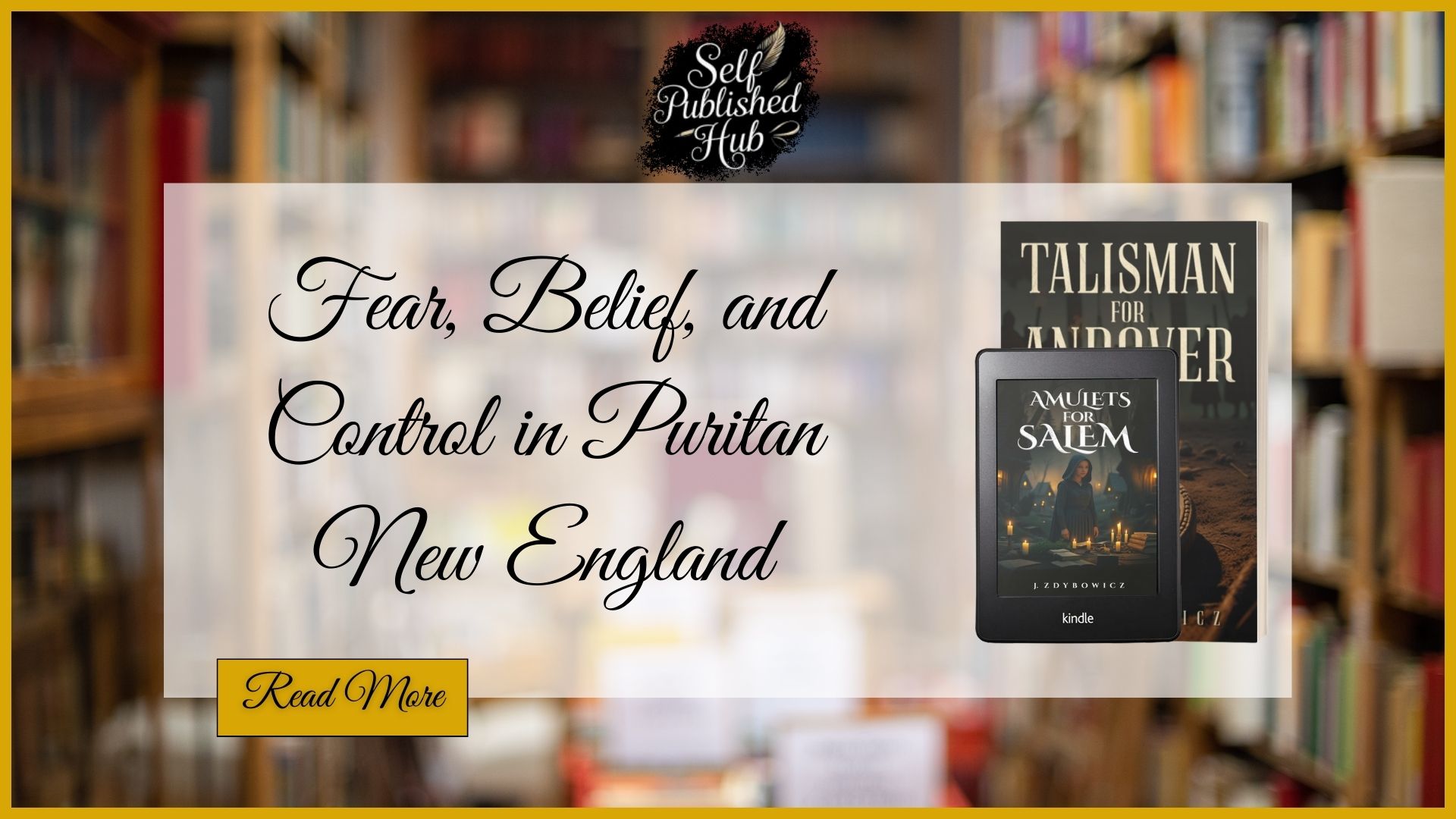
These themes are explored thoughtfully in Amulets for Salem, a historical novel that examines belief, fear, and survival within a tightly bound Puritan community. Through its rich storytelling and historical detail, the book invites readers to observe how ordinary people navigate uncertainty when faith and fear become inseparable.
Perfect for fans of Ļe Crucible, Ļe Witch, and Ļe Bear and the Nightingale, Ļe Hollow Rebellion is a haunting historical fantasy about the cost of silence, the strength of sisterhood, and the kind of magic that endures in blood, roots, and memory.
Here’s a link for Amulets for Salem: https://www.amazon.com/dp/1969868244/.
Here’s a link for Talisman for Andover: https://www.amazon.com/dp/B0GF4738J6
Understanding these patterns matters because they repeat. Fear still influences how societies respond to uncertainty. When belief becomes rigid, it can lose its ability to heal. Examining Salem through this lens allows readers to reflect on how easily protection turns into control.