Imagine the President of the United States steps up to a podium and admits, in front of the entire nation and the world, that America made a mistake. And it was not a small oversight, but a monumental error that has shifted the balance of global power for decades.
That mistake was signing onto free trade with China in 2001.
The scene is powerful. The President explains how the assumption of that time, that cheap goods would benefit everyone and that prosperity in China would eventually lead to openness and democracy, was wrong. He admits that instead of building equilibrium, it fueled dependency. Wealth poured out of America while Chinese factories grew stronger, and Beijing used its rising economic muscle to expand military power and tighten political control. The President speaks clearly: the balance must be restored.
In this speech, the President outlines a decisive path forward. A formal notice is sent to the World Trade Organization in Geneva, informing them that the U.S. will terminate the 2001 trade terms. The aim is not to cease trade but to transform it into Equal Trade, where the U.S. imports from China only as much as it exports there. Trade will persist, but it will no longer be an unlimited transfer of wealth.
The announcement is not left vague. The White House releases details the same day, identifying industries that will no longer be allowed to buy from China after a six-month transition. Strategic sectors such as defense and advanced technology are prioritized for immediate reshoring. Everyday consumer items such as t-shirts and jeans might still be imported. But key sectors are required to restore supply chains either domestically or within non-strategic, well-regulated markets.
To manage this monumental change, a new Import and Export Trade Bureau is created. Its job is to oversee rules, monitor compliance, and adjust policies as needed. A capable official is appointed to lead the effort. Lobbying from powerful corporations, which will undoubtedly fight these changes, is restricted to prevent derailment. Extensions may be granted for industries that cannot adapt within six months, but the rule is clear: dependency on China must end.
What stands out in this vision is the clarity of purpose. The President emphasizes that the goal is not simply to protect U.S. industry, though that will naturally follow. The deeper aim is to stop fueling China’s enrichment—a flow of money that has emboldened a government hostile to democracy. By cutting that enrichment off, America will correct a historic error and reclaim control of its economic destiny.
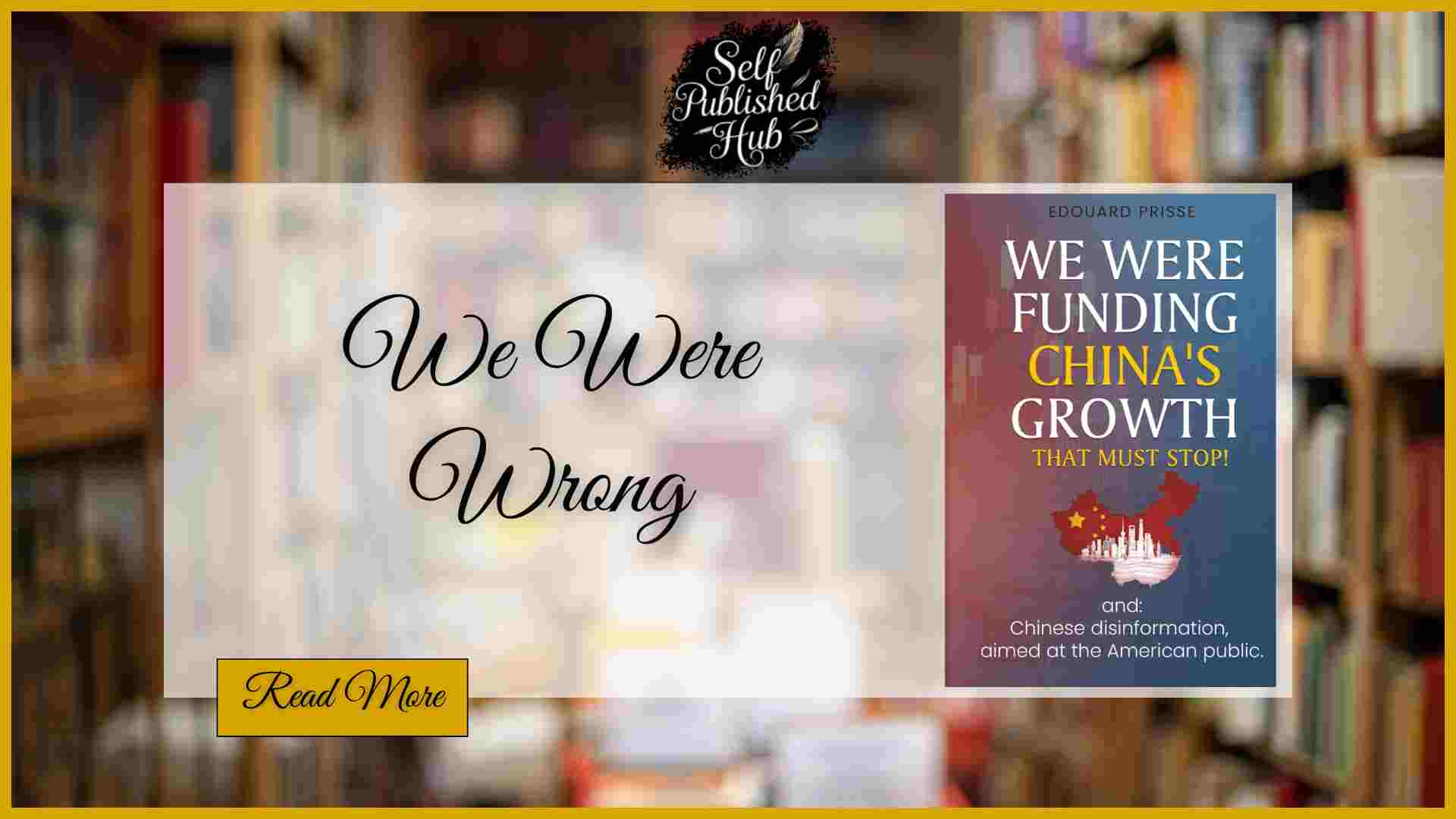
This scenario may sound ambitious, but it is not impossible. As Prisse points out in We Were Funding China’s Growth That Must Stop!, survival and adaptation are at the heart of business. Faced with clear rules, industries will adjust. Some will shift sourcing to other countries. Many will invest in U.S. production again. It will be challenging, but entirely feasible.
The larger question is whether America has the willpower to take such a step. Can a leader face down the lobbying machine, the short-term profit fears, and the political resistance, and instead act with long-term vision? That remains to be seen.
In short, the only way forward is to admit the mistake and fix it. And for those who want to understand the depth of that mistake and the solution at hand, Prisse’s book is the essential guide to what such a speech and such a policy would mean.
If we are willing to see America rise again and become dominant in the global economy, this is our chance to make it happen. Read this book now.
Order your copy from Amazon: https://www.amazon.com/dp/1967963053.
We Were Funding China’s Growth That Must Stop! by Edouard Prisse is a sharp, well-researched examination of how decades of misguided free trade with China have fueled the rise of America’s greatest rival. Drawing on the economic insights of John Maynard Keynes, Prisse explains how the 2001 decision to welcome China into the global trade system created a one-sided relationship that drained Western industries while empowering Beijing’s authoritarian regime.
The book not only exposes the dangers of this ongoing imbalance—job losses, weakened manufacturing, and growing geopolitical risks—but also offers a clear solution: shifting from “free trade” to “Equal Trade,” a value-balanced system that ensures reciprocity and protects democracy. Both a warning and a roadmap, this book is essential reading for policymakers, business leaders, economists, and citizens who care about safeguarding the future of free societies.