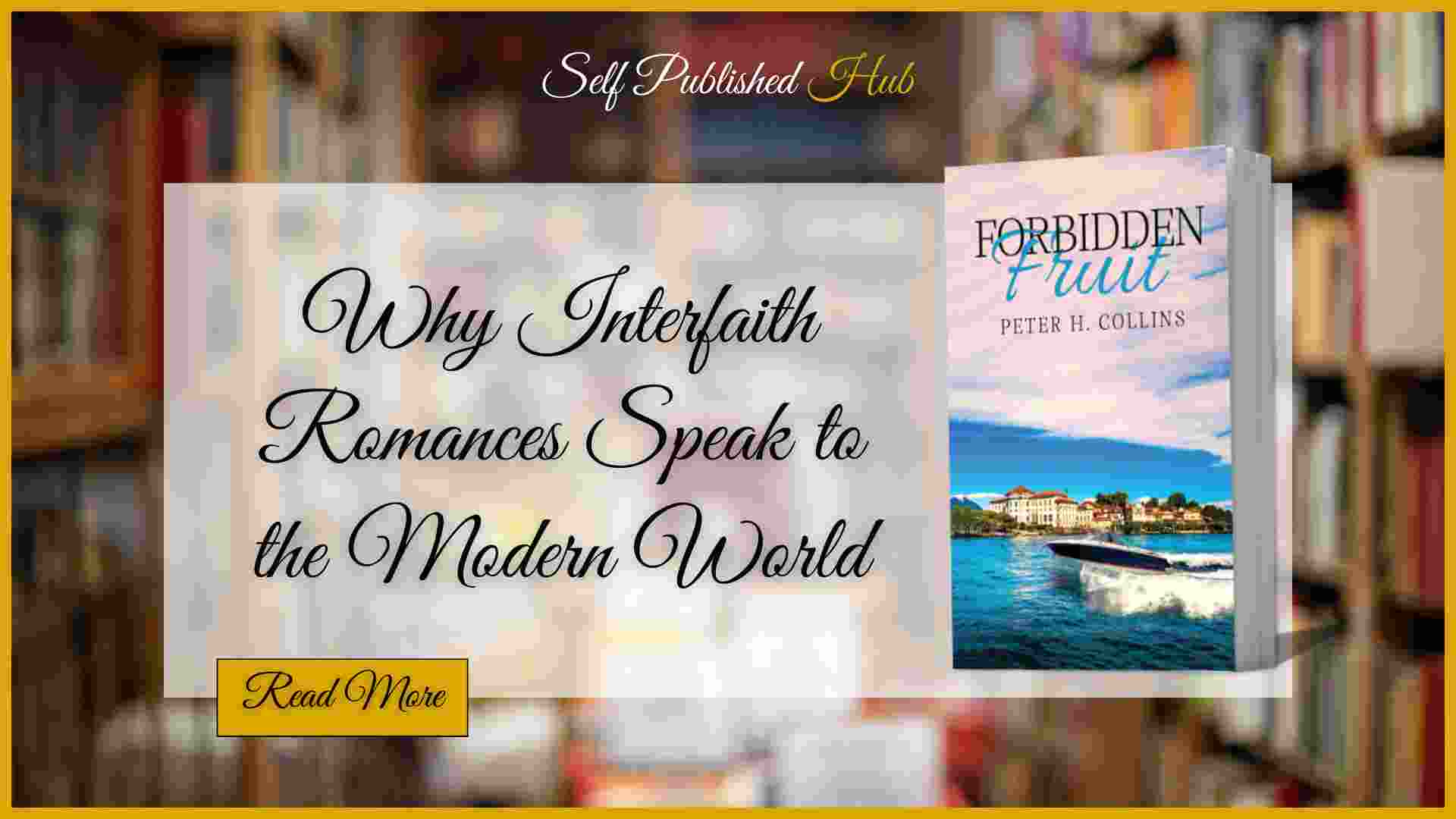
Love has always found ways to cross the lines that society draws. In today’s world, those lines are often shaped by faith, culture, and family expectations. Interfaith romances show us what happens when two people fall in love despite belonging to different religious traditions. These stories matter because they mirror real struggles faced by many couples today, and they remind us that love is not just a private choice but a deeply human one that can challenge long-standing traditions. Peter H. Collins’s novel Forbidden Fruit captures this theme with honesty and compassion through the story of Jeff, a Jewish-American soldier, and Maria, a Catholic Italian nurse.
At its heart, an interfaith romance is about two people trying to balance personal happiness with cultural identity. Jeff and Maria meet under unusual circumstances. He is wounded from war and recovering in a hospital in Milan, and she is one of the nurses caring for him. What begins as a relationship built on healing and comfort soon becomes something much deeper. Their love feels natural, but they both know it will not be simple. His Jewish heritage and her Catholic faith carry expectations from their families, and those expectations weigh heavily on their future.
This tension mirrors what many couples face in real life. Interfaith relationships often involve questions about weddings, holidays, traditions, and raising children. Families may worry about losing cultural continuity or religious practices. Even when love is strong, these practical issues can create conflict. Collins captures this reality through Jeff and Maria’s quiet doubts, conversations, and fears about how their families will react.
What makes their story powerful is that it is not just about resistance or rebellion. Jeff and Maria do not fall in love to defy their families or their religions. Their connection grows out of genuine care and respect. That honesty reflects the way many interfaith couples experience their relationships. Love is not about rejecting the past but about creating a future that respects both identities.
Interfaith romances also raise larger questions about society. They show us how faith can both nurture and restrict. For Jeff, his Jewish heritage is a source of identity but also a source of pressure. For Maria, her Catholic background provides strength but also sets limits on what is acceptable. These inner conflicts highlight how personal choices are rarely free from cultural influence. In this way, interfaith stories remind readers that love is not lived in isolation. It always exists within a social and cultural framework.
The importance of these stories goes beyond the characters themselves. By exploring the challenges of interfaith love, novels like Forbidden Fruit open conversations about tolerance, acceptance, and the possibility of finding common ground. They encourage readers to see beyond religious labels and focus on shared humanity. In a divided world where religion often creates barriers, these stories show that love can become a bridge.
Of course, not every interfaith romance ends happily, either in real life or in fiction. Some couples find ways to navigate differences, while others part ways under the weight of expectations. Yet even in uncertainty, these stories remain meaningful. They reflect the courage it takes to follow one’s heart and the resilience needed to balance love with identity.
Jeff and Maria’s story may be set in the mid-2000s, but its themes feel timeless. Many readers will see echoes of their own struggles, whether in interfaith relationships, intercultural marriages, or simply in trying to make choices that go against family expectations. That connection is why interfaith romances continue to resonate. They are not just love stories—they are human stories about identity, belonging, and the hope that love can overcome barriers.
In the end, Forbidden Fruit reminds us that interfaith romances speak to the modern world because they ask the same questions many of us face: Can love thrive across differences? Can families learn to accept choices that challenge tradition? And most importantly, is the risk of love worth the struggle it brings? These are not easy questions, but they are deeply real, and that is what makes stories like Jeff and Maria’s so compelling.
Available Now On Amazon: https://www.amazon.com/dp/1968615199