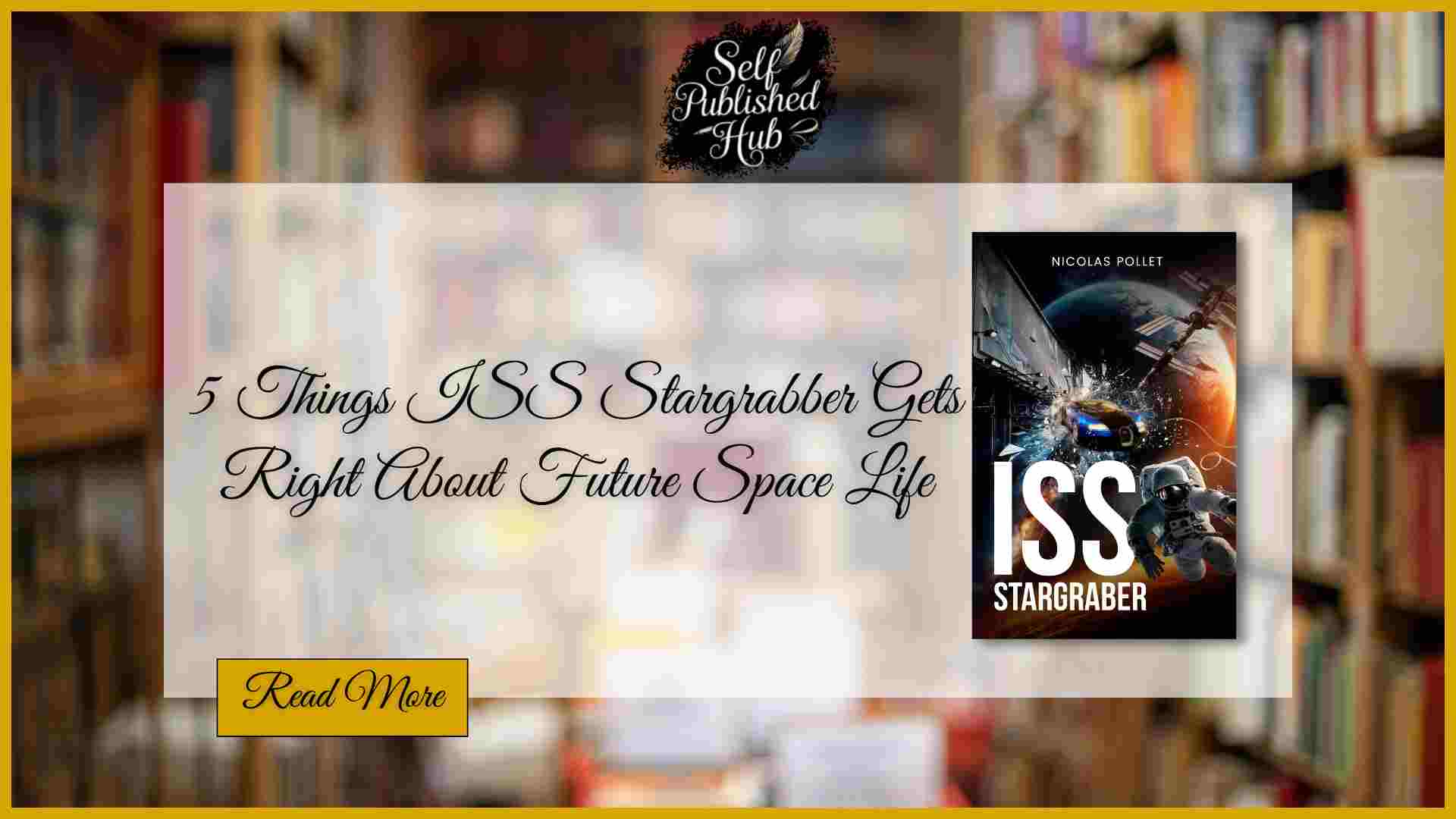
Imagining the future of life in space has always been a mix of science, speculation, and creativity. Nicolas Pollet’s ISS Stargrabber takes this challenge seriously as it beautifully builds on the legacy of the International Space Station and expands it into a massive orbital structure that circles half the Earth.
Here are five things the book gets right about what the future of living beyond Earth might look like.
One: Space Elevators as the Key to Access
Getting people and supplies into orbit is the single biggest challenge of space travel today. Rockets are expensive and limited. In ISS Stargrabber, access to the station is made possible by gigantic space elevators. These are connected to Earth with nanotube cables stretching thousands of miles into space. While such elevators remain theoretical, scientists and engineers continue to study whether advanced materials could make them possible. The idea that a future station would rely on elevators rather than rockets reflects real thinking about how to make space accessible to millions, not just astronauts.
Two: Solar Energy as Humanity’s Lifeline
The novel makes energy collection the central reason for Stargraber’s existence. Giant panels capture solar energy in orbit and beam it back to Earth. This concept, known as space-based solar power, is already being explored by researchers in Japan, the United States, and Europe. By removing the barriers of weather and day-night cycles, orbital solar farms could supply continuous, clean energy. ISS Stargrabber takes this idea to its logical conclusion, imagining a world no longer dependent on fossil fuels.
Three: Life in Modules Like Floating Cities
Rather than one large structure, Stargraber is made up of thousands of connected modules. Each serves a purpose, from living quarters to laboratories to spaceports. This design mirrors how engineers think about building safe, expandable habitats. The book describes these modules as communities, complete with neighborhoods and cultural identities. This feels realistic because any large orbital society would have to combine functionality with the human need for belonging.
Four: The Importance of Selection and Training
In the novel, not just anyone can live on Stargraber. Residents are chosen carefully, from scientists and engineers to cooks and service workers, because life in space requires discipline and cooperation. This detail matches real-world space programs, where psychological stability, teamwork, and adaptability matter as much as technical skills. The idea that an orbital city would feel like a submarine in space is accurate. Confined living, constant maintenance, and the need to rely on each other would define daily life.
Five: Space as Both Progress and Risk
Perhaps the most important thing ISS Stargrabber gets right is the dual nature of space life. It is full of promise, offering energy, research, and expansion. But it is also fragile. The novel shows how sabotage or accidents could threaten not only the station but the Earth itself. This tension reflects real concerns. As humanity moves further into space, the systems we build will need to balance innovation with safety. Technology will not eliminate risk, but it will change how we face it.
Taken together, these five elements show why ISS Stargrabber stands out as a thoughtful vision of the future. By blending action with detail in a way that makes readers believe this world could exist, through space elevators, solar power, modular habitats, strict selection, and the constant presence of risk, this book has become a part of ongoing conversations in science and engineering today.
By anchoring its imagination in these ideas, the novel does more than entertain. It helps readers picture what space life might truly be like, not as fantasy, but as a future we may one day share.
Head to Amazon to purchase your copy: https://www.amazon.com/dp/B0F56P7XVR